
Vitamin
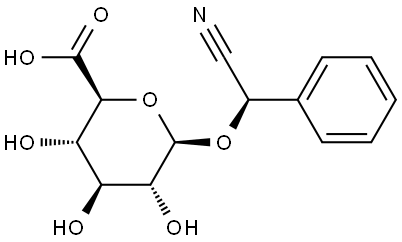
- CAS NO.:1332-94-1
- Empirical Formula: C14H15NO7
- Molecular Weight: 309.27
- MDL number: MFCD06198902
- SAFETY DATA SHEET (SDS)
- Update Date: 2025-06-03 11:32:20
What is Vitamin?
Description
Amygdalin (on the left) and its companion molecule laetrile (right) burst into the headlines in the 1950s as purported cancer cures. As scientific research soon determined, they are not effective for treating cancer—they are potent poisons.
Amygdalin occurs in many plants, notably in seeds of fruits in the Rosaceae family such as bitter almonds, apricots, and plums. Laetrile is a derivative of amygdalin formed by the hydrolytic removal of one glycoside group from the parent compound. The literature is a bit confusing because the names and laetrile sometimes are conflated. Both molecules are also erroneously termed vitamin B17.
Chemists Walter Norman Haworth and Birkett Wylam at Durham University (Newcastle upon Tyne, UK) elucidated the structure of amygdalin and synthesized it in 1923. Haworth was awarded the 1937 Nobel Prize in Chemistry for 1938.
From the 1950s through the 1970s, both compounds, under the name laetrile, were heavily promoted as a cure for many types of cancer. Rogue physicians and others established clinics in Mexico to which desperate patients flocked to receive the “cure” and other ineffective treatments. Science, however, prevailed: Laetrile was never approved by the US Food and Drug Administration or the European Commission.
The nitrile groups in amygdalin and laetrile are labile and easily removed as the cyanide ion by β-glucosidase enzymes in the human body. Cyanide, of course, is highly toxic; it is surprising that the compounds’ oral toxicity is given the mild hazard statement “harmful if swallowed”.
In 1981, Irving J. Lerner at the University of Minnesota Medical School (Minneapolis) summarized the laetrile hoax thus: "All prior forms of cancer quackery . . . pale in comparison with the laetrile crusade, the slickest, most sophisticated, and certainly the most remunerative cancer quack promotion in medical history."
Properties of Vitamin
| Melting point: | 215°C |
| Boiling point: | 449.56°C (rough estimate) |
| Density | 1.3031 (rough estimate) |
| refractive index | 1.5300 (estimate) |
| solubility | 83 g/l |
| pka | 2.75±0.70(Predicted) |
| appearance | white powder |
Safety information for Vitamin
Computed Descriptors for Vitamin
New Products
5-bromo-4-fluoro-2-nitrobenzaldehyde Cyclobutanone (R)-(-)-2-Amino-1-propanol Fmoc-OSu 1-(2-Chloroethyl)pyrrolidine Hydrochloride 2-Amino-2-(4-methylphenyl)acetic acid 2,4-Dihydroxybenzaldehyde Obidoxime hydrochloride API Pyrrolo[1,2-a]pyrimidine-6-carboxylic acid, 4,6,7,8-tetrahydro-4-oxo-, sodium salt (1:1), (6S) Dipropyl disulfide 4 pentyn 1 ol N-Vinylformamide Methacrylate-PEG-Methacrylate, Mn:35000 2,4-Dihydroxyacetophenone 2-Chloro 5-Fluoro Pyridine Vasicinone 2-Chloroisonicotinic Acid Tween 80 or Polysorbate 80 2-Butyn-1-oL 2-Pentyn-1-oL 4-Nitrobenzotrifluoride N-(4-Cyano-3-(trifluoromethyl)phenyl)-2-methyloxirane-2-carboxamide N-(4-fluoro-2-methoxy-5-nitrophenyl)-4-(1-methyl-1H-indol-3-yl)pyrimidin-2-amine Pirtobrutinib intd.Related products of tetrahydrofuran
You may like
-
 7250-67-1 1-(2-Chloroethyl)pyrrolidine Hydrochloride 98+View Details
7250-67-1 -
7250-67-1 1-(2-Chloroethyl)pyrrolidine Hydrochloride 98+View Details
7250-67-1 -
13227-01-5 98+View Details
13227-01-5 -
545445-44-1 3-Morpholino-1-(4-(2-oxopiperidin-1-yl) phenyl)-5,6-dihyropyridin-2-(1H)-one 98%View Details
545445-44-1 -
6629-04-5 98%View Details
6629-04-5 -
4-(4-Αminophenyl)-3-Morpholinone 98%View Details
438056-69-0 -
1-(4-Aminophenyl)-3-morpholino-5,6-dihydropyridin-2(1H)-one 1267610-26-3 98%View Details
1267610-26-3 -
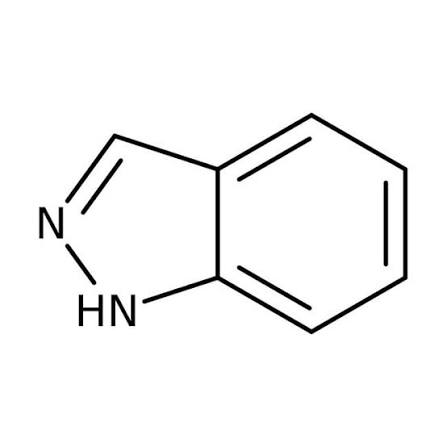 1H-Indazole | CAS No. 271-44-3 | Pharmaceutical IntermediateView Details
271-44-3