
EPOETIN ALFA
- CAS NO.:113427-24-0
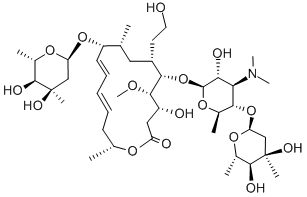
- Empirical Formula: C42H73NO16
- Molecular Weight: 848.03
- SAFETY DATA SHEET (SDS)
- Update Date: 2026-01-13 11:18:55
What is EPOETIN ALFA?
The Uses of EPOETIN ALFA
Anti-anemic; hematinic.
brand name
Epogen (Amgen); Procrit (Ortho Biotech).
General Description
Epoetin alfa, rEPO (Epogen, Procrit), isthe recombinant human erythropoietin produced in Chinesehamster ovary cells into which the human erythropoietin genehas been inserted. These mammalian cells glycosylate theprotein in a manner similar to that observed in human cells.
Epoetin alfa is indicated in anemic patients with chronicrenal failure, including both those who require regular dialysisand those who do not. Epoetin alfa is also indicated inanemia associated with AIDS, treatment of AIDS with zidovudine,frequent blood donations, and neoplastic diseases.It is indicated to prevent anemia in patients who donateblood prior to surgery for future autologoustransfusions and to reduce the need for repeated maintenancetransfusions. The hormone is available as an isotonicbuffered solution, which is administered by the intravenousroute. The solution should not be frozen or shakenand is stored at 36°F to 46°F.
Clinical Use
Epoetin Alfa, recombinant Erythropoietin alfa, Epogen,Procrit, is a glycoprotein that stimulates red blood cellproduction. It is produced in the kidney, and it activates theproliferation and differentiation of specially committed erythroidprogenitors in the bone marrow.
Epoetin is indicated to treat anemia of chronic renal failurepatients, anemia in zidovudine-treated HIV-infectedpatients, and in cancer patients taking chemotherapy. Theresults in these cases have been dramatic; most patients respondwith a clinically significant increase in hematocrit.
Veterinary Drugs and Treatments
EPO has been used to treat dogs and cats for anemia associated with chronic renal failure. Some clinicians state that because of the expense and potential risks associated with its use, PCV’s should be in the “teens” before considering beginning EPO therapy. Development of antibodies to EPO has severely limited its clinical usefulness in veterinary medicine for chronic use. EPO may be demonstrated in the future to have significant benefits in reducing the number or volume of transfusions, or as a neuroprotective agent.
Drug interactions
Potentially hazardous interactions with other drugs Hyperkalaemia with ACE inhibitors and angiotensin-II antagonists
Metabolism
The metabolic fate of both endogenous and recombinant erythropoietin is poorly understood. Current evidence from studies in animals suggests that hepatic metabolism contributes only minimally to elimination of the intact hormone, but desialylated epoetin (i.e. terminal sialic acid groups removed) appears to undergo substantial hepatic clearance via metabolic pathways and/or binding. Desialylation and/or removal of the oligosaccharide side chains of erythropoietin appear to occur principally in the liver; bone marrow also may have a role in catabolism of the hormone. Elimination of desialylated drug by the kidneys, bone marrow, and spleen also may occur; results of animal studies suggest that proximal renal tubular secretion may be involved in renal elimination.
Safety information for EPOETIN ALFA
New Products
2-(2-Ethoxyphenoxy)ethyl bromide 1,3-Dibromo-2,2-dimethoxypropane 8-Bromo-7-(2-butynyl)-3-methyl xanthine 5-Chlorothiophene-2-carboxylic acid 8-Bromo-3-methyl xanthine Maleic hydrazide o-Anisaldehyde 4-Bromobenzaldehyde 3-Fluorobenzaldehyde 2-Chlorobenzaldehyde 3-Amino-3-(3-fluorophenyl)propanoic acid 1-Propyl-4-piperidone 2,3-Dihydro-5,6-dimethoxy-2-(4-piperidinylmethyl)-1H-inden-1-one hydrochloride 3-(4-Bromo-3-methyl-2-oxo-2,3-dihydro-1h-benzo[d]imidazol-1-yl)piperidine-2,6-dione 2-Fluoro-6-iodobenzoic acid 3-Pyridineacrylic acid 1-Boc-4-cyanopiperidine ethyl 2-oxo-2,3,9,10-tetrahydro-1H-pyrido[3',4':4,5]pyrrolo[1,2,3-de]quinoxaline-8(7H)-carboxylate Vardenafil Bis-sulphonamide(Dimer) Nitroso Irbesartan N-Nitroso Nortriptyline Sulfonic acid Impurity 2-(p-Tolyl)acetaldehyde 2,2-dibromo-1-cyclopropyl-2-(2-fluorophenyl)ethan-1-oneRelated products of tetrahydrofuran




You may like
-
 Deuterated Styrene-d8 19361-62-7 97-99%View Details
19361-62-7 -
1187989-89-4 97-99%View Details
1187989-89-4 -
(S)-2-Bromobutanoic acid 97-99%View Details
32659-49-7 -
665020-24-6 ethyl 1-(2,4-dichlorophenyl)-4,5-dihydro-1H-benzo[g]indazole-3-carboxylate 97-99%View Details
665020-24-6 -
methyl 3-amino-4-formylbenzoate 97-99%View Details
212322-17-3 -
3-bromo-[1,1'-biphenyl]-2-amine 1620885-59-7 97-99%View Details
1620885-59-7 -
(13S,17S)-13-methyl-3-oxo-2,3,8,9,10,11,12,13,14,15,16,17-dodecahydro-1H-cyclopenta[a]phenanthren-17-yl acetate 2590-41-2 97-99%View Details
2590-41-2 -
1503408-77-2 6-Chloro-3,4-dimethylpyridin-2-amine 97-99%View Details
1503408-77-2