
2-(Diphenylphosphino)benzoic acid
Synonym(s):(2-Carboxyphenyl)diphenylphosphine
- CAS NO.:17261-28-8
- Empirical Formula: C19H15O2P
- Molecular Weight: 306.3
- MDL number: MFCD00674024
- EINECS: 241-293-7
- SAFETY DATA SHEET (SDS)
- Update Date: 2026-05-28 01:17:45
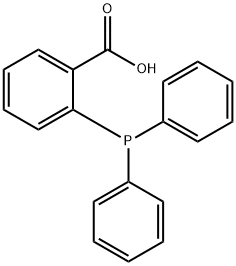
What is 2-(Diphenylphosphino)benzoic acid?
Chemical properties
light yellow powder
The Uses of 2-(Diphenylphosphino)benzoic acid
2-(Diphenylphosphino)benzoic Acid is used in small molecule control of protein function through staudinger reduction.
The Uses of 2-(Diphenylphosphino)benzoic acid
The ligand (R ,R )‐1,2‐Bis(aminocarbonylphenyl‐2′‐diphenylphosphino)cyclohexane[138517-61-0] can be prepared by the coupling of (1R ,2R )‐(-)‐1,2‐diaminocyclohexane [20439-47-8] with 2‐(diphenylphosphino)benzoic acid [17261-28-8], using reagents such as DCC.
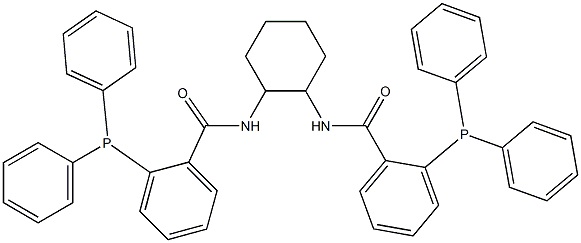
An alternative procedure has been developed where by (1R ,2R )‐(+)‐1,2‐diaminocyclohexane L‐tartrate salt [39961-95-0] is coupled to a mixed anhydride of 2‐(diphenylphosphino)benzoic acid and diphenylchlorophosphate.The procedure is reproduced below 2‐(Diphenylphosphino)benzoic acid (20 g, 65.3 mmol, 2 equiv) is suspended in dichloromethane (150 mL) and cooled in an ice‐water bath to 0°C (internal temperature). Triethylamine (10.1 mL, 71.8 mmol, 2.2 equiv) is added dropwise and a clear solution is obtained. This process is exothermic and a rise in temperature to 5°C is observed. The solution is re‐cooled to 0°C and diphenylchlorophosphate (13.4 mL, 64.7 mmol, 1.98 equiv) is added slowly, maintaining the internal temperature between 0–5°C. The yellow solution is stirred for 1 h at 0°C. (1R, 2R )‐(+)‐1,2‐Diaminocyclohexane‐L‐tartrate salt (8.63 g, 32.65 mmol, 1 equiv) is suspended in water (50 mL, 5.8 vol) and potassium carbonate (15 g, 107.8 mmol, 3.3 equiv) is added. This process is exothermic and a clear solution is obtained after approximately 10 min. After 30 min, the clear aqueous solution of diamine is added to the mixed anhydride solution at 0°C, and the resulting yellow two‐phase mixture is stirred for 2 h at 0°C, then allowed to warm to room temperature. After 14 h, the mixture is poured into a separating funnel and 200 mL of dichloromethane and 100 mL of water are added. The organic phase is separated, washed with 2 N HCl (100 mL) and saturated aqueous NaHCO3 solution (100 mL), then dried over magnesium sulfate. The dried organic phase is filtered through a silica pad and the pad is washed with dichloromethane (50 mL). The combined filtrates are evaporated to dryness under reduced pressure, producing a yellow foam (22.3 g, 99% crude). The foam is crystallized from boiling acetonitrile (390 mL, 17.5 vol) to afford a white crystalline solid. The solid is dried under vacuum to provide the phosphine ligand (15 g, 67%).
Properties of 2-(Diphenylphosphino)benzoic acid
| Melting point: | 174-181 °C (lit.) |
| Boiling point: | 159 °C |
| storage temp. | Inert atmosphere,Room Temperature |
| solubility | Chloroform (Slightly), DMSO (Slightly), Methanol (Slightly) |
| form | Powder |
| pka | 3.72±0.36(Predicted) |
| color | Light yellow |
| Stability: | Hygroscopic |
| CAS DataBase Reference | 17261-28-8(CAS DataBase Reference) |
| EPA Substance Registry System | Benzoic acid, 2-(diphenylphosphino)- (17261-28-8) |
Safety information for 2-(Diphenylphosphino)benzoic acid
| Signal word | Warning |
| Pictogram(s) |
 Exclamation Mark Irritant GHS07 |
| GHS Hazard Statements |
H315:Skin corrosion/irritation H319:Serious eye damage/eye irritation H332:Acute toxicity,inhalation H335:Specific target organ toxicity, single exposure;Respiratory tract irritation |
| Precautionary Statement Codes |
P261:Avoid breathing dust/fume/gas/mist/vapours/spray. P264:Wash hands thoroughly after handling. P264:Wash skin thouroughly after handling. P271:Use only outdoors or in a well-ventilated area. P302+P352:IF ON SKIN: wash with plenty of soap and water. P305+P351+P338:IF IN EYES: Rinse cautiously with water for several minutes. Remove contact lenses, if present and easy to do. Continuerinsing. |
Computed Descriptors for 2-(Diphenylphosphino)benzoic acid
| InChIKey | UYRPRYSDOVYCOU-UHFFFAOYSA-N |
New Products
9-Mesityl-10-methylacridinium perchlorate Sulfapyridine Fmoc-OSu (R)-(-)-2-Amino-1-propanol Cyclobutanone 5-bromo-4-fluoro-2-nitrobenzaldehyde 4 pentyn 1 ol N-Vinylformamide Phenethyl cinnamate Pyrrolo[1,2-a]pyrimidine-6-carboxylic acid, 4,6,7,8-tetrahydro-4-oxo-, sodium salt (1:1), (6S) Ethyl 3-phenylpropanoate β-Bromostyrene Methacrylate-PEG-Methacrylate, Mn:35000 2,4-Dihydroxyacetophenone 2-Chloro 5-Fluoro Pyridine Vasicinone 2-Chloroisonicotinic Acid Tween 80 or Polysorbate 80 Methyl trans-4-Aminocyclohexanecarboxylate Hydrochloride N-(4-fluoro-2-methoxy-5-nitrophenyl)-4-(1-methyl-1H-indol-3-yl)pyrimidin-2-amine Pirtobrutinib intd. 4-Nitrobenzotrifluoride 2-Pentyn-1-oL N-(4-Cyano-3-(trifluoromethyl)phenyl)-2-methyloxirane-2-carboxamideRelated products of tetrahydrofuran



You may like
-
 2-(Diphenylphosphino)benzoic Acid CAS 17261-28-8View Details
17261-28-8 -
2-(Diphenylphosphino)benzoic acid CAS 17261-28-8View Details
17261-28-8 -
Fmoc-OSu 98+View Details
82911-69-1 -
(R)-(-)-2-Amino-1-propanol 35320-23-1 98+View Details
35320-23-1 -
1191-95-3 Cyclobutanone 98+View Details
1191-95-3 -
213382-45-7 98+View Details
213382-45-7 -
Fmoc-OSu 98+View Details
82911-69-1 -
(R)-(-)-2-Amino-1-propanol 35320-23-1 98+View Details
35320-23-1