
Unii-9oqo0E343z
- CAS NO.:34819-78-8
- Empirical Formula: H3N
- Molecular Weight: 16.02152
- SAFETY DATA SHEET (SDS)
- Update Date: 2023-05-04 17:34:38
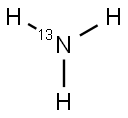
What is Unii-9oqo0E343z?
Absorption
Following intravenous injection, 13N-ammonia is cleared rapidly from the blood with a biologic half-life of about 2.84 minutes (effective half-life of about 2.2 minutes). In the myocardium, its biologic half-life has been estimated to be less than 2 minutes (effective half-life less than 1.67 minutes).
Toxicity
Data not available.
The Uses of Unii-9oqo0E343z
Diagnostic aid (cardiac imaging); diagnostic aid (liver imaging); radioactive agent.
Indications
For diagnostic Positron Emission Tomography (PET) imaging of the myocardium under rest or pharmacologic stress conditions to evaluate myocardial perfusion in patients with suspected or existing coronary artery disease.
Background
Ammonia N 13 Injection, USP is a positron emitting radiopharmaceutical that is used for diagnostic purposes in conjunction with positron emission tomography (PET) imaging. The active ingredient, [13N] ammonia, has the molecular formula of 13NH3 with a molecular weight of 16.02. Ammonia N 13 Injection, USP is used for imaging of the myocardium under rest or pharmacologic stress conditions to evaluate myocardial perfusion in patients with suspected or existing coronary artery disease.
Definition
ChEBI: Ammonia-(13)N is a (13)N-modified compound that is ammonia that has a (13)N isotope as the nitrogen atom. (13)N decays with a half-life of ten minutes to (13)C, emitting a positron. Used in diagnostic Positron Emission Tomography (PET) imaging. It has a role as a radioactive imaging agent.
Pharmacokinetics
Following intravenous injection, ammonia N 13 enters the myocardium through the coronary arteries. The PET technique measures myocardial blood flow based on the assumption of a three-compartmental disposition of intravenous ammonia N 13 in the myocardium. In this model, the value of the rate constant, which represents the delivery of blood to myocardium, and the fraction of ammonia N 13 extracted into the myocardial cells, is a measure of myocardial blood flow. Optimal PET imaging of the myocardium is generally achieved between 10 to 20 minutes after administration.
Metabolism
Ammonia N 13 undergoes a five-enzyme step metabolism in the liver to yield urea N 13 (the main circulating metabolite). It is also metabolized to glutamine N 13 (the main metabolite in tissues) by glutamine synthesis in the skeletal muscles, liver, brain, myocardium, and other organs. Other metabolites of ammonia N 13 include small amounts of N 13 amino acid anions (acidic amino acids) in the forms of glutamate N 13 or aspartate N 13.
Safety information for Unii-9oqo0E343z
New Products
3-AMINO-3-(2-FLUORO-PHENYL)-PROPIONIC ACID Pentadecanoic acid Hendecanoic acid 2-AMINO-3-METHYLQUINOLINE HYDROCHLORIDE 3-Hydroxypropionitrile DL-3-Amino-3-(2-methoxyphenyl)propionic acid 5-Bromo-2-Fluoropyridine 2,3-Diamino-5-Chloropyridine 2-Amino-3-Hydroxypyridine 2,6-Diamino Pyridine 4-Amino-2-Chloropyridine 2-Hydroxy-4-Picoline 4-(4-(Dimethylamino)-1-(4-fluorophenyl)-1-hydroxybutyl)-3-(hydroxymethyl)benzonitrile 4-Bromo-3-(ethoxymethyl)benzoic acid 2,4-Dichloro-5-methoxyaniline 4,6-Dichloro-2-(propylthio)pyrimidin-5-amine N2-Isobutyryl-2'-O-methylguanosine 2-chloro-5-methylpyridin-4-amine 4-Bromobenzaldehyde 2-Chloro-6-nitro benzothiazole 2-Amino-4-phenyl-thiazole 4-Chloro-2-methyl quinoline 2-(Chloromethyl) quinazolin-4(3H)-one 5-Phenyl-[1,3,4]-thiadiazol-2-amineYou may like
-
 2-Bromo-4-nitropyridine-N-oxide 52092-43-0 98%View Details
52092-43-0 -
18979-61-8 98%View Details
18979-61-8 -
4, 4'-Ditolylamine (or) 4,4-Dimethyl Diphenylamine 620-93-9 98%View Details
620-93-9 -
2-Bromo-5-Chloropyridine 98%View Details
40473-01-6 -
2-Picolinic acid N-oxide 824-40-8 98%View Details
824-40-8 -
15862-34-7 5-Bromo-2-Hydroxy-3-Nitro Pyridine 98%View Details
15862-34-7 -
2-(2,4-Diaminophenoxy)ethanol Dihydrochloride 98%View Details
66422-95-5 -
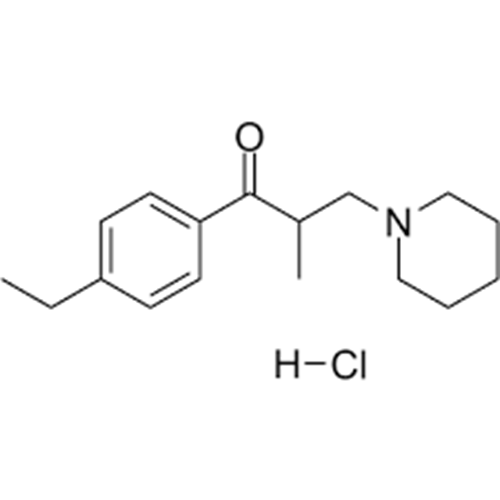 Eperisone Hydrochloride APIView Details
56839-43-1