
JP-4 (Jet Fuel)
- CAS NO.:50815-00-4
- Molecular Weight: 0
- MDL number: MFCD01773343
- Update Date: 2026-08-25 20:17:46
What is JP-4 (Jet Fuel)?
The Uses of JP-4 (Jet Fuel)
JP-4 and JP-7 (jet propellant-4 and jet propellant-7) are used by the US Air Force as aircraft fuels.
General Description
Watery colorless liquids. Less dense than water and insoluble in water. Hence float on water.
Air & Water Reactions
Highly flammable. Insoluble in water.
Reactivity Profile
JP-4 (Jet Fuel) may be incompatible with strong oxidizing agents like nitric acid. Charring may occur followed by ignition of unreacted material and other nearby combustibles. In other settings, mostly unreactive. Not affected by aqueous solutions of acids, alkalis, most oxidizing agents, and most reducing agents. When heated sufficiently or when ignited in the presence of air, oxygen or strong oxidizing agents, burns exothermically to produce mostly carbon dioxide and water.
Health Hazard
Vapor causes slight irritation of eyes and nose. Liquid irritates stomach; if taken into lungs, causes coughing, distress, and rapidly developing pulmonary edema.
Properties of JP-4 (Jet Fuel)
| form | JP-4 is a colorless to strawcolored
liquid with the odor of gasoline and/or
kerosene. JP-7 is a liquid, usually colorless and
with the odor of kerosene. JP-4 can be made
by refining either crude petroleum oil or shale
oil. It is called a wide cut fuel because it is produced
from a broad distillation temperature
range and contains a wide array of carbon chain
lengths, from 4- to 16. It consists of approximately
13% (v/v) aromatic hydrocarbons, 1.0%
olefins, and 86% saturated hydrocarbons.1 JP-
7 is made by refining kerosene, a product of
refined crude petroleum. It was developed for
use in advanced supersonic jets because of its
thermal stability and high flash point. Aviation fuels consist primarily of hydrocarbons (paraffins and cycloparaffins or naphthenes primarily but also aromatics and olefins). Paraffins have a high hydrogen-tocarbon ratio, with a high heat release per unit of weight and a cleaner burn than other hydrocarbons. Cycloparaffins have a lower hydrogen- to-carbon ratio and produce less heat release but increase the density and reduce the freezing point of the fuel. Aromatic hydrocarbons are a good energy source but produce smoke on burning; therefore, the maximum levels are restricted (20–25% by volume in JP- 4, 5% by volume in JP-7). Olefins are similar to paraffins but are unsaturated (double and triple C-C bonds) with lower hydrogen-tocarbon ratios, are the most reactive of the hydrocarbons, and are allowed at only 5% by volume in JP-4. Benzene is present as a contaminant at less than 0.5% in JP-4. Other ingredients of lesser importance are sulfur and sulfur compounds as well as additives to improve performance (antioxidants, metal deactivators, fuel system icing inhibitors, corrosion inhibitors, static dissipater additives). |
| Dielectric constant | 1.7(21.0℃) |
Safety information for JP-4 (Jet Fuel)
Computed Descriptors for JP-4 (Jet Fuel)
New Products
5-bromo-4-fluoro-2-nitrobenzaldehyde Cyclobutanone (R)-(-)-2-Amino-1-propanol Fmoc-OSu 1-(2-Chloroethyl)pyrrolidine Hydrochloride 2-Amino-2-(4-methylphenyl)acetic acid 2,4-Dihydroxybenzaldehyde Obidoxime hydrochloride API Pyrrolo[1,2-a]pyrimidine-6-carboxylic acid, 4,6,7,8-tetrahydro-4-oxo-, sodium salt (1:1), (6S) Dipropyl disulfide 4 pentyn 1 ol N-Vinylformamide Methacrylate-PEG-Methacrylate, Mn:35000 2,4-Dihydroxyacetophenone 2-Chloro 5-Fluoro Pyridine Vasicinone 2-Chloroisonicotinic Acid Tween 80 or Polysorbate 80 2-Butyn-1-oL 2-Pentyn-1-oL 4-Nitrobenzotrifluoride N-(4-Cyano-3-(trifluoromethyl)phenyl)-2-methyloxirane-2-carboxamide N-(4-fluoro-2-methoxy-5-nitrophenyl)-4-(1-methyl-1H-indol-3-yl)pyrimidin-2-amine Pirtobrutinib intd.Related products of tetrahydrofuran




You may like
-
 7250-67-1 1-(2-Chloroethyl)pyrrolidine Hydrochloride 98+View Details
7250-67-1 -
7250-67-1 1-(2-Chloroethyl)pyrrolidine Hydrochloride 98+View Details
7250-67-1 -
13227-01-5 98+View Details
13227-01-5 -
545445-44-1 3-Morpholino-1-(4-(2-oxopiperidin-1-yl) phenyl)-5,6-dihyropyridin-2-(1H)-one 98%View Details
545445-44-1 -
6629-04-5 98%View Details
6629-04-5 -
4-(4-Αminophenyl)-3-Morpholinone 98%View Details
438056-69-0 -
1-(4-Aminophenyl)-3-morpholino-5,6-dihydropyridin-2(1H)-one 1267610-26-3 98%View Details
1267610-26-3 -
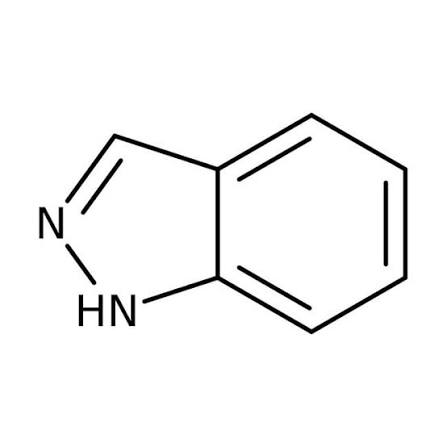 1H-Indazole | CAS No. 271-44-3 | Pharmaceutical IntermediateView Details
271-44-3