
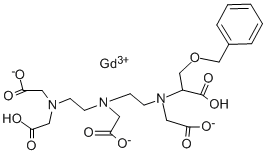
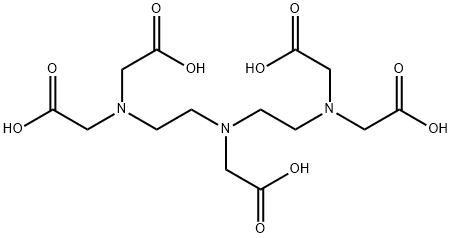
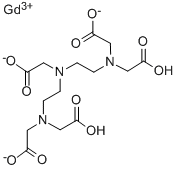
gadobenic acid
- CAS NO.:113662-23-0
- Empirical Formula: C22H28N3O11.Gd
- Molecular Weight: 667.723
- SAFETY DATA SHEET (SDS)
- Update Date: 2024-11-12 15:22:20
What is gadobenic acid?
Toxicity
Gadolinium-based radiocontrast agents like gadobenate dimeglumine are cytotoxic to renal cells. The toxic effects include apoptosis, cellular energy failure, disruption of calcium homeostasis, and disturbance of tubular cell polarity, and are thought to be linked to oxidative stress.
The Uses of gadobenic acid
Diagnostic aid (paramagnetic).
Background
Gadobenic acid (in the form of gadobenate dimeglumine) is an MRI contrast agent used primarily for MR imaging of the liver. It can also be used for visualizing the CNS and heart. In contrast to conventional extracellular fluid contrast agents, gadobenate dimeglumine is characterized by a weak and transient binding capacity to serum proteins. This binding leads to an increased relaxivity of gadobenate dimeglumine and, consequently, to a considerably increased signal intensity over that of other agents.
Indications
Gadobenate dimeglumine is indicated for use in magnetic resonance imaging (MRI) of the central nervous system in adult and pediatric patients in order to visualize lesions with abnormal blood-brain barrier or abnormal vascularity of the brain, spine, and associated tissues. It is also indicated for use in magnetic resonance angiography (MRA) to evaluate adults with known or suspected renal or aorto-ilio-femoral occlusive vascular disease.
brand name
Multihance (Bracco).
Pharmacokinetics
Gadobenate dimeglumine shares the pharmacokinetic properties of the ECF contrast agent gadopentetate dimeglumine; however, gadobenate differs in that is also selectively taken-up by hepatocytes and excreted via the bile (up to 5% of dose). The elimination half-life of gadobenate dimeglumine is approximately 1 hour. It is not metabolized.
Metabolism
Not metabolized.
Safety information for gadobenic acid
New Products
9-Mesityl-10-methylacridinium perchlorate Sulfapyridine Fmoc-OSu (R)-(-)-2-Amino-1-propanol Cyclobutanone 5-bromo-4-fluoro-2-nitrobenzaldehyde 4 pentyn 1 ol N-Vinylformamide Phenethyl cinnamate Pyrrolo[1,2-a]pyrimidine-6-carboxylic acid, 4,6,7,8-tetrahydro-4-oxo-, sodium salt (1:1), (6S) Ethyl 3-phenylpropanoate β-Bromostyrene Methacrylate-PEG-Methacrylate, Mn:35000 2,4-Dihydroxyacetophenone 2-Chloro 5-Fluoro Pyridine Vasicinone 2-Chloroisonicotinic Acid Tween 80 or Polysorbate 80 Methyl trans-4-Aminocyclohexanecarboxylate Hydrochloride N-(4-fluoro-2-methoxy-5-nitrophenyl)-4-(1-methyl-1H-indol-3-yl)pyrimidin-2-amine Pirtobrutinib intd. 4-Nitrobenzotrifluoride 2-Pentyn-1-oL N-(4-Cyano-3-(trifluoromethyl)phenyl)-2-methyloxirane-2-carboxamideRelated products of tetrahydrofuran

You may like
-
 1191-95-3 Cyclobutanone 98+View Details
1191-95-3 -
213382-45-7 98+View Details
213382-45-7 -
Fmoc-OSu 98+View Details
82911-69-1 -
(R)-(-)-2-Amino-1-propanol 35320-23-1 98+View Details
35320-23-1 -
1191-95-3 Cyclobutanone 98+View Details
1191-95-3 -
213382-45-7 98+View Details
213382-45-7 -
Fmoc-OSu 98+View Details
82911-69-1 -
(R)-(-)-2-Amino-1-propanol 35320-23-1 98+View Details
35320-23-1