
Formaldehyde
Synonym(s):Formaldehyde Solution;Formaldehydi solutio 35 per centum;Formalin;Formalin, Formaldehyde;Formaline solution, Methanal solution, Methylaldehyde solution
- CAS NO.:50-00-0
- Empirical Formula: CH2O
- Molecular Weight: 30.03
- MDL number: MFCD00003274
- EINECS: 200-001-8
- SAFETY DATA SHEET (SDS)
- Update Date: 2026-08-25 20:17:46
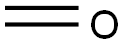
What is Formaldehyde?
Toxicity
Acute oral toxicity (LD50): 42 mg/kg [Mouse].
Description
Formaldehyde emissions from wood paneling, carpets, and tobacco smoke cause respiratory irritation, and possibly cancer, in some individuals. Forest fires also produce formaldehyde, and trace amounts of they are a normal byproduct of human food metabolism. In 1969, formaldehyde's microwave signature was detected in interstellar space.
Chemical properties
Formalin is made slightly alkaline (pH 8) by the addition of sodium hydroxide and then urea is added to give a urea to formaldehyde ratio of about 1: 2 molar. The resulting solution is boiled under reflux for about 15 minutes, acidified (to pH 4) with formic acid and then boiled for a further 5-20 minutes until the required degree of reaction is attained.
Physical properties
Formaldehyde is a clear, colorless liquid with a pungent, suffocating odor. Burning taste. Experimentally determined odor threshold concentrations of 1.0 ppmv and 0.50 ppmv were reported by Leonardos et al. (1969) and Nagata and Takeuchi (1990), respectively. Also,formalin is an aqueous solution that is 37% formaldehyde by weight; inhibited solutions (added to prevent polymeri zation) usually contain 6 12% methyl alcohol. Formaldehyde is used in the manufacture of plastics and resins by reaction with phenols,urea, and melamine. It is used as a preservative,a disinfectant, and as a chemical intermediate.
History
Formaldehyde is a by-product of combustion of organic compounds, metabolism, and other natural processes. Formaldehyde results from wood combustion and elevated atmospheric concentrations can result from forest fires, as well as from urban pollution sources such as transportation. Formaldehyde has been identified as a significant indoor air pollutant. Building materials such as particleboard, plywood, and paneling are major sources of formaldehyde because they incorporate formaldehyde resins as bonding adhesives. Other sources of formaldehyde in the home are carpets, upholstery, drapes, tobacco smoke, and indoor combustion products.
Reaction

A slurry of the amine (50 mg, 0.12 mmol) and the aldehyde (31.6 mg, 0.18 mmol) in 1,4-Dioxane (3 mL) was stirred for 5 min then treated with NaBH(OAc)3 (77 mg, 0.363 mmol). After stirring 10 min, DCM was added to the reaction mixture. The resulting solution was washed with saturated aq NaHCO3, water, and brine. The organics were dried (MgSO4) and concentrated in vacuo to provide the product which was used in the next step without further purification.
The Uses of Formaldehyde
More than half of the commercial formaldehyde produced is used to manufacture phenolic,urea, and melamine formaldehyde resins. Polyacetyl resins use another 5–10% of formaldehyde,and approximately 80% of formaldehyde goes into the resins and plastics industry.Phenolic-formaldehyde resins were the first synthetic plastics to be produced. The first plasticwas called Bakelite.
Formaldehyde has traditionally been used as a preservative in biology and medical laboratoriesand in embalming fluid. Embalming fluids typically contain 5–15% formaldehyde, a significant percentage of alcohol, and other additives to perform certain functions, for example,bleaches and coloring to preserve skin color. Formaldehyde has been used to preserve deadbodies since 1900 and has several qualities that make it the preferred preservative. Foremostamong these is its low cost, but it also has several biochemical advantages: it kills germs andmicroorganisms, destroys decomposition enzymes, retards decomposition of proteins, andhardens body tissues.
Indications
Formaldehyde is used for drying skin before or after surgical removal of warts or where dryness is required.
Background
A highly reactive aldehyde gas formed by oxidation or incomplete combustion of hydrocarbons. In solution, it has a wide range of uses: in the manufacture of resins and textiles, as a disinfectant, and as a laboratory fixative or preservative. Formaldehyde solution (formalin) is considered a hazardous compound, and its vapor toxic. (From Reynolds, Martindale The Extra Pharmacopoeia, 30th ed, p717)
Definition
Formalin: a colourless solution of methanal (formaldehyde) in waterwith methanol as a stabilizer; r.d.1.075–1.085. When kept at temperaturesbelow 25°C a white polymer ofmethanal separates out. It is used asa disinfectant and preservative forbiological specimens.
Production Methods
The industrial preparation of formaldehyde has occurred since the late 1800s and involvesthe catalytic oxidation of methanol: 2CH3OH(g) + O2(g) → 2CH2O(g).the oxidationtakes place at temperatures between 400°C and 700°C in the presence of metal catalysts. Metalsinclude silver, copper, molybdenum, platinum, and alloys of these metals.
Preparation
Formaldehyde is prepared industrially by the catalytic oxidation of methanol. In the commonly used formox process, methanol and oxygen react at c. 250–400 °C in presence of iron oxide in combination with molybdenum and/or vanadium to produce formaldehyde.
General Description
Formaldehyde solution commercially formaldehyde solution is an aqueous solution containing 37% formaldehyde and 8-10% methanol. Formaldehyde solution can be activated by adding the catalytic amount of lanthanide triflate. This activated formaldehyde solution was employed for the smooth hydroxymethylation reaction of silyl enol ethers. Formaldehyde solution reacts with silyl enol ethers to afford the corresponding hydroxymethylated adducts in high yields.
Air & Water Reactions
The solution gives up formaldehyde vapors readily. These vapors are flammable over a wide vapor-air concentration range. Water soluble.
Reactivity Profile
FORMALDEHYDE, SOLUTION, reacts violently with strong oxidizing agents (hydrogen peroxide, performic acid, perchloric acid in the presence of aniline, potassium permanganate, nitromethane). Reacts with bases (sodium hydroxide, potassium hydroxide, ammonia), and with nitrogen dioxide (explosive reaction around 180°C). Reacts with hydrochloric acid to form highly toxic bis(chloromethyl) ether. Polymerization reaction with phenol may develop sudden destructive pressure [Bretherick, 5th ed., 1995, p.168].
Hazard
Moderate fire risk. Explosive limits in air 7– 73%. Toxic by inhalation, strong irritant, a carcinogen. (Solution) Avoid breathing vapor and avoid skin contact. Confirmed carcinogen.
Health Hazard
Formaldehyde is moderately toxic by skin contact and inhalation. Exposure to formaldehyde gas can cause irritation of the eyes and respiratory tract, coughing, dry throat, tightening of the chest, headache, a sensation of pressure in the head, and palpitations of the heart. Exposure to 0.1 to 5 ppm causes irritation of the eyes, nose, and throat; above 10 ppm severe lacrimation occurs, burning in the nose and throat is experienced, and breathing becomes difficult. Acute exposure to concentrations above 25 ppm can cause serious injury, including fatal pulmonary edema. Formaldehyde has low acute toxicity via the oral route. Ingestion can cause irritation of the mouth, throat, and stomach, nausea, vomiting, convulsions, and coma.
Fire Hazard
Toxic vapors such as carbon dioxide and carbon monoxide are generated during combustion. Explosion hazard: when aqueous formaldehyde solutions are heated above their flash points, a potential for explosion hazard exists. High formaldehyde concentration or methanol content lowers flash point. Reacts with nitrogen oxides at about 180; the reaction becomes explosive. Also reacts violently with perchloric acid-aniline, performic acid, nitromethane, magnesium carbonate, and hydrogen peroxide. When heated, irritant formaldehyde gas evolved from solution. The main products of decomposition are carbon monoxide and hydrogen.
Flammability and Explosibility
Formaldehyde gas is extremely flammable; formalin solution is a combustible liquid (NFPA rating = 2 for 37% formaldehyde (15% methanol), NFPA rating = 4 for 37% formaldehyde (methanol free)). Toxic vapors may be given off in a fire. Carbon dioxide or dry chemical extinguishers should be used to fight formaldehyde fires.
Chemical Reactivity
Reactivity with Water No reaction; Reactivity with Common Materials: No reactions; Stability During Transport: Stable; Neutralizing Agents for Acids and Caustics: Not pertinent; Polymerization: Not pertinent; Inhibitor of Polymerization: Not pertinent.
Agricultural Uses
Microbiocide, Fungicide, Bactericide; Soil sterilent: Registered for use in the U.S. Not approved for use in EU countries. Formaldehyde has found wide industrial usage as a fungicide, germicide and in disinfectants. It is used most often in an aqueous solution stabilized with methanol (formalin). It is also a pesticide intermediate.
Trade name
DYNOFORM®; FANNOFORM®; FORMALITH®; FORMOL®; FYDE®; HERCULES 37 M6-8®; HOCH®; IVALON®; KARSAN®; LYSOFORM®; MAGNIFLOC 156C FLOCCULANT®; MORBICID®; STERIFORM®; SUPERLYSOFORM®
Contact allergens
Sources and uses of formaldehyde are numerous. Exposed people are mainly health workers, cleaners, painters, met alworkers, but also photographers (color developers) and carbonless copy paper users. Formaldehyde can induce contact urticaria. Formaldehyde may be the cause of sen sitization to formaldehyde releasers: benzylhemiformal, bromonitrodioxane, bromonitropropanediol, chloroal lylhexaminium chloride or Quaternium-15, diazolidinylu rea, dimethylol urea, dimethyloldimethylhydantoin or DMDM hydantoin, hexamethylenetetramine or methe namine, imidazolidinylurea, monomethyloldimethylhy dantoin or MDM hydantoin, N-methylolchloracetamide, paraformaldehyde and trihydroxyethylhexahydrotriazine or Grotan BK.
Biochem/physiol Actions
Formaldehyde is the simplest aldehyde that denatures the bihelical regions of RNA and converts the polynucleotides into random coils. It is a genotoxic substance that significantly induces DNA-protein crosslinks (DPC), sister-chromatid exchanges, micronuclei formation and leads to cytotoxicity. It also induces tumors in the nasal epithelium of rats and supposed to be a human carcinogen.
Safety Profile
Confirmed carcinogen with experimental carcinogenic, tumorigenic, and teratogenic data. Human poison by ingestion. Experimental poison by ingestion, skin contact, inhalation, intravenous, intraperitoneal, and subcutaneous routes. Human systemic effects by inhalation: lachqmation, olfactory changes, aggression, and pulmonary changes. Experimental reproductive effects. Human mutation data reported. A human skin and eye irritant. If swallowed it causes violent vomiting and darrhea that can lead to collapse. Frequent or prolonged exposure can cause hypersensitivity leading to contact dermatitis, possibly of an eczematoid nature. An air concentration of 20 ppm is quickly irritating to eyes. A common air contaminant. Flammable liquid when exposed to heat or flame; can react vigorously with oxidizers. A moderate explosion hazard when exposed to heat or flame. The gas is a more dangerous fire hazard than the vapor.
Potential Exposure
Formaldehyde has found wide indus trial usage as a fungicide, germicide; and in disinfectants and embalming fluids. It is also used in the manufacture of artificial silk and textiles, latex, phenol, urea, thiourea and melamine resins; dyes, and inks; cellulose esters and other organic molecules; mirrors, and explosives. It is also used in the paper, photographic, and furniture industries. It is an intermediate in drug manufacture and is a pesticide intermediate.
First aid
If this chemical gets into the eyes, remove anycontact lenses at once and irrigate immediately for at least30 min, occasionally lifting upper and lower lids. Seek medical attention immediately. If this chemical contacts the skin,remove contaminated clothing and wash immediately withsoap and water. Seek medical attention immediately. If thischemical has been inhaled, remove from exposure, begin rescue breathing (using universal precautions, including resuscitation mask) if breathing has stopped and CPR if heart actionhas stopped. Transfer promptly to a medical facility. Whenthis chemical has been swallowed, get medical attention.Give large quantities of water and induce vomiting. Do notmake an unconscious person vomit. Medical observation isrecommended for 2448 h after breathing overexposure, aspulmonary edema may be delayed. As first aid for pulmonaryedema, a doctor or authorized paramedic may consideradministering a corticosteroid spray.
Carcinogenicity
Formaldehyde is known to be a human carcinogen based on sufficient evidence of carcinogenicity from studies in humans and supporting data on mechanisms of carcinogenesis. Formaldehyde was first listed in the Second Annual Report on Carcinogens in 1981 as reasonably anticipated to be a human carcinogen based on sufficient evidence from studies in experimental animals. Since that time, additional cancer studies in humans have been published, and the listing status was changed to known to be a human carcinogen in the Twelfth Report on Carcinogens (2011).
Source
Formaldehyde naturally occurs in jimsonweed, pears, black currant, horsemint, sago
cycas seeds (1,640 to 2,200 ppm), oats, beets, and wild bergamot (Duke, 1992).
Formaldehyde was formed when acetaldehyde in the presence of oxygen was subjected to
continuous irradiation (λ >2200 ?) at room temperature (Johnston and Heicklen, 1964).
Schauer et al. (2001) measured organic compound emission rates for volatile organic
compounds, gas-phase semi-volatile organic compounds, and particle phase organic compounds
from the residential (fireplace) combustion of pine, oak, and eucalyptus. The gas-phase emission
rates of formaldehyde were 1,165 mg/kg of pine burned, 759 mg/kg of oak burned, and 599 mg/kg
of eucalyptus burned.
Gas-phase tailpipe emission rates from California Phase II reformulated gasoline-powered
automobiles with and without catalytic converters were 8.69 and 884 mg/km, respectively
(Schauer et al., 2002).
Environmental Fate
Biological. Biodegradation products reported include formic acid and ethanol, each of which can further degrade to carbon dioxide (Verschueren, 1983).
Photolytic. Major products reported from the photooxidation of formaldehyde with nitrogen oxides are carbon monoxide, carbon dioxide and hydrogen peroxide (Altshuller, 1983). In synthetic air, photolysis of formaldehyde gave hydrochloric acid andIrradiation of gaseous formaldehyde containing an excess of nitrogen dioxide over chlorine yielded ozone, carbon monoxide, nitrogen pentoxide, nitryl chloride, nitric acid and hydrochloric acid.
Chemical/Physical. Oxidizes in air to formic acid (Hartley and Kidd, 1987). Trioxymethylene may precipitate under cold temperatures (Sax, 1984). Polymerizes easily (Windholz et al., 1983). Major products reported from the photooxidation of formaldehyde with nitrogen oxides are carbon monoxide, carbon dioxide and hydrogen peroxide (Altshuller, 1983).Reacts with hydrochloric acid in moist air forming bis(chloromethyl)ether.
Storage
Work with formaldehyde should be conducted in a fume hood to prevent exposure by inhalation, and splash goggles and impermeable gloves should be worn at all times to prevent eye and skin contact. Formaldehyde should be used only in areas free of ignition sources. Containers of formaldehyde should be stored in secondary containers in areas separate from oxidizers and bases.
Shipping
UN1198 Formaldehyde solutions, flammable, Hazard Class: 3; Labels: 3-Flammable liquid, 8-Corrosive material. Cylinders must be transported in a secure upright position, in a well-ventilated truck. Protect cylinder and labels from physical damage. The owner of the compressed gas cylinder is the only entity allowed by federal law (49CFR) to transport and refill them. It is a violation of transportation regulations to refill compressed gas cylinders without the express written permission of the owner. UN2209 Formaldehyde solutions, with not<25% formal dehyde, Hazard class: 8; Labels: 8-Corrosive material. UN3077 For solids containing varying amounts of formal dehyde : UN3077 Environmentally hazardous substances, solid, n.o.s., Hazard class: 9; Labels: 9-Miscellaneous hazardous material, Technical Name Required.
Purification Methods
Formaldehyde commonly contains added MeOH. Add KOH solution (1 mole KOH: 100 moles HCHO) to ~37% by weight aqueous formaldehyde solution (formalin), or evaporate to dryness, to give paraformaldehyde polymer which, after washing with water, is dried in a vacuum desiccator over P2O5 or H2SO4. It is regenerated by heating the paraformaldehyde to 120o under vacuum, or by decomposing it with barium peroxide. The monomer, a colourless flammable gas, is passed through a glass-wool filter cooled to -48o in a CaCl2/ice mixture to remove particles of polymer, then dried by passage over P2O5 and either condensed in a bulb immersed in liquid nitrogen or absorbed in ice-cold conductivity water.
Toxicity evaluation
The carbonyl atom is the electrophilic site of formaldehyde, making it react easily with nucleophilic sites on cell membranes and in body fluids and tissues such as the amino groups in protein and DNA. Higher concentrations of formaldehyde precipitate protein. It is probable that formaldehyde toxicity occurs when intracellular levels saturate formaldehyde dehydrogenase activity, allowing the unmetabolized intact molecule to exert its effects locally. Formaldehyde is a very strong crosslinking agent even in the low concentration range. The reaction mechanism of this agent is the initial addition of formaldehyde to a primary amine on either an amino acid residue or DNA base to yield a hydroxymethyl intermediate. Then the hydroxymethyl group condenses with a second primary amine to yield a methylene bridge.
Incompatibilities
Pure formaldehyde may polymerize unless properly inhibited (usually with methanol). May form explosive mixture with air. Incompatible with strong acids; amines, strong oxidizers; alkaline materials; nitrogen dioxide; performic acid; phenols, urea. Reaction with hydrochloric acid forms bis-chloromethyl ether, a carcino gen. Formalin is incompatible with strong oxidizers, alkalis, acids, phenols, urea, oxides, isocyanates, caustics, anhydrides.
Waste Disposal
Return refillable compressed gas cylinders to supplier. Incineration in solution of combus tible solvent. Consult with environmental regulatory agen cies for guidance on acceptable disposal practices. Generators of waste containing this contaminant (≥100 kg/mo) must conform with EPA regulations governing storage, trans portation, treatment, and waste disposal.
Properties of Formaldehyde
| Melting point: | -15°C |
| Boiling point: | 97°C(37% solution),-19.5°C(pure) |
| Density | 1.09 g/mL at 25 °C(lit.) |
| vapor density | 1.03 (vs air) |
| vapor pressure | 52 mm Hg ( 37 °C) |
| refractive index | n |
| Flash point: | 133 °F |
| storage temp. | room temp |
| solubility | water: soluble |
| form | Solution |
| appearance | Colorless gas (at room temperature) |
| pka | 13.27(at 25℃) |
| color | APHA: ≤10 |
| Odor | Pungent odor detectable at 1 ppm |
| PH | pH (25℃) : 7.0~7.5 |
| Odor Threshold | 0.5ppm |
| Water Solubility | soluble |
| λmax | λ: 260 nm Amax: 0.01 λ: 280 nm Amax: 0.01 |
| Merck | 14,4235 |
| BRN | 1209228 |
| Henry's Law Constant | 2.08(x 10-7 atm?m3/mol) at 25 °C (flow-type generation system, spectrophometry, Kanda et al., 2005) |
| Exposure limits | NIOSH REL: TWA 0.016 ppm, 15-min C 0.1 ppm, IDLH 20 ppm; OSHA PEL: TWA 0.75 ppm, STEL 2 ppm. |
| Dielectric constant | 23.0(Ambient) |
| CAS DataBase Reference | 50-00-0(CAS DataBase Reference) |
| IARC | 1 (Vol. Sup 7, 62, 88, 100F) 2012 |
| NIST Chemistry Reference | Formaldehyde(50-00-0) |
| EPA Substance Registry System | Formaldehyde (50-00-0) |
Safety information for Formaldehyde
| Signal word | Danger |
| Pictogram(s) |
 Corrosion Corrosives GHS05  Skull and Crossbones Acute Toxicity GHS06  Health Hazard GHS08 |
| GHS Hazard Statements |
H314:Skin corrosion/irritation H317:Sensitisation, Skin H330:Acute toxicity,inhalation H335:Specific target organ toxicity, single exposure;Respiratory tract irritation H341:Germ cell mutagenicity H350:Carcinogenicity H370:Specific target organ toxicity, single exposure |
| Precautionary Statement Codes |
P202:Do not handle until all safety precautions have been read and understood. P260:Do not breathe dust/fume/gas/mist/vapours/spray. P280:Wear protective gloves/protective clothing/eye protection/face protection. P303+P361+P353:IF ON SKIN (or hair): Remove/Take off Immediately all contaminated clothing. Rinse SKIN with water/shower. P305+P351+P338:IF IN EYES: Rinse cautiously with water for several minutes. Remove contact lenses, if present and easy to do. Continuerinsing. |
Computed Descriptors for Formaldehyde
| InChIKey | WSFSSNUMVMOOMR-UHFFFAOYSA-N |
Formaldehyde manufacturer
Bhagya Laxmi Chemicals
Benzer Multitech India Private Limited
New Products
5-bromo-4-fluoro-2-nitrobenzaldehyde (R)-(-)-2-Amino-1-propanol Cyclobutanone Fmoc-OSu 1-(2-Chloroethyl)pyrrolidine Hydrochloride 2-Amino-2-(4-methylphenyl)acetic acid β-Bromostyrene Ethyl 3-phenylpropanoate Phenethyl cinnamate Dipropyl disulfide 4 pentyn 1 ol N-Vinylformamide Methacrylate-PEG-Methacrylate, Mn:35000 2,4-Dihydroxyacetophenone 2-Chloro 5-Fluoro Pyridine Vasicinone 2-Chloroisonicotinic Acid Tween 80 or Polysorbate 80 2-Butyn-1-oL 2-Pentyn-1-oL 4-Nitrobenzotrifluoride N-(4-fluoro-2-methoxy-5-nitrophenyl)-4-(1-methyl-1H-indol-3-yl)pyrimidin-2-amine Pirtobrutinib intd. N-(4-Cyano-3-(trifluoromethyl)phenyl)-2-methyloxirane-2-carboxamideRelated products of tetrahydrofuran




You may like
-
 Formaldehyde 99%View Details
 -
Formal Dehyde 99%View Details
-
FORMALDEHYDE 98%View Details
-
Formaldehyde 99%View Details
-
 Formaldehyde CASView Details
 -
Formaldehyde, 37% in aq. soln., For ACS analysis CAS 50-00-0View Details
50-00-0 -
Formaldehyde, For ACS analysis CAS 50-00-0View Details
50-00-0 -
Formaldehyde CASView Details