
Paraformaldehyde
Synonym(s):Paraformaldehyde;Polyoxymethylene
- CAS NO.:30525-89-4
- Empirical Formula: (CH2O)x
- Molecular Weight: 30.03
- MDL number: MFCD00133991
- EINECS: 608-494-5
- SAFETY DATA SHEET (SDS)
- Update Date: 2026-07-20 17:44:43

What is Paraformaldehyde?
Chemical properties
Paraformaldehyde is a polymerized form of formaldehyde (CHO) and is a stable white crystalline powder with the odor of monomeric formaldehyde. Because pure formaldehyde is unstable at ambient conditions, paraformaldehyde is used as a readily-usable form of formaldehyde at use sites. Then,formaldehyde gas is generated during heating. Paraformaldehyde is used for different applications as a source of either gaseousformaldehyde or solution formaldehyde.
The Uses of Paraformaldehyde
Paraformaldehyde is a disinfectant and fixation reagent. It is used as a fumigant, a disinfectant and in the manufacture of synthetic resins like melamine resin, phenol resin and polyacetal resin. Paraformaldehyde is also used in cell culture. It also serves as a fixative in electron microscopy. It is also used in the preparation of formalin fixatives for tissues or cells. To use the chemical as a fixative, it must be converted to the monomer formaldehyde by heating as formaldehyde is the active chemical in fixation.
What are the applications of Application
Paraformaldehyde solution 4% in PBS is commonly used to preserve tissues for routine histology and is supplied in 1X PBS
Definition
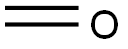
ChEBI: Paraformaldehyde is a macromolecule composed of repeating methyleneoxy units arising from polymerisation of formaldehyde.
Preparation
Paraformaldehyde is prepared industrially in continuously operated plants by concentrating aqueous formaldehyde solutions under vacuum conditions. Paraformaldehyde is currently produced in several steps which are carried out at low pressure and various temperatures. Highly reactive formaldehyde is produced under vacuum conditions starting with solutions that contain 50-100 ppm of formic acid and also 1-15 ppm of metal formates where the metals have an atomic number of 23-30 (e.g., Mn, Co, and Cu). The solutions are processed in thin-layer evaporators and spray dryers.
General Description
Paraformaldehyde appears as a white solid with a light pungent odor. A linear polymer of formaldehyde of formula HO(CH2-O)xH where x averages about 30. Paraformaldehyde is the smallest solid form of liquid formaldehyde, formed by the polymerization of formaldehyde with a typical degree of polymerization of 8-100 units. Flammable, although may take some effort to ignite. Flash point 158 °F. Used in fungicides, bactericides, and in the manufacture of adhesives.
Air & Water Reactions
Flammable. Forms aqueous solution of formaldehyde, often quite slowly.
Reactivity Profile
Paraformaldehyde may react violently with strong oxidizing agents (hydrogen peroxide, performic acid, perchloric acid in the presence of aniline, potassium permanganate, nitromethane). May react with bases (sodium hydroxide, potassium hydroxide, ammonia), and with nitrogen dioxide (explosive reaction around 180°C). Reacts with hydrochloric acid to form highly toxic bis(chloromethyl) ether. Polymerization reaction with phenol may develop sudden destructive pressure [Bretherick, 5th ed., 1995, p.168]. May generate flammable and/or toxic gases in combination with azo, diazo compounds, dithiocarbamates, nitrides, and strong reducing agents. Generates toxic formaldehyde gas when heated. Can react with air to give first peroxo acids, and ultimately formic acid. These reactions are activated by light, catalyzed by salts of transition metals, and are autocatalytic (catalyzed by the products of the reaction). Incompatible with liquid oxygen.
Health Hazard
Vapor or dust irritates eyes, mucous membranes, and skin; may cause dermatitis. Ingestion of solid or of a solution in water irritates mouth, throat, and stomach and may cause death.
Fire Hazard
Behavior in Fire: Changes to formaldehyde gas, which is highly flammable.
Safety Profile
Moderately toxic by ingestion. A severe eye and skin irritant. Mutation data reported. Flammable when exposed to heat or flame; can react with oxidzing materials. To fight fire, use alcohol foam, COr, dry chemical. Incompatible with liquid oxygen. Dangerous; when heated to decomposition it emits toxic formaldehyde gas. See also FORMALDEHYDE.
Potential Exposure
Paraformaldehyde is used in polyacetal resin manufacture; as a food additive; and as an odorless fuel.
Shipping
UN2213 Paraformaldehyde, Hazard Class: 4.1; Labels: 4.1-Flammable solid.
Incompatibilities
Paraformaldehyde dust forms an explosive mixture with air. Decomposes on contact with oxidizers, strong acids; acid fumes; and bases; with elevated temperatures, forming formaldehyde. May explode when heated. May explode on impact if peroxide contamination develops. Mixtures with hydrogen peroxide or liquid oxygen are explosives sensitive to heat, shock, or contact with lead.
Waste Disposal
Dissolve or mix the material with a combustible solvent and burn in a chemical incinerator equipped with an afterburner and scrubber. All federal, state, and local environmental regulations must be observed.
Properties of Paraformaldehyde
| Melting point: | 120-170 °C (lit.) |
| Boiling point: | 107.25°C (rough estimate) |
| Density | 0.88 g/mL at 25 °C (lit.) |
| vapor density | 1.03 (vs air) |
| vapor pressure | <1.45 mm Hg ( 25 °C) |
| refractive index | 1.4540 (estimate) |
| Flash point: | 158 °F |
| storage temp. | 2-8°C |
| solubility | chlorophenol above 70°C: soluble |
| form | prilled |
| color | White to off-white |
| PH | 5.5 (H2O, 20℃)(saturated solution) |
| Odor | odor of formaldehyde |
| PH Range | 4 - 5.5 |
| explosive limit | 7-73%(V) |
| Water Solubility | sparingly soluble |
| Merck | 14,7025 |
| BRN | 102769 |
| Dielectric constant | 4.0(Ambient) |
| Stability: | Stable. Incompatible with strong acids, organic acids, strong oxidizing agents, oxides, alkalies, strong bases, amines. Combustible. Dust may form an explosive mixture with air. Liberates poisonous gases on combustion. |
| EPA Substance Registry System | Paraformaldehyde (30525-89-4) |
Safety information for Paraformaldehyde
| Signal word | Danger |
| Pictogram(s) |
 Flame Flammables GHS02  Corrosion Corrosives GHS05  Exclamation Mark Irritant GHS07  Health Hazard GHS08 |
| GHS Hazard Statements |
H228:Flammable solids H315:Skin corrosion/irritation H317:Sensitisation, Skin H318:Serious eye damage/eye irritation H335:Specific target organ toxicity, single exposure;Respiratory tract irritation H341:Germ cell mutagenicity H350:Carcinogenicity |
| Precautionary Statement Codes |
P210:Keep away from heat/sparks/open flames/hot surfaces. — No smoking. P280:Wear protective gloves/protective clothing/eye protection/face protection. P301+P312:IF SWALLOWED: call a POISON CENTER or doctor/physician IF you feel unwell. P305+P351+P338:IF IN EYES: Rinse cautiously with water for several minutes. Remove contact lenses, if present and easy to do. Continuerinsing. P308+P313:IF exposed or concerned: Get medical advice/attention. |
Computed Descriptors for Paraformaldehyde
| InChIKey | VHWYCFISAQVCCP-UHFFFAOYSA-N |
Paraformaldehyde manufacturer
Sona Enterprise
Yash Enterprise
Mehta Chemicals
New Products
Dibenzoyl-L-tartaric acid Anhydrous (Resolution Reagent) Cis-Tosylate Dibenzo[b,f][1,4]thiazepin-11(10H)-one 1,2,3,9-Tetrahydro-9-Methyl-4H-Carbazole-4-One 1-(4-methoxyphenyl)-4-(4-Nitrophenyl)Piperazine (IT-1) BOC Piperazine 1-Benzhydrylazetane-3-carbonitrile 8-oxa-1,3-diazaspiro[4.5]decane-2,4-dione (±)-amino(2-fluorophenyl)acetic acid 2-(2-Chlorophenyl)glycine AMINO-(3-CHLORO-PHENYL)-ACETIC ACID 2'-Fluoroacetophenone METHANOL-D1(OD) TERTIARY BUTANOL-D9 N-ETHYL-D5-AMINE HYDROCHLORIDE BENZOIC ACID-D CHLOROFORM-D TOLUENE-D3 Trans,trans muconic acid HC Blue-16 4-Amino-2-chloro-6,7-dimethoxyquinazoline Ethyl 4,5-bis(2-methoxyethoxy)-2-nitrobenzoate 2,3-Dimethoxypyridine 1-(3-Chlorophenyl)piperazine hydrochlorideRelated products of tetrahydrofuran



You may like
-
 Paraformaldehyde 99%View Details
 -
 Paraformaldehyde, Methanol free CAS 30525-89-4View Details
30525-89-4 -
Paraformaldehyde, Micro filtered CAS 30525-89-4View Details
30525-89-4 -
Paraformaldehyde CASView Details
-
 Paraformaldehyde Powder Chemical, 30525-89-4, 99%View Details
30525-89-4 -
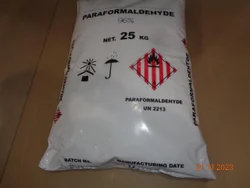 91 Paraformaldehyde Chemical, PowderView Details
30525-89-4 -
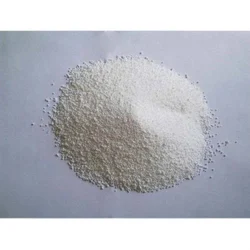 Paraformaldehyde Powder Chemical, 96%View Details
30525-89-4 -
 Paraformaldehyde 91% -96%View Details
30525-89-4