
Erythrodiol
Synonym(s):Olean-12-ene-3β,28-diol
- CAS NO.:545-48-2
- Empirical Formula: C30H50O2
- Molecular Weight: 442.72
- MDL number: MFCD00017294
- EINECS: 208-890-4
- SAFETY DATA SHEET (SDS)
- Update Date: 2026-07-27 17:00:41
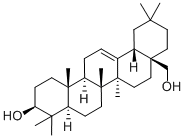
What is Erythrodiol?
Description
Erythrodiol is a triterpene that has been found in olive oil and has diverse biological activities. It induces relaxation of isolated rat aortic rings precontracted with phenylephrine (EC50 = 3.38 μM). Erythrodiol inhibits the growth of HT-29 adenocarcinoma cells (EC50 = 48.8 μM). It induces production of reactive oxygen species (ROS) and apoptosis in MCF-7 cells when used at a concentration of 100 μM. Topical administration of erythrodiol (0.5 mg/ear) reduces ear edema and myeloperoxidase (MPO) activity induced by phorbol 12-myristate 13-acetate (TPA; ) in mice.
The Uses of Erythrodiol
It is an essential reagent in the synthesis of aminopropoxytriterpenoids that have anticancer activity. 3β-Erythrodiol has pharmacological property as a vasodilatory agent. It may have interesting therapeutic potential as a new vasodilator drug, for protecting the cardiovascular system.
What are the applications of Application
Erythrodiol is A reference material for the analytical determination of olive oil
Definition
ChEBI: Erythrodiol is a pentacyclic triterpenoid that is beta-amyrin in which one of the hydrogens of the methyl group at position 28 has been replaced by a hydroxy group. It is a plant metabolite found in olive oil as well as in Rhododendron ferrugineum and other Rhododendron species. It has a role as a plant metabolite. It is a pentacyclic triterpenoid, a primary alcohol, a secondary alcohol and a diol. It is functionally related to a beta-amyrin.
Properties of Erythrodiol
| Melting point: | 230-231 °C(lit.) |
| Boiling point: | 520.5±50.0 °C(Predicted) |
| Density | 1.05±0.1 g/cm3(Predicted) |
| storage temp. | -20°C Freezer, Under inert atmosphere |
| solubility | Chloroform (Slightly, Sonicated), Methanol (Slightly) |
| form | Solid |
| pka | 15.09±0.10(Predicted) |
| color | White to Off-White |
| Water Solubility | insoluble in water |
| BRN | 2340203 |
| CAS DataBase Reference | 545-48-2(CAS DataBase Reference) |
Safety information for Erythrodiol
| Signal word | Warning |
| Pictogram(s) |
 Exclamation Mark Irritant GHS07 |
| GHS Hazard Statements |
H315:Skin corrosion/irritation H319:Serious eye damage/eye irritation |
| Precautionary Statement Codes |
P280:Wear protective gloves/protective clothing/eye protection/face protection. P302+P352:IF ON SKIN: wash with plenty of soap and water. P305+P351+P338:IF IN EYES: Rinse cautiously with water for several minutes. Remove contact lenses, if present and easy to do. Continuerinsing. P332+P313:IF SKIN irritation occurs: Get medical advice/attention. P337+P313:IF eye irritation persists: Get medical advice/attention. |
Computed Descriptors for Erythrodiol
New Products
2-(2-Chlorophenyl)glycine Propiolic Acid 1-(3-Hydroxy-4-methoxyphenyl)-2-nitroethene (±)-amino(2-fluorophenyl)acetic acid trans-3-Benzyloxy-4-methoxy-beta-nitrostyrene 1-Pentadecanol 4-(4-Αminophenyl)-3-Morpholinone 3-Morpholino-1-(4-(2-oxopiperidin-1-yl) phenyl)-5,6-dihyropyridin-2-(1H)-one 1-(4-Aminophenyl)-3-morpholino-5,6-dihydropyridin-2(1H)-one N-cyanoacetylurethane 1H-IndazoleRelated products of tetrahydrofuran


You may like
-
 Erythrodiol CAS 545-48-2View Details
545-48-2 -
471-25-0 Propiolic Acid 98+View Details
471-25-0 -
84145-28-8 98+View Details
84145-28-8 -
trans-3-Benzyloxy-4-methoxy-beta-nitrostyrene 98+View Details
63909-29-5 -
2-(2-Chlorophenyl)glycine 88744-36-9 98+View Details
88744-36-9 -
40216-83-9 trans-4-Hydroxy-L-proline methyl ester hydrochloride 98+View Details
40216-83-9 -
629-76-5 98+View Details
629-76-5 -
1-(3-Hydroxy-4-methoxyphenyl)-2-nitroethene 98+View Details
39816-35-8