
Polyethylene Glycol
Synonym(s):PEG;PEO;Poly(ethylene glycol);0;0
- CAS NO.:25322-68-3
- Empirical Formula: (C2H4O)nH2O
- Molecular Weight: 0
- MDL number: MFCD00081839
- EINECS: 500-038-2
- SAFETY DATA SHEET (SDS)
- Update Date: 2026-09-09 19:30:26

What is Polyethylene Glycol?
Absorption
PEGs can be absorbed by the gastrointestinal tract following oral administration with the fraction absorbed being dependent on the molecular weight of the compound . It is likely to display minimal absorption through the intact skin, but may penetrate through injured skin with compromised barrier function .
Toxicity
PEG of different molecular weights by a range of routes has been studied extensively, and has not led to any major toxicities, and signs/symptoms of toxicity that do occur are only observed at a much higher than therapeutic dose .
LD50 = 157000 mg/kg, intragastric, guinea pigs
LD50 = 28915 mg/kg, intragastric, mice, rats
LD50 = 9708 mg/kg, intra-abdominal, rats
LD50= 7312 mg/kg, intravenous, rats
Description
Polyethylene glycols (PEGs) are a family of linear polymers synthesized by base-catalyzed condensation of ethylene oxide, with the general formula (C?H?O)?H?O where n represents the average number of oxyethylene units. Molecular weights range from 200 to several million, with high-molecular-weight variants (100,000 to 5,000,000) often termed polyethylene oxides. PEGs are designated by the number of ethylene oxide units or approximate molecular weight (e.g., PEG-4, PEG-200), and each product has a narrow molecular weight distribution (±5%). Those with molecular weights below 600 are liquids, while those above 1000 are solids. They are nonvolatile, water-soluble, tasteless, and odorless, miscible with water, alcohols, esters, ketones, aromatic solvents, and chlorinated hydrocarbons, but immiscible with alkanes, paraffins, waxes, and ethers.
Chemical properties
Polyethylene glycol (PEG) is an addition polymer of ethylene oxide and water, as described in USP32–NF27. Grades 200–600 are liquids, appearing as clear, colorless or slightly yellow viscous fluids with a slight characteristic odor and a bitter, slightly burning taste; PEG 600 may solidify at ambient temperatures. Grades 1000 and above are solids, white to off-white in color, ranging in consistency from pastes to waxy flakes, and possessing a faint sweet odor. Grades such as PEG 6000 and higher are available as free-flowing milled powders.
Originator
MiraLax ,Braintree Laboratories
The Uses of Polyethylene Glycol
Poly(ethylene glycol) (PEG), typically composed of around 2000 monomers, is utilized across diverse fields from industrial chemistry to biological chemistry. Recent studies have demonstrated its ability to support spinal cord injury recovery by facilitating nerve impulse conduction in animals, and in rats, it has been shown to repair severed sciatic axons and aid nerve damage recovery. Industrially, PEG serves as a lubricant on various surfaces to reduce friction and is also employed in the development of vesicle transport systems for diagnostic and drug delivery applications.
Indications
Indicated as a lubricant in over-the-counter ophthalmic solutions to temporarily relieve redness, burning and irritation of the eyes.
Background
Polyethylene glycols (PEGs) are products made of condensed ethylene oxide and water that can contain various derivatives and have various functions. Because many PEG types are hydrophilic, they are favorably used as enhancers of penetration, and used heavily in topical dermatological preparations. PEGs, along with their many nonionic derivatives, are widely utilized in cosmetic products as surfactants, emulsifiers, cleansing agents, humectants, and skin conditioners. PEGylation occurs when PEGs are attached to numerous protein medications, allowing for greater solubility for selected drugs. Examples of PEGylated medications are PEG-interferon alpha (Pegintron) and PEG-filgrastim. In addition, PEG is available as a bowel preparation for colonoscopy procedures and as a laxative .
Indications
Polyethylene glycol is indicated for use as an over-the-counter osmotic laxative to relieve occasional constipation. When used in combination with sodium ascorbate, sodium sulfate, ascorbic acid, sodium chloride and potassium chloride, it is used for cleansing of the colon in preparation for colonoscopy in adults.
Definition
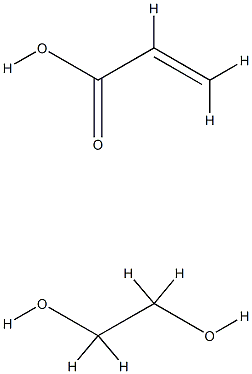
Any of several condensa-tion polymers of ethylene glycol with thegeneral formula HOCH2(CH2OCH2)nCH2OH orH(OCH2CH2)nOH. Average molecular weightsrange from 200 to 6000. Properties vary with molec-ular weight.
Production Methods
Polyethylene glycol polymers are formed by the reaction of ethylene oxide and water under pressure in the presence of a catalyst.
Indications
Polyethylene glycol (Miralax) is another osmotic laxative that is colorless and tasteless once it is mixed.
Manufacturing Process
Polyethylene glycol 3350 was obtained by polymerization of ethylene oxide in an autoclave at 80-100°C using as a catalyst dipotassium alcogolate of polyethylene glycol 400.
Dipotassium alcogolate of polyethylene glycol 400 was synthesized by a heating of the dry mixture of polyethylene glycol 400 and potassium hydroxide. The molecular weight of polymer was regulated by the ratio of monomer:catalyst.
brand name
Atpeg 4000 (ICI Americas).
Therapeutic Function
Laxative
General Description
Clear colorless viscous liquid.
Air & Water Reactions
Water soluble.
Reactivity Profile
Poly(ethylene glycol) is heat-stable and inert to many chemical agents; Poly(ethylene glycol) will not hydrolyze or deteriorate under normal conditions. Poly(ethylene glycol) has a solvent action on some plastics.
Fire Hazard
Poly(ethylene glycol) is combustible.
Flammability and Explosibility
Not classified
Biochem/physiol Actions
Poly(ethylene glycol) (PEG) helps in the purification and crystal growth of proteins and nucleic acids. PEG also interacts with cell membrane, thereby allowing cell fusion.
Pharmacokinetics
PEGs act as nonionic surfactant to decrease surface tension and condition the stratum corneum, thus enhance the diffusion of other molecules or drugs through the skin .
Safety Profile
When heated to decomposition it emits acrid smoke and irritating fumes.
Environmental Fate
Like other polymeric substances, polyethylene glycols are not readily biodegradable, with reported 5-day biochemical oxygen demand (BOD5) of 0–1%. However, owing to their hydrophilicity, they have a low potential to bioaccumulate.
Metabolism
Polyethylene glycol is a metabolically inert laxative that does not undergo intestinal enzymatic degradation or bacterial metabolism. Proportion of absorbed PEGs may be metabolized to lower oligomers, glycolic acid, hydroxyglycolic acids and the diglycolic acids homologs, carbon dioxide that is exhaled, and to a minor extent, oxalic acid .
Storage
Polyethylene glycols are chemically stable in air and in solution, although grades with a molecular weight less than 2000 are hygroscopic. Polyethylene glycols do not support microbial growth, and they do not become rancid.
Polyethylene glycols and aqueous polyethylene glycol solutions can be sterilized by autoclaving, filtration, or gamma irradiation.
Sterilization of solid grades by dry heat at 150℃ for 1 hour may induce oxidation, darkening, and the formation of acidic degradation products. Ideally, sterilization should be carried out in an inert atmosphere. Oxidation of polyethylene glycols may also be inhibited by the inclusion of a suitable antioxidant.
If heated tanks are used to maintain normally solid polyethylene glycols in a molten state, care must be taken to avoid contamination with iron, which can lead to discoloration. The temperature must be kept to the minimum necessary to ensure fluidity; oxidation may occur if polyethylene glycols are exposed for long periods to temperatures exceeding 50℃. However, storage under nitrogen reduces the possibility of oxidation.
Polyethylene glycols should be stored in well-closed containers in a cool, dry place. Stainless steel, aluminum, glass, or lined steel containers are preferred for the storage of liquid grades.
Toxicity evaluation
Many years of human experience in the workplace and in the use of consumer products containing polyethylene glycols have not shown any adverse health effects, except in situations where very high doses are administered to hypersusceptible individuals or persons with underlying diseases.
Incompatibilities
The chemical reactivity of polyethylene glycols is mainly confined to
the two terminal hydroxyl groups, which can be either esterified or
etherified. However, all grades can exhibit some oxidizing activity
owing to the presence of peroxide impurities and secondary
products formed by autoxidation.
Liquid and solid polyethylene glycol grades may be incompatible
with some coloring agents.
The antibacterial activity of certain antibiotics is reduced in
polyethylene glycol bases, particularly that of penicillin and
bacitracin. The preservative efficacy of the parabens may also be
impaired owing to binding with polyethylene glycols.
Physical effects caused by polyethylene glycol bases include
softening and liquefaction in mixtures with phenol, tannic acid, and
salicylic acid. Discoloration of sulfonamides and dithranol can also
occur, and sorbitol may be precipitated from mixtures. Plastics, such
as polyethylene, phenolformaldehyde, polyvinyl chloride, and cellulose-ester membranes (in filters) may be softened or dissolved
by polyethylene glycols. Migration of polyethylene glycol can occur
from tablet film coatings, leading to interaction with core
components.
Regulatory Status
Included in the FDA Inactive Ingredients Database (dental preparations; IM and IV injections; ophthalmic preparations; oral capsules, solutions, syrups, and tablets; rectal, topical, and vaginal preparations). Included in nonparenteral medicines licensed in the UK. Included in the Canadian List of Acceptable Non-medicinal Ingredients.
Properties of Polyethylene Glycol
| Melting point: | 64-66 °C |
| Boiling point: | >250°C |
| Density | 1.27 g/mL at 25 °C |
| vapor density | >1 (vs air) |
| vapor pressure | <0.01 mm Hg ( 20 °C) |
| refractive index | n |
| Flash point: | 270 °C |
| storage temp. | 2-8°C |
| solubility | H2O: 50 mg/mL, clear, colorless |
| form | waxy solid |
| color | White to very pale yellow |
| Specific Gravity | 1.128 |
| PH | 5.5-7.0 (25℃, 50mg/mL in H2O) |
| Water Solubility | Soluble in water. |
| Sensitive | Hygroscopic |
| λmax | λ: 260 nm Amax: 0.6 λ: 280 nm Amax: 0.3 |
| Merck | 14,7568 |
| Stability: | Stable. Incompatible with strong oxidizing agents. |
| NIST Chemistry Reference | Polyethylene glycol(25322-68-3) |
| EPA Substance Registry System | Polyethylene glycol (25322-68-3) |
Safety information for Polyethylene Glycol
| Signal word | Danger |
| Pictogram(s) |
 Skull and Crossbones Acute Toxicity GHS06  Health Hazard GHS08  Environment GHS09 |
| GHS Hazard Statements |
H302:Acute toxicity,oral H311:Acute toxicity,dermal H373:Specific target organ toxicity, repeated exposure H411:Hazardous to the aquatic environment, long-term hazard |
| Precautionary Statement Codes |
P273:Avoid release to the environment. P280:Wear protective gloves/protective clothing/eye protection/face protection. P391:Collect spillage. Hazardous to the aquatic environment P501:Dispose of contents/container to..… |
Computed Descriptors for Polyethylene Glycol
Polyethylene Glycol manufacturer
New Products
5-bromo-4-fluoro-2-nitrobenzaldehyde Cyclobutanone (R)-(-)-2-Amino-1-propanol Fmoc-OSu 1-(2-Chloroethyl)pyrrolidine Hydrochloride 2-Amino-2-(4-methylphenyl)acetic acid 2,4-Dihydroxybenzaldehyde Obidoxime hydrochloride API Pyrrolo[1,2-a]pyrimidine-6-carboxylic acid, 4,6,7,8-tetrahydro-4-oxo-, sodium salt (1:1), (6S) Dipropyl disulfide 4 pentyn 1 ol N-Vinylformamide Methacrylate-PEG-Methacrylate, Mn:35000 2,4-Dihydroxyacetophenone 2-Chloro 5-Fluoro Pyridine Vasicinone 2-Chloroisonicotinic Acid Tween 80 or Polysorbate 80 2-Butyn-1-oL 2-Pentyn-1-oL 4-Nitrobenzotrifluoride N-(4-Cyano-3-(trifluoromethyl)phenyl)-2-methyloxirane-2-carboxamide N-(4-fluoro-2-methoxy-5-nitrophenyl)-4-(1-methyl-1H-indol-3-yl)pyrimidin-2-amine Pirtobrutinib intd.Related products of tetrahydrofuran


You may like
-
 Polyethylene Glycol (PEG) 99%View Details
 -
 Poly Ethylene Glycol (PEG) 99%View Details
 -
 Polyethylene glycol 6000 99%View Details
 -
Polyethylene Glycol CASView Details
-
PEG 400 CASView Details
-
Polyethylene Glycol CASView Details
-
PEG 400 CASView Details
-
 POLYETHYLENE GLYCOL 3400 CAS Number: 24991-53-5View Details
24991-53-5