
DOTHIEPIN HCL
Synonym(s):3-Dibenzo[b,e]thepin-11(6H)-ylidine-N,N-dimethyl-1-propanamine hydrochloride;Dothiepin hydrochloride
- CAS NO.:897-15-4
- Empirical Formula: C19H22ClNS
- Molecular Weight: 331.9
- MDL number: MFCD00941484
- EINECS: 212-978-8
- SAFETY DATA SHEET (SDS)
- Update Date: 2026-05-27 22:50:42
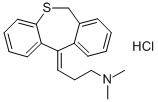
What is DOTHIEPIN HCL?
Chemical properties
White or faintly yellow, crystalline powder.
The Uses of DOTHIEPIN HCL
Monoamine reuptake inhibitor; tricyclic antidepressant
The Uses of DOTHIEPIN HCL
Dothiepin Hydrochloride is a tricyclic antidepressant.
Clinical Use
Tricyclic antidepressant
Drug interactions
Potentially hazardous interactions with other drugs
Alcohol: increased sedative effect.
Analgesics: increased risk of CNS toxicity with
tramadol; possibly increased risk of side effects with
nefopam; possibly increased sedative effects with
opioids.
Anti-arrhythmics: increased risk of ventricular
arrhythmias with amiodarone - avoid; increased
risk of ventricular arrhythmias with disopyramide,
dronedarone, flecainide or propafenone - avoid with
dronedarone.
Antibacterials: increased risk of ventricular
arrhythmias with moxifloxacin and possibly
delamanid and telithromycin - avoid with
moxifloxacin.
Anticoagulants: may alter anticoagulant effect of
coumarins.
Antidepressants: enhanced CNS excitation and
hypertension with MAOIs and moclobemide -
avoid; concentration possibly increased with SSRIs;
risk of ventricular arrhythmias with citalopram
and escitalopram - avoid; possible increased risk of
convulsions with vortioxetine.
Antiepileptics: convulsive threshold lowered;
concentration reduced by carbamazepine,
phenobarbital and possibly fosphenytoin, phenytoin
and primidone.
Antimalarials: avoid with artemether/lumefantrine
and piperaquine with artenimol.
Antipsychotics: increased risk of ventricular
arrhythmias especially with droperidol, fluphenazine,
haloperidol, pimozide, risperidone, sulpiride and
zuclopenthixol - avoid; increased antimuscarinic
effects with clozapine and phenothiazines;
concentration increased by antipsychotics
Antivirals: increased risk of ventricular arrhythmias
with saquinavir - avoid; concentration possibly
increased with ritonavir.
Atomoxetine: increased risk of ventricular
arrhythmias and possibly convulsions.
Beta-blockers: increased risk of ventricular
arrhythmias with sotalol.
Clonidine: tricyclics antagonise hypotensive
effect; increased risk of hypertension on clonidine
withdrawal.
Dapoxetine: possible increased risk of serotonergic
effects - avoid
Dopaminergics: avoid use with entacapone; CNS
toxicity reported with selegiline and rasagiline.
Metabolism
Dosulepin hydrochloride is readily absorbed from the gastrointestinal tract, and extensively demethylated by first-pass metabolism in the liver to its primary active metabolite, desmethyldothiepin (also termed northiaden). Paths of metabolism also include S-oxidation. Dosulepin is excreted in the urine, mainly in the form of its metabolites; small amounts are also excreted in the faeces. Elimination half-lives of about 14-24 and 23-46 hours have been reported for dosulepin and its metabolites, respectively. Dose in renal impairment GFR (mL/min) 20-50 Dose as in normal renal function. 10-20 Start with small dose and titrate according to response. <10 Start with small dose and titrate according to response. Dose in patients undergoing renal replacement therapies APD/CAPD Not dialysed. Dose as in GFR<10 mL/ min. HD Not dialysed. Dose as in GFR<10 mL/ min. HDF/High flux Unknown dialysability. Dose as in GFR<10 mL/min. CAV/VVHD Unknown dialysability. Dose as in GFR=10-20 mL/min. Important drug interactions Potentially hazardous interactions with other drugs Alcohol: increased sedative effect. Analgesics: increased risk of CNS toxicity with tramadol; possibly increased risk of side effects with nefopam; possibly increased sedative effects with opioids. Anti-arrhythmics: increased risk of ventricular arrhythmias with amiodarone - avoid; increased risk of ventricular arrhythmias with disopyramide, dronedarone, flecainide or propafenone - avoid with dronedarone. Antibacterials: increased risk of ventricular arrhythmias with moxifloxacin and possibly delamanid and telithromycin - avoid with moxifloxacin. Anticoagulants: may alter anticoagulant effect of coumarins. Antidepressants: enhanced CNS excitation and hypertension with MAOIs and moclobemide - avoid; concentration possibly increased with SSRIs; risk of ventricular arrhythmias with citalopram and escitalopram - avoid; possible increased risk of convulsions with vortioxetine. Antiepileptics: convulsive threshold lowered; concentration reduced by carbamazepine, phenobarbital and possibly fosphenytoin, phenytoin and primidone. Antimalarials: avoid with artemether/lumefantrine and piperaquine with
Properties of DOTHIEPIN HCL
| Melting point: | 218-221℃ |
| storage temp. | -20°C |
| solubility | Freely soluble in water, in alcohol and in methylene chloride. |
| form | neat |
| CAS DataBase Reference | 897-15-4 |
Safety information for DOTHIEPIN HCL
| Signal word | Warning |
| Pictogram(s) |
 Exclamation Mark Irritant GHS07 |
| GHS Hazard Statements |
H302:Acute toxicity,oral |
Computed Descriptors for DOTHIEPIN HCL
New Products
2-Amino-5-bromo-4-(trifluoromethyl)pyridine Sulfapyridine Fmoc-OSu (R)-(-)-2-Amino-1-propanol Cyclobutanone 5-bromo-4-fluoro-2-nitrobenzaldehyde β-Bromostyrene Ethyl 3-phenylpropanoate Phenethyl cinnamate Dipropyl disulfide N-Vinylformamide 4 pentyn 1 ol Methacrylate-PEG-Methacrylate, Mn:35000 2,4-Dihydroxyacetophenone 2-Chloro 5-Fluoro Pyridine Vasicinone 2-Chloroisonicotinic Acid Tween 80 or Polysorbate 80 2-Butyn-1-oL 2-Pentyn-1-oL 4-Nitrobenzotrifluoride N-(4-fluoro-2-methoxy-5-nitrophenyl)-4-(1-methyl-1H-indol-3-yl)pyrimidin-2-amine Pirtobrutinib intd. N-(4-Cyano-3-(trifluoromethyl)phenyl)-2-methyloxirane-2-carboxamideRelated products of tetrahydrofuran
![3-dibenzo[b,e]thiepin-11(6H)-ylidene-8-methyl-8-azabicyclo[3.2.1]octane hydrochloride](https://img.chemicalbook.in/CAS/GIF/27574-25-0.gif)
You may like
-
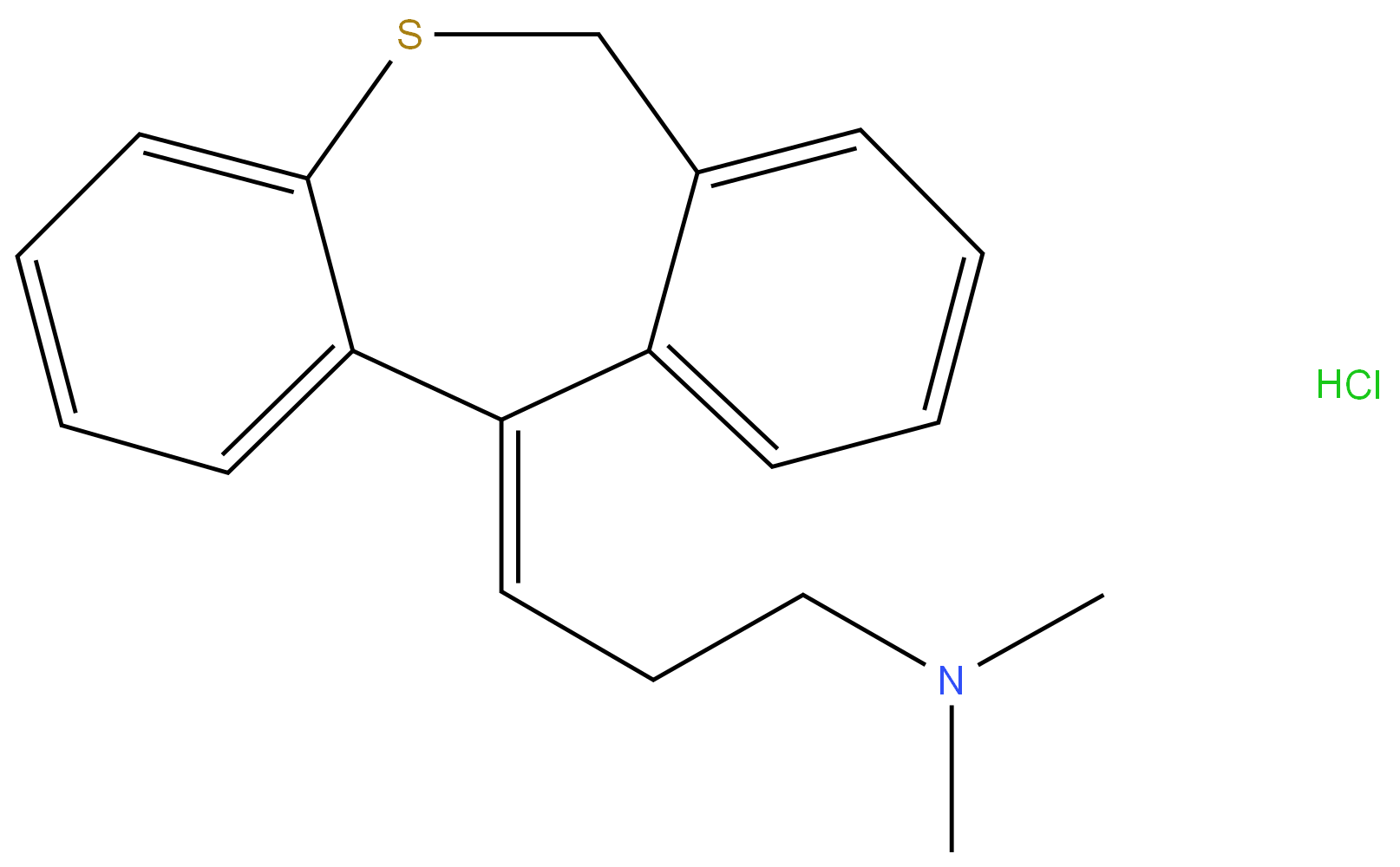 897-15-4 Dothiepin hydrochloride 98%View Details
897-15-4 -
 Dothiepin Hcl 99%View Details
 -
Dothiepin hydrochloride CAS 897-15-4View Details
897-15-4 -
Dosulepin hydrochloride CAS 897-15-4View Details
897-15-4 -
1191-95-3 Cyclobutanone 98+View Details
1191-95-3 -
213382-45-7 98+View Details
213382-45-7 -
Fmoc-OSu 98+View Details
82911-69-1 -
(R)-(-)-2-Amino-1-propanol 35320-23-1 98+View Details
35320-23-1