
DL-Adrenaline hydrochloride
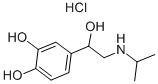
Synonym(s):(±)-Adrenalin;4-(1-Hydroxy-2-[methylamino]ethyl)-1,2-benzenediol hydrochloride
- CAS NO.:329-63-5
- Empirical Formula: C9H14ClNO3
- Molecular Weight: 219.67
- MDL number: MFCD00050562
- EINECS: 206-346-0
- SAFETY DATA SHEET (SDS)
- Update Date: 2026-09-12 18:55:52
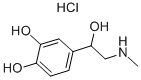
What is DL-Adrenaline hydrochloride?
Chemical properties
solid
The Uses of DL-Adrenaline hydrochloride
bronchodilatator,
The Uses of DL-Adrenaline hydrochloride
An adrenergic receptor agonist.
The Uses of DL-Adrenaline hydrochloride
(±)-Epinephrine hydrochloride has been used:
- in the induction of renalase expression in Human renal proximal tubular epithelial cells
- in the infusion studies to test its effect on heart rate and eye temperature measurements in bull
- as a medium supplement for the stimulation of endothelial progenitor cells
What are the applications of Application
(±)-Epinephrine hydrochloride is an adrenergic receptor agonist
General Description
Epinephrine (adrenalin) is synthesized from norepinephrine (noradrenalin) by the action of the enzyme phenylethanolamine N-methyltransferase. Epinephrine comprises 5%-10% of the total catecholamines in the central nervous system. It is a mixed α/β-adrenergic receptor agonist and stimulates these receptors. Their site of synthesis is adrenal medulla and it travels through the vascular systems. Its breakdown occurs in the central nervous system (CNS), liver and kidney.
Biochem/physiol Actions
Epinephrine improves systemic pressure during cardiopulmonary resuscitation and is used post cardiac arrest. The levels of epinephrine increases during trauma, sepsis and hypoglycemia resulting in increased cardiac rate and contractility. It is used in the treatment of acute anaphylaxis. Use of epinephrine hydrochloride enables dilation of pupil during intraocular lens (IOL) implantation surgery.
Properties of DL-Adrenaline hydrochloride
| Melting point: | 157° |
| storage temp. | 2-8°C |
| solubility | H2O: >50 mg/mL |
| form | A crystalline solid |
| Merck | 14,3619 |
| Stability: | Stable, but light sensitive. Incompatible with acids, acid chlorides, acid anhydrides, oxidizing agents. |
| CAS DataBase Reference | 329-63-5(CAS DataBase Reference) |
| EPA Substance Registry System | (+-)-Epinephrine hydrochloride (329-63-5) |
Safety information for DL-Adrenaline hydrochloride
| Signal word | Danger |
| Pictogram(s) |
 Skull and Crossbones Acute Toxicity GHS06 |
| GHS Hazard Statements |
H315:Skin corrosion/irritation H319:Serious eye damage/eye irritation H335:Specific target organ toxicity, single exposure;Respiratory tract irritation |
| Precautionary Statement Codes |
P280:Wear protective gloves/protective clothing/eye protection/face protection. P305+P351+P338:IF IN EYES: Rinse cautiously with water for several minutes. Remove contact lenses, if present and easy to do. Continuerinsing. |
Computed Descriptors for DL-Adrenaline hydrochloride
New Products
2-(2-Chlorophenyl)glycine Propiolic Acid 1-(3-Hydroxy-4-methoxyphenyl)-2-nitroethene (±)-amino(2-fluorophenyl)acetic acid trans-3-Benzyloxy-4-methoxy-beta-nitrostyrene 1-Pentadecanol 2,4-Dihydroxybenzaldehyde Dipropyl disulfide Pyrrolo[1,2-a]pyrimidine-6-carboxylic acid, 4,6,7,8-tetrahydro-4-oxo-, sodium salt (1:1), (6S) Obidoxime hydrochloride API 4 pentyn 1 ol N-Vinylformamide Methacrylate-PEG-Methacrylate, Mn:35000 2,4-Dihydroxyacetophenone 2-Chloro 5-Fluoro Pyridine Vasicinone 2-Chloroisonicotinic Acid Tween 80 or Polysorbate 80 2-Butyn-1-oL N-(4-Cyano-3-(trifluoromethyl)phenyl)-2-methyloxirane-2-carboxamide N-(4-fluoro-2-methoxy-5-nitrophenyl)-4-(1-methyl-1H-indol-3-yl)pyrimidin-2-amine Pirtobrutinib intd. 2-Pentyn-1-oL 4-NitrobenzotrifluorideRelated products of tetrahydrofuran


![BICUCULLINE METHYLCHLORIDE (-), [METHYL-14C]](https://img.chemicalbook.in/StructureFile/ChemBookStructure4/GIF/CB7290998.gif)
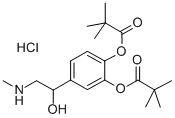
You may like
-
 329-63-5 Adrenaline Hydrochloride RS 98%View Details
329-63-5 -
 (±)-Epinephrine hydrochloride CAS 329-63-5View Details
329-63-5 -
471-25-0 Propiolic Acid 98+View Details
471-25-0 -
84145-28-8 98+View Details
84145-28-8 -
trans-3-Benzyloxy-4-methoxy-beta-nitrostyrene 98+View Details
63909-29-5 -
2-(2-Chlorophenyl)glycine 88744-36-9 98+View Details
88744-36-9 -
40216-83-9 trans-4-Hydroxy-L-proline methyl ester hydrochloride 98+View Details
40216-83-9 -
1-(3-Hydroxy-4-methoxyphenyl)-2-nitroethene 98+View Details
39816-35-8