
Basic Orange 2
Synonym(s):4-Phenylazo-m-phenylenediamine monohydrochloride;Basic Orange 2;Chrysoidine Y
- CAS NO.:532-82-1
- Empirical Formula: C12H12N4.ClH
- Molecular Weight: 248.71
- MDL number: MFCD00012976
- EINECS: 208-545-8
- SAFETY DATA SHEET (SDS)
- Update Date: 2026-05-28 01:27:04
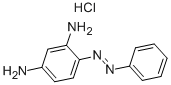
What is Basic Orange 2?
Chemical properties
BORDEAUX TO DEEP PURPLE CRYSTALLINE POWDER
The Uses of Basic Orange 2
Orange dye for cotton and silk.
What are the applications of Application
Chrysoidine G is a useful dye for biological research purposes
Definition
A dye made from aniline.
General Description
Red-brown powder, large black shiny crystals with a green luster or purple powder.
Air & Water Reactions
Azo dyes can be explosive when suspended in air at specific concentrations.Slightly soluble in water.
Reactivity Profile
Basic Orange 2 is an azo compound. Toxic gases are formed by mixing compounds containing azo groups with acids, aldehydes, amides, carbamates, cyanides, inorganic fluorides, halogenated organics, isocyanates, ketones, metals, nitrides, peroxides, phenols, epoxides, acyl halides, and strong oxidizing or reducing agents. Flammable gases are formed by mixing materials in this group with alkali metals. Explosive combination can occur with strong oxidizing agents, metal salts, peroxides, and sulfides. Basic Orange 2 is incompatible with strong oxidizing agents.
Hazard
Questionable carcinogen.
Fire Hazard
Flash point data for Basic Orange 2 are not available. Basic Orange 2 is probably combustible.
Safety Profile
Moderately toxic by ingestion and subcutaneous routes. Questionable carcinogen with experimental tumorigenic data. Mutation data reported. When heated to decomposition it emits very toxic fumes of NO, and HCl. Used as a colorant in textiles, paper, leather, inks, wood, and biological stains
Properties and Applications
|
TEST ITEMS |
SPECIFICATION |
|
APPEARANCE |
ORANGE |
|
LIGHTING |
1-2 |
|
SOAPING |
3-4 |
|
PERSPIRATING |
3-4 |
|
FRICTION(DRY) |
4 |
|
FRICTION(WET) |
3 |
|
RESIDUE ON 80 MESH |
5.0% max |
|
WATER SOLUBILE |
1.0% max |
|
VOLATITE 105°C |
1.0% max |
|
TINTING STRENGTH |
100-105 % |
|
WEIGHT METAL TOTAL |
50ppm max |
Purification Methods
It is a red-brown powder which is recrystallised from H2O. It gives a yellow solution in conc H2SO4 which turns orange on dilution. Its solubility at 15o is 5.5% (H2O), 4.75% (EtOH), 6.0% (cellosolve), 9.5% (ethylene glycol), 0.005% (xylene) and is insoluble in *C6H6. The hydroiodide has m 184o (from EtOH) and the picrate forms red needles m 196o. [Muramatsu Bull Chem Soc Jpn 31 864 1958, Beilstein 6 IV 561.]
Properties of Basic Orange 2
| Melting point: | 235 °C (dec.)(lit.) |
| Boiling point: | 2262°C |
| Density | 1.2171 (rough estimate) |
| refractive index | 1.6110 (estimate) |
| storage temp. | room temp |
| solubility | Solubility Soluble in water, ethanol, acetone, methyl cellosolve, xylene; practically insoluble in Ibenzene |
| form | Crystalline Powder |
| Colour Index | 11270 |
| color | Bordeaux to deep purple |
| Odor | Odorless |
| PH Range | Orange (4.0) to yellow (7.0) |
| λmax | 449nm |
| Merck | 13,2279 |
| BRN | 3724653 |
| Major Application | Recording materials, waveguides, thin solid films, photographic materials, printing plates, inks, toners, detergents, corrosion inhibitors, rubber, textiles, hair dyes |
| CAS DataBase Reference | 532-82-1(CAS DataBase Reference) |
| IARC | 3 (Vol. 8, Sup 7) 1987 |
| EPA Substance Registry System | C.I. Basic Orange 2, monohydrochloride (532-82-1) |
Safety information for Basic Orange 2
| Signal word | Danger |
| Pictogram(s) |
 Corrosion Corrosives GHS05  Exclamation Mark Irritant GHS07  Health Hazard GHS08  Environment GHS09 |
| GHS Hazard Statements |
H302:Acute toxicity,oral H315:Skin corrosion/irritation H318:Serious eye damage/eye irritation H341:Germ cell mutagenicity H410:Hazardous to the aquatic environment, long-term hazard |
| Precautionary Statement Codes |
P201:Obtain special instructions before use. P273:Avoid release to the environment. P280:Wear protective gloves/protective clothing/eye protection/face protection. P308+P313:IF exposed or concerned: Get medical advice/attention. |
Computed Descriptors for Basic Orange 2
| InChIKey | MCTQNEBFZMBRSQ-GEEYTBSJSA-N |
Basic Orange 2 manufacturer
New Products
2-(2-Chlorophenyl)glycine Propiolic Acid 1-(3-Hydroxy-4-methoxyphenyl)-2-nitroethene (±)-amino(2-fluorophenyl)acetic acid trans-3-Benzyloxy-4-methoxy-beta-nitrostyrene 1-Pentadecanol 4-(4-Αminophenyl)-3-Morpholinone 3-Morpholino-1-(4-(2-oxopiperidin-1-yl) phenyl)-5,6-dihyropyridin-2-(1H)-one 1-(4-Aminophenyl)-3-morpholino-5,6-dihydropyridin-2(1H)-one N-cyanoacetylurethane 1H-IndazoleRelated products of tetrahydrofuran


You may like
-
 Basic Red 22 99%View Details
532-82-1 -
 Basic Red 22 532-82-1 98%View Details
532-82-1 -
Neisser's stain C CAS 532-82-1View Details
532-82-1 -
Chrysodine Y CAS 532-82-1View Details
532-82-1 -
Basic Orange 2 CAS 532-82-1View Details
532-82-1 -
CHRYSOIDINE Y For Microscopy CAS 532-82-1View Details
532-82-1 -
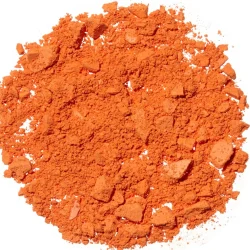 Chemolin Chemicals Basic Orange 2View Details
532-82-1 -
 Chemolin Chemicals Basic Orange 2 (Crysodine R&Y)View Details
532-82-1