
Vitamin E
- CAS NO.:2074-53-5
- Empirical Formula: C29H50O2
- Molecular Weight: 430.71
- MDL number: MFCD00072051
- EINECS: 218-197-9
- SAFETY DATA SHEET (SDS)
- Update Date: 2026-06-24 18:39:39
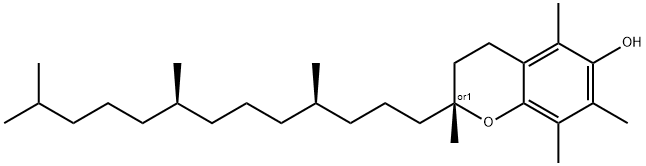
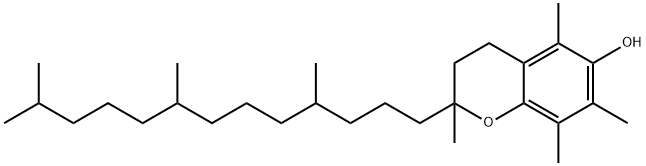
What is Vitamin E?
Physical properties
Vitamin E has demonstrated some success in the treatment of yellow nail syndrome when taken orally (600 EU to 1200 EU daily) for several months. Topically-applied vitamin E has also shown significant improvement in symptoms of yellow nail syndrome, as well as increased nail growth rates after six months.
The Uses of Vitamin E
Vitamin E supplement.
The Uses of Vitamin E
vitamin E (D-alpha-tocopherol; DL-alpha-tocopherol; tocopherol) is considered the most important oil-soluble anti-oxidant and freeradical scavenger. Studies indicate that vitamin e performs these functions when topically applied. It is also a photoprotectant, and it helps protect the cellular membrane from free-radical damage. In addition, vitamin e serves a preservative function given its ability to protect against oxidation. This benefits not only the skin, but also the product in terms of longevity. As a moisturizer, vitamin e is well-absorbed through the skin, demonstrating a strong affinity with small blood vessels and an ability to enhance blood circulation in the skin. It is also thought to improve the skin’s water-binding ability. In addition, vitamin e emulsions have been found to reduce transepidermal water loss, thereby improving the appearance of rough, dry, and damaged skin. This vitamin is also believed to help maintain the connective tissue. There is evidence that vitamin e is effective in preventing irritation owing to sun exposure: studies show that vitamin e topically applied prior to uV irradiation is protective against epidermal cell damage caused by inflammation. This indicates possible anti-inflammatory properties. Lipid peroxidation in tissues may be one cause of skin aging. Vitamin e, however, appears to counteract decreased functioning of the sebaceous glands and to reduce excessive skin pigmentation, which is found to increase almost linearly with age. It is available also as a tocopherol-polypeptide complex that delivers the vitamin in a waterdispersable form. In this way, when incorporated into cosmetic formulations, it does not need other compounds to assist in its solubilization. It is useful in anti-aging creams and lotions, and in uV protective products, tocopherol is a naturally occurring vitamin e found in a variety of cereal germ oils including wheat germ oil. It can also be produced synthetically.
Indications
Vitamin E is a potent antioxidant that is capable of protecting polyunsaturated fatty acids from oxidative breakdown.This vitamin also functions to enhance vitamin A use.Although several other physiological actions have been suggested, to date no unifying concept exists to explain these actions. Vitamin E (α-tocopherol) is found in a variety of foodstuffs, the richest sources being plant oils, including wheat germ and rice, and the lipids of green leaves.
Definition
ChEBI: (R,R,R)-alpha-tocopherol is an alpha-tocopherol that has R,R,R configuration. The naturally occurring stereoisomer of alpha-tocopherol, it is found particularly in sunflower and olive oils. It has a role as an antioxidant, a nutraceutical, an antiatherogenic agent, an EC 2.7.11.13 (protein kinase C) inhibitor, an anticoagulant, an immunomodulator, an antiviral agent, a micronutrient, an algal metabolite and a plant metabolite. It is an enantiomer of a (S,S,S)-alpha-tocopherol.
brand name
Aquasol E (Astra); Eprolin (Lilly); Natopherol (Abbott).
Benefits
Vitamin E is a fat-soluble nutrient found in many foods. It is the most abundant antioxidant in the skin and the most important lipid-soluble, membrane-bound antioxidant in the body. The body also needs vitamin E to boost its immune system so that it can fight off invading bacteria and viruses. It helps to widen blood vessels and keep blood from clotting within them. In addition, cells use vitamin E to interact with each other and to carry out many important functions.
Clinical Use
Deficiency of vitamin E is characterized by low serum tocopherol levels and a positive hydrogen peroxide hemolysis test.This deficiency is believed to occur in patients with biliary, pancreatic, or intestinal disease that is characterized by excessive steatorrhea. Premature infants with a high intake of fatty acids exhibit a deficiency syndrome characterized by edema, anemia, and low tocopherol levels.This condition is reversed by giving vitamin E.
Side Effects
Prolonged administration of large dosages of vitamin E may result in muscle weakness, fatigue, headache, and nausea.This toxicity can be reversed by discontinuing the large-dose supplementation.
Toxicology
α-Tocopherol is known as vitamin E and exists in many kind of plants, especially in lettuce and alfalfa. Its color changes from yellow to dark brown when exposed to sunlight. Natural vegetable oils are not readily oxidized due to the presence of tocopherol. During refining processes, however, tocopherol may be removed from oils; consequently, refined vegetable oils can become unstable toward oxidation. In one experiment, vitamin E appeared to be relatively innocuous, having been given to patients for months both orally and parenterally at a dosage level of 300 mg/day without any observed ill effects. However, in another experiment, 6 out of 13 patients given similar doses complained of headache, nausea, fatigue, dizziness, and blurred vision. Although the chronic toxicity of vitamin E has not been thoroughly studied, WHO recommends 2 mg/kg/day as the maximum daily dose.
Properties of Vitamin E
| Boiling point: | 485.9±0.0 °C(Predicted) |
| Density | 0.93 |
| storage temp. | Store at -20°C,protect from light |
| solubility | Ethanol: 50 mg/mL (116.09 mM); DMSO: 16.11 mg/mL (37.40 mM) |
| form | Oil |
| pka | 11.40±0.40(Predicted) |
| color | Light yellow to yellow |
| CAS DataBase Reference | 2074-53-5 |
Safety information for Vitamin E
Computed Descriptors for Vitamin E
Vitamin E manufacturer
Rass Biosolution Pvt. Ltd.
New Products
9-Mesityl-10-methylacridinium perchlorate Sulfapyridine Fmoc-OSu (R)-(-)-2-Amino-1-propanol Cyclobutanone 5-bromo-4-fluoro-2-nitrobenzaldehyde 4 pentyn 1 ol N-Vinylformamide Phenethyl cinnamate Pyrrolo[1,2-a]pyrimidine-6-carboxylic acid, 4,6,7,8-tetrahydro-4-oxo-, sodium salt (1:1), (6S) Ethyl 3-phenylpropanoate β-Bromostyrene Methacrylate-PEG-Methacrylate, Mn:35000 2,4-Dihydroxyacetophenone 2-Chloro 5-Fluoro Pyridine Vasicinone 2-Chloroisonicotinic Acid Tween 80 or Polysorbate 80 5-Bromo-1-Pentyne 1-(2-Methyl-5-nitrophenyl)guanidine Nitrate Methyl trans-4-Aminocyclohexanecarboxylate Hydrochloride 2-Pentyn-1-oL 4-Nitrobenzotrifluoride N-(4-Cyano-3-(trifluoromethyl)phenyl)-2-methyloxirane-2-carboxamideRelated products of tetrahydrofuran

You may like
-
 Vitamin E 98%View Details
 -
 BASF Vitamin E 50% Dry Powder Active Pharma Ingredient, Prescription, Treatment: Consult DoctorView Details
2074-53-5 -
 Vitamin E API PowderView Details
2074-53-5 -
Poultry Vitamin E APIView Details
2074-53-5 -
 Vitamin E Soft CapsuleView Details
2074-53-5 -
 Vitamin E 50 Feed GradeView Details
2074-53-5 -
 Vitamin E 50% Feed Grade Dry Powder, 25Kg Drum, IPView Details
59-02-9 -
 BASF/ SIMFA Vitamin E 50% (Feed Grade), 25 Kg, Packaging Type: BagView Details
2074-53-5