
Trichloroethylene
Synonym(s):TCE;Trichloroethene;Trichloroethylene solution
- CAS NO.:79-01-6
- Empirical Formula: C2HCl3
- Molecular Weight: 131.39
- MDL number: MFCD00000838
- EINECS: 201-167-4
- SAFETY DATA SHEET (SDS)
- Update Date: 2026-08-25 20:17:46
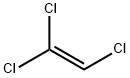
What is Trichloroethylene?
Description
Trichloroethylene (IUPAC), CHClCCl2, is a stable, low-boiling, colorless liquid with a chloroform-like odor. It is not corrosive to the common metals even in the presence of moisture. It is slightly soluble in water and is nonflammable. It is toxic by inhalation, with a TLV of 50 ppm and an IDLH of 1000 ppm in air. The FDA has prohibited its use in foods, drugs, and cosmetics. The four-digit UN identification number is 1710. The NFPA 704 designation is health 2, flammability 1, and reactivity 0. Its primary uses are in metal degreasing, dry cleaning, as a refrigerant and fumigant, and for drying electronic parts.
Chemical properties
Trichloroethylene (TCE) is a clear, colorless, nonflammable (at room temperature) stable toxic liquid with chloroform-like odor (ATSDR, 2011). The Odor Threshold is 25-50 ppm. It is slightly soluble in water, is soluble in greases and common organic solvents, and boils at 87°C (190 F).
On contact with air, it slowly decomposes and forms phosgene, hydrogen chloride, and dichloroacetyl chloride. Trichloroethylene in contact with water becomes corrosive and forms dichloroacetic acid and hydrochloric acid. It is soluble in methanol, diethyl ether, and acetone.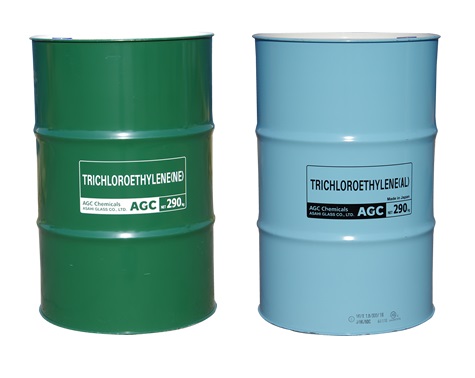
Physical properties
Clear, colorless, watery-liquid with a chloroform-like odor. Odor threshold concentrations determined in air were 21.4 ppmv (Leonardos et al., 1969) and 3.9 ppmv (Nagata and Takeuchi, 1990). The average least detectable odor threshold concentrations in water at 60 °C and in air at 40 °C were 10 and 2.6 mg/L, respectively (Alexander et al., 1982).
The Uses of Trichloroethylene
Trichloroethylene is a chlorinated hydrocarbon used as a detergent or solvent for metals, oils, resins, sulfur and as gemal degreasing agent.
Background
Trichloroethylene is a halocarbon commonly used as an industrial solvent, not to be confused with the similar 1,1,1-trichloroethane, also known as chlorothene. It has been sold under a variety of trade names including Trimar and Trilene and used as a volatile anesthetic and as an inhaled obstetrical analgesic. Environmental exposure, particularly groundwater and drinking water contamination from industrial discharge, is a major concern for human health and has been the subject of numerous incidents and lawsuits.
Definition
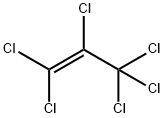
ChEBI: A member of the class of chloroethenes that is ethene substituted by chloro groups at positions 1, 1 and 2.
Production Methods
Trichloroethylene(TCE) has been in commercial use for almost 60 years. TCE has been used as a solvent because of its powerful ability to dissolve fats, greases, and waxes. It has been widely used in the dry cleaning industry and as a metal degreaser and in the electronic components industry where workers have been observed using it as a cleaning solvent without any protective equipment, thus allowing uncontrolled skin contact and inhalation exposures.
Indications
For inhalation analgesia in obstetrics and for minor surgical procedures, but only with a special inhaler. Trichloroethylene (MAC0.17) should not be used in a closedcircuit apparatus. Trichloroethylene is better tolerated than chloroform.
General Description
A clear colorless volatile liquid having a chloroform-like odor. Denser than water and is slightly soluble in water. Noncombustible. Used as a solvent, fumigant, in the manufacture of other chemicals, and for many other uses.
Air & Water Reactions
Slightly soluble in water.
Reactivity Profile
Trichloroethylene has been determined experimentally that mixtures of finely divided barium metal and a number of halogenated hydrocarbons possess an explosive capability. Specifically, impact sensitivity tests have shown that granular barium in contact with monofluorotrichloromethane, trichlorotrifluoroethane, carbon tetrachloride, Trichloroethylene, or tetrachloroethylene can detonate (ASESB Pot. Incid. 39. 1968; Chem. Eng. News 46(9):38. 1968). Trichloroethylene has been determined experimentally that a mixture of beryllium powder with carbon tetrachloride or with Trichloroethylene will flash or spark on heavy impact (ASESB Pot. Incid. 39. 1968). A mixture of powdered magnesium with Trichloroethylene or with carbon tetrachloride will flash or spark under heavy impact (ASESB Pot. Incid, 39. 1968).
Health Hazard
The toxic effects manifested in humansfrom inhaling trichloroethylene vapors areheadache, dizziness, drowsiness, fatigue, andvisual disturbances. A 2-hour exposure to a1000-ppm concentration affected the visualperception. Higher concentrations can pro duce narcotic effects. Heavy exposures maycause death due to respiratory failure or car diac arrest. A 4-hour exposure to 8000 ppmwas lethal to rats. Chronic exposure causedincrease in kidney and liver weights in testanimals.The symptoms of poisoning from oralintake of trichloroethylene are nausea, vom iting, diarrhea, and gastric disturbances. Theacute oral toxicity, however, is low.
Fire Hazard
Special Hazards of Combustion Products: Toxic and irritating gases are produced in fire situations.
Flammability and Explosibility
Non flammable
Chemical Reactivity
Reactivity with Water No reaction; Reactivity with Common Materials: No reaction; Stability During Transport: Stable; Neutralizing Agents for Acids and Caustics: Not pertinent; Polymerization: Not pertinent; Inhibitor of Polymerization: Not pertinent.
Industrial uses
Trichloroethylene is used widely by industry as a metal degreaser. It is especially valuable because of its cleaning properties, low flammability, and lack of a measurable flash point. Trichloroethylene also is used as a chemical process intermediate in fluorochemical and polyvinyl chloride (PVC) production.
High-purity grades of trichloroethylene are used as a feedstock in the synthesis of the refrigerant hydrofluorocarbon 134a. In this process, the trichloroethylene molecule is destroyed to form the new fluorinated compound.
Trichloroethylene is also used as a solvent in some nonflammable adhesive and aerosol formulations, and as a low temperature heat-transfer medium.
Contact allergens
Trichloroethylene is a chlorinated hydrocarbon used as a detergent or solvent for metals, oils, resins, sulfur, and as general degreasing agent. It can cause irritant contact dermatitis, generalized exanthema, Stevens-Johnson- like syndrome, pustular or bullous eruption, scleroderma, as well as neurological and hepatic disorders.
Safety Profile
Confirmed carcinogen with experimental carcinogenic, tumorigenic, and teratogenic data. Experimental poison by intravenous and subcutaneous routes. Moderately toxic experimentally by ingestion and intraperitoneal routes. Mildly toxic to humans by ingestion and inhalation. Mildly toxic experimentally by inhalation. Human systemic effects by ingestion and inhalation: eye effects, somnolence, hallucinations or distorted perceptions, gastrointestinal changes, and jaundice. Experimental reproductive effects. Human mutation data reported. An eye and severe skin irritant. Inhalation of high concentrations causes narcosis and anesthesia. There is damage to liver and other organs from chronic exposure. A common air contaminant. Nonflammable, but high concentrations of trichloroethylene vapor in hightemperature air can be made to burn mildly if plied with a strong flame.
Potential Exposure
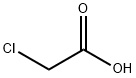
Trichloroethylene is used as a vapor degreaser of metal parts, as a solvent; and as a drug; It is also used for extracting caffeine from coffee, as a dry-cleaning agent; and as a chemical intermediate in the production of pesticides; in making waxes, gums, resins, tars, paints, varnishes, and specific chemicals; such as chloroacetic acid.
Carcinogenicity
Trichloroethylene is reasonably anticipated to be a human carcinogen based on limited evidence of carcinogenicity from studies in humans, sufficient evidence of carcinogenicity from studies in experimental animals, and information from studies on mechanisms of carcinogenesis.
Source
A known degradation product of tetrachloroethylene.
Environmental Fate
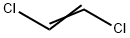
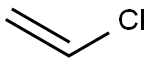
Biological. Microbial degradation of trichloroethylene via sequential dehalogenation produced cis- and trans-1,2-dichloroethylene and vinyl chloride (Smith and Dragun, 1984). Anoxic microcosms in sediment and water degraded trichloroethylene to 1,2-dichloroethylene and then to vinyl chloride (Barrio-Lage et al., 1986).
Photolytic. Under smog conditions, indirect photolysis via OH radicals yielded phosgene, dichloroacetyl chloride, and formyl chloride (Howard, 1990).
Chemical/Physical. The evaporation half-life of trichloroethylene (1 mg/L) from water at 25 °C using a shallow-pitch propeller stirrer at 200 rpm at an average depth of 6.5 cm was 18.5 min (Dilling, 1977).
Metabolic pathway
From the photooxidation reaction medium (1) of trichloroethylene, the formation of dichloroacetyl chloride, CO, phosgene, and pentachloroethane and their conversion to the final product, CO2, are identified. By the second TiO2 photocatalyst reaction (2), trichloroacetaldehyde, dichloroacetyl chloride, CO, and phosgene with the new identified intermediates oxalyl chloride, trichloroacetyl chloride, and trichloroacetic acid are observed.
Shipping
UN1710 Trichloroethylene, Hazard Class: 6.1; Labels: 6.1-Poisonous materials.
Purification Methods
Tricloroethylene undergoes decomposition in a similar way as CHCl3, giving HCl, CO, COCl2 and organic products. It reacts with KOH, NaOH and 90% H2SO4, and forms azeotropes with water, MeOH, EtOH, and acetic acid. It is purified by washing successively with 2M HCl, water and 2M K2CO3, then dried with K2CO3 and CaCl2, then fractionally distilled before use. It has also been steam distilled from 10% Ca(OH)2 slurry, most of the water being removed from the distillate by cooling to -30o to -50o and filtering off the ice through chamois skin: the trichloroethylene is then fractionally distilled at 250mm pressure and collected in a blackened container. [Carlisle & Levine Ind Eng Chem (Anal Ed) 24 1164 1932, Beilstein 1 IV 712.]
Toxicity evaluation
Extended exposure (e.g., occupational exposure) to a chlorinated solvent like TCE typically results in signs of central nervous system (CNS) disturbance and hepatotoxicity. The primary target tissues for the carcinogenicity of TCE identified in animal studies are the liver, lung, and kidney.
TCE metabolism via glutathione (GSH) conjugation generates DCVC, which is associated with nephrotoxicity and kidney cancer. DCVC can be both bioactivated and detoxified by different enzymes. The enzyme that is primarily responsible for renal bioactivation of nephrotoxic cysteine S-conjugates is the b-lyase.
Incompatibilities
Contact with strong caustics causes decomposition and the production of highly toxic and flammable dichloroacetylene. Violent reaction with chemically active metals; powders, or shavings, such as aluminum, barium, lithium, sodium, magnesium, and titanium. Violent reaction with aluminum in the presence of dilute hydrochloric acid. Thermal decomposition of trichloroethylene, due to contact with hot metal or UV radiation, forms hazardous products including chlorine gas, hydrogen chloride; and phosgene. Keep this chemical away from high temperatures, such as arc welding or cutting, unshielded resistance heating; open flames; and high intensity UV light. Slowly decomposed by light in presence of moisture, with formulation of hydrochloric acid.
Waste Disposal
Consult with environmental regulatory agencies for guidance on acceptable disposal practices. Generators of waste containing this contaminant (≥100 kg/mo) must conform with EPA regulations governing storage, transportation, treatment, and waste disposal. Incineration, preferably after mixing with another combustible fuel. Care must be exercised to assure complete combustion to prevent the formation of phosgene. An acid scrubber is necessary to remove the halo acids produced. An alternative to disposal for TCE is recovery and recycling.
Properties of Trichloroethylene
| Melting point: | -86 °C |
| Boiling point: | 87 °C |
| Density | 1.463 g/mL at 25 °C(lit.) |
| vapor density | 4.5 (vs air) |
| vapor pressure | 61 mm Hg ( 20 °C) |
| refractive index | n |
| Flash point: | 90°C |
| storage temp. | 2-8°C |
| solubility | Soluble in acetone, ethanol, chloroform, ether (U.S. EPA, 1985), and other organic solvents
including bromoform, carbon tetrachloride, methylene chloride, trichloroethylene, and tetrachloroethylene. |
| form | Liquid |
| color | Clear colorless |
| Odor | Chloroform-like; ethereal. |
| Odor Threshold | 3.9ppm |
| Water Solubility | Slightly soluble. 0.11 g/100 mL |
| Merck | 14,9639 |
| BRN | 1736782 |
| Henry's Law Constant | 3.14 at 1.8 °C, 8.47 at 21.6 °C, 19.0 at 40.0 °C, 26.5 at 50 °C, 35.8 at 60 °C, 56.6 at 70 °C
(EPICS-GC, Shimotori and Arnold, 2003) |
| Exposure limits | TLV-TWA 50 ppm (~270 mg/m3)
(ACGIH), 100 ppm (MSHA and OSHA);
TLV-STEL 200 ppm (ACGIH); ceiling 200
ppm (OSHA); carcinogenicity: Animal Lim ited Evidence, Human Inadequate Evidence
(IARC). |
| Dielectric constant | 3.4(16℃) |
| Stability: | Stable. Incompatible with oxidizing agents, aluminium, magnesium, strong bases, reducing agents. Light-sensitive. Reacts violently with many metals, ozone, potassium nitrate, potassium hydroxide, sodium hydroxide. |
| CAS DataBase Reference | 79-01-6(CAS DataBase Reference) |
| IARC | 1 (Vol. Sup 7, 63, 106) 2014 |
| NIST Chemistry Reference | Trichloroethylene(79-01-6) |
| EPA Substance Registry System | Trichloroethylene (79-01-6) |
Safety information for Trichloroethylene
| Signal word | Danger |
| Pictogram(s) |
 Exclamation Mark Irritant GHS07  Health Hazard GHS08 |
| GHS Hazard Statements |
H315:Skin corrosion/irritation H317:Sensitisation, Skin H319:Serious eye damage/eye irritation H336:Specific target organ toxicity,single exposure; Narcotic effects H341:Germ cell mutagenicity H350:Carcinogenicity H412:Hazardous to the aquatic environment, long-term hazard |
| Precautionary Statement Codes |
P202:Do not handle until all safety precautions have been read and understood. P273:Avoid release to the environment. P280:Wear protective gloves/protective clothing/eye protection/face protection. P302+P352:IF ON SKIN: wash with plenty of soap and water. P305+P351+P338:IF IN EYES: Rinse cautiously with water for several minutes. Remove contact lenses, if present and easy to do. Continuerinsing. P308+P313:IF exposed or concerned: Get medical advice/attention. |
Computed Descriptors for Trichloroethylene
Trichloroethylene manufacturer
Gayatri Industries
New Products
9-Mesityl-10-methylacridinium perchlorate Sulfapyridine Fmoc-OSu (R)-(-)-2-Amino-1-propanol Cyclobutanone 5-bromo-4-fluoro-2-nitrobenzaldehyde 4 pentyn 1 ol N-Vinylformamide Phenethyl cinnamate Pyrrolo[1,2-a]pyrimidine-6-carboxylic acid, 4,6,7,8-tetrahydro-4-oxo-, sodium salt (1:1), (6S) Ethyl 3-phenylpropanoate β-Bromostyrene Methacrylate-PEG-Methacrylate, Mn:35000 2,4-Dihydroxyacetophenone 2-Chloro 5-Fluoro Pyridine Vasicinone 2-Chloroisonicotinic Acid Tween 80 or Polysorbate 80 5-Bromo-1-Pentyne 1-(2-Methyl-5-nitrophenyl)guanidine Nitrate Methyl trans-4-Aminocyclohexanecarboxylate Hydrochloride N-(4-Cyano-3-(trifluoromethyl)phenyl)-2-methyloxirane-2-carboxamide 4-Nitrobenzotrifluoride 2-Pentyn-1-oLRelated products of tetrahydrofuran
You may like
-
 Trichloro Ethylene (TCE) 99%View Details
 -
 TRICHLOROETHYLENE (TCE) 99%View Details
 -
 Trichloroethylene 99%View Details
 -
 Trichloro Ethylene 99%View Details
 -
 Karl Fischer Solvent CASView Details
 -
TRICHLOROETHYLENE 99%View Details
-
Trichloroethylene CASView Details
-
 Liquid Trichloroethylene Chemical, Grade: Industrial, Purity: 99View Details
79-01-6