
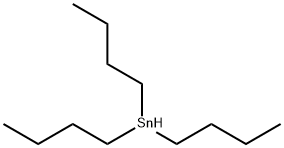
TRIBUTYLTIN CHLORIDE-D27
- CAS NO.:1257647-76-9
- Empirical Formula: C12ClD27Sn
- Molecular Weight: 352.67
- MDL number: MFCD03428112
- SAFETY DATA SHEET (SDS)
- Update Date: 2025-08-30 07:39:51

What is TRIBUTYLTIN CHLORIDE-D27?
Chemical properties
Colourless Oil
The Uses of TRIBUTYLTIN CHLORIDE-D27
Labelled analogue Tributyltin Chloride, a triorganotin compound with insecticidal acitivity. Tributyltin Chloride is an endocrine disruptor as well as an inhibitor for the V-ATPases (potential targets in the treatment of diseases such as osteoporosis and cancer).
Properties of TRIBUTYLTIN CHLORIDE-D27
| Boiling point: | 171-173 °C/25 mmHg (lit.) |
| solubility | Acetone (Slightly), Chloroform (Slightly) |
| form | Oil |
| color | Colourless |
| Stability: | Air sensitive, Hygroscopic |
Safety information for TRIBUTYLTIN CHLORIDE-D27
| Signal word | Danger |
| Pictogram(s) |
 Skull and Crossbones Acute Toxicity GHS06  Health Hazard GHS08  Environment GHS09 |
| GHS Hazard Statements |
H301:Acute toxicity,oral H312:Acute toxicity,dermal H315:Skin corrosion/irritation H317:Sensitisation, Skin H319:Serious eye damage/eye irritation H372:Specific target organ toxicity, repeated exposure H410:Hazardous to the aquatic environment, long-term hazard |
| Precautionary Statement Codes |
P202:Do not handle until all safety precautions have been read and understood. P273:Avoid release to the environment. P280:Wear protective gloves/protective clothing/eye protection/face protection. P301+P310:IF SWALLOWED: Immediately call a POISON CENTER or doctor/physician. P305+P351+P338:IF IN EYES: Rinse cautiously with water for several minutes. Remove contact lenses, if present and easy to do. Continuerinsing. |
Computed Descriptors for TRIBUTYLTIN CHLORIDE-D27
New Products
Indole Methyl Resin tert-butyl 9-methoxy-3-azaspiro[5.5]undecane-3-carboxylate Boc-His(Boc)-OH 2-CTC Resin 4-Chloro-7-tosy1-7Hpyrrolo[2,3-d]pyrimidine 5,7-Dibromo-1H-indole 2,5-dichloro-N-hydroxy-4,6-dimethylpyridine-3-carboximidamide 2,2-Dimethoxy-7-azaspiro[3.5]nonane hydrochloride 4-chloromethyl-5-methyl-1,3-dioxol-2-one (DMDO-Cl) R-2-BENZYLOXY PROPIONIC ACID 1,1’-CARBONYLDIIMIDAZOLE 1,1’-CARBONYLDI (1,2-4 TRIAZOLE) N-METHYL INDAZOLE-3-CARBOXYLIC ACID 4-((2-hydroxyethyl)thio)benzoic acid 1-(TERT-BUTOXYCARBONYL)-2-PYRROLIDINONE Methyl 6-methylnicotinate 3-Pyridineacrylic acid tert-Butyl carbazate TETRAHYDRO-2H-PYRAN-3-OL 2-((4-morpholinophenylamino) (methylthio) methylene) malononitrile 3-(4-morpholinophenylamino)-5-amino-1H-pyrazole-4-carbonitrile 2,4-dihydroxybenzaldehyde 1,3-Diethyl-1,3-Diphenylurea Methyl 2-methylquinoline-6-carboxylateRelated products of tetrahydrofuran
You may like
-
 Tributyltin chloride-d27 CAS 1257647-76-9View Details
1257647-76-9 -
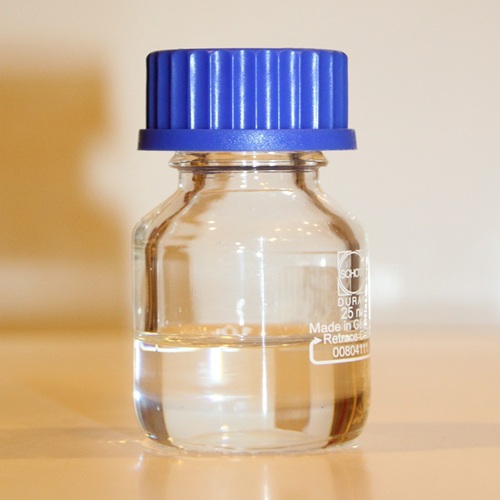 Pyridine 99.5% HPLC /UV SpectroscopyView Details
110-86-1 -
 Guanine , 99%View Details
73-40-5 -
 Piperazine Spot supply, best priceView Details
110-85-0 -
 Dibutyl PhthalateView Details
84-74-2 -
 Imidazole Spot supply, competitive priceView Details
288-32-4 -
 Octadecyl 3-(3,5-di-tert-butyl-4-hydroxyphenyl)propionate 98% (GC)View Details
2082-79-3 -
 Thiourea 99% ARView Details
62-56-6
Statement: All products displayed on this website are only used for non medical purposes such as industrial applications or scientific research, and cannot be used for clinical diagnosis or treatment of humans or animals. They are not medicinal or edible.