
tianeptine sulfate
- CAS NO.:1224690-84-9
- Empirical Formula: C21H27ClN2O8S2
- Molecular Weight: 535.02
- EINECS: 200-001-8
- Update Date: 2026-04-17 18:11:59
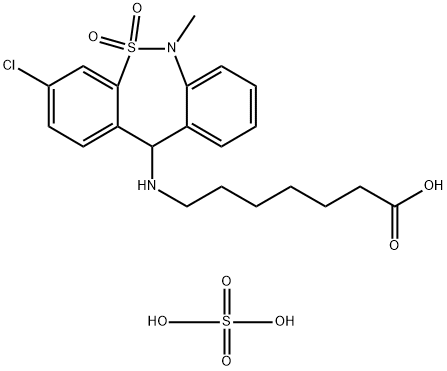
What is tianeptine sulfate?
Physical properties
Tianeptine sulfate is more stable than tianeptine sodium which is notoriously unstable; it reacts to both atmospheric moisture and to light. Tianeptine sulfate on the other hand does not absorb the water from air so it does not clump.Tianeptine sulfate is soluble and cam be mixed easily with water.
The Uses of tianeptine sulfate
Tianeptine sulfate is classified as a selective serotonin reuptake enhancer (SSRE) used to treat depression. Tianeptine was developed in France in the 1960s and has been used throughout the last part of the 2000s. Tianeptine sulfate improves brain neuroplasticity and decreases depression. Neuroplasticity is the brain’s ability to adapt and change when learning; contributing to better cognitive performance and improved learning ability.
Definition
Tianeptine is used as a prescription drug in some European, Asian, and Latin American countries, but it is not approved as a drug in the United States. The FDA is aware of several serious adverse event reports associated with tianeptine. Tianeptine is also known as: Tianeptine sulfate, Tianeptine sodium powder, Tianaa, Tianna Green, Tianna Red, and Tianna White.
What are the applications of Application
Tianeptine sulfate can be used to provide pharmaceutical compositions for the treatment of conditions known in the art, such as one or more depressive disorders, irritable bowel syndrome (IBS), attention deficit hyperactivity disorder (ADHD), one or more neurodegenerative diseases, and asthma.
Pharmacokinetics
The effect tianeptine sulfate lasts longer than tianeptine sodium. Tianeptine sulfate is absorbed by the body slowly so its effect is also extended and that means less dosing.
Side Effects
Tianeptine is prescribed as an antidepresant in Europe. The prescription drug is produced as tianeptine sodium. The most common adverse effects of Tianeptine are nausea, constipation, abdominal pain, headache, dizziness and changes in dreaming. Anticholinergic effects occur less often with tianeptine than with tricyclic agents. Hepatoxicity is rare.
Properties of tianeptine sulfate
Safety information for tianeptine sulfate
Computed Descriptors for tianeptine sulfate
| InChIKey | KVVMXNNJBVTOSX-UHFFFAOYSA-N |
New Products
N-Carbethoxy-4-piperidone 1-Aminocyclopentane carbonitrile Tetrabutylammonium perchlorate N,O-Dimethylhydroxylamine hydrochloride (RS)-beta-Amino-beta-(4-bromophenyl)propionic acid 2-Amino-5-bromo-4-(trifluoromethyl)pyridine N-Vinylformamide 4 pentyn 1 ol Phenethyl cinnamate Pyrrolo[1,2-a]pyrimidine-6-carboxylic acid, 4,6,7,8-tetrahydro-4-oxo-, sodium salt (1:1), (6S) Ethyl 3-phenylpropanoate β-Bromostyrene Methacrylate-PEG-Methacrylate, Mn:35000 2,4-Dihydroxyacetophenone 2-Chloro 5-Fluoro Pyridine Vasicinone 2-Chloroisonicotinic Acid Tween 80 or Polysorbate 80 5-Bromo-1-Pentyne 1-(2-Methyl-5-nitrophenyl)guanidine Nitrate Methyl trans-4-Aminocyclohexanecarboxylate Hydrochloride 2-Pentyn-1-oL 4-Nitrobenzotrifluoride N-(4-Cyano-3-(trifluoromethyl)phenyl)-2-methyloxirane-2-carboxamideRelated products of tetrahydrofuran
You may like
-
 144-83-2 Sulfapyridine 98+View Details
144-83-2 -
29976-53-2 98+View Details
29976-53-2 -
2-Amino-5-bromo-4-(trifluoromethyl)pyridine 98+View Details
944401-56-3 -
(RS)-beta-Amino-beta-(4-bromophenyl)propionic acid 39773-47-2 98+View Details
39773-47-2 -
6638-79-5 N,O-Dimethylhydroxylamine hydrochloride 98+View Details
6638-79-5 -
674783-97-2 98+View Details
674783-97-2 -
1-Aminocyclopentane carbonitrile 98+View Details
49830-37-7 -
Tetrabutylammonium perchlorate 1923-70-2 98+View Details
1923-70-2