
Potassium dicyanoargentate
Synonym(s):Potassium silver(I) cyanide
- CAS NO.:506-61-6
- Empirical Formula: C2AgN2.K
- Molecular Weight: 199
- MDL number: MFCD00036297
- EINECS: 208-047-0
- SAFETY DATA SHEET (SDS)
- Update Date: 2026-05-28 02:15:02
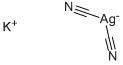
What is Potassium dicyanoargentate ?
Chemical properties
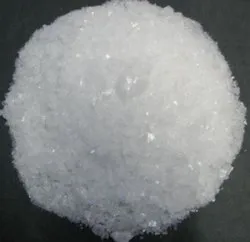
Potassium silver cyanide is a poisonous, white solid made of crystals, which are light sensitive. It is soluble in water and acids and slightly soluble in ethanol. It emits very toxic fumes when heated to decomposition.
Chemical properties
Potassium silver cyanide is a white crystalline solid.
The Uses of Potassium dicyanoargentate
In silver plating.
The Uses of Potassium dicyanoargentate
Silver platingPotassium silver cyanide is used in silver plating and in the manufacturing of antiseptics. It is a versatile bridging ligand and finds use for multidimensional polymer construction.
General Description
White crystals. Poisonous. Used in silver plating, as a bactericide and in the manufacture of antiseptics. Not registered as a pesticide in the U.S.
Air & Water Reactions
Water soluble [Merck].
Reactivity Profile
Potassium dicyanoargentate is light sensitive. Acids precipitate silver cyanide from its aqueous solution. Fusion with metal chlorates, perchlorates, nitrates or nitrites can cause violent explosions [Bretherick 1979 p. 101].
Hazard
Very toxic.
Health Hazard
The primary health hazard is as a cyanide. (Non-specific -- Cyanide, Inorganic, n.o.s.). It is poisonous and may be fatal if inhaled, swallowed or absorbed through the skin. Fire may produce irritating or poisonous gases.
Health Hazard
Potassium silver cyanide is a poisonous, white solid made of crystals, which are light sensitive. It is soluble in water and acids, and slightly soluble in ethanol. It emits very toxic fumes when heated to decomposition. Synonyms for potassium silver cyanide are potassium argentocyanide and potassium dicyanoargentate
Fire Hazard
When heated to decomposition, Potassium dicyanoargentate emits very toxic fumes of cyanide and nitrogen oxides. Avoid light.
Flammability and Explosibility
Not classified
Safety Profile
Poison by ingestion. A severe skin and eye irritant. When heated to decomposition it emits very toxic fumes of CN-, K2O, and NOx. See also CYANIDE and SILVER COMPOUNDS.
Potential Exposure
Potassium silver cyanide is used in silver plating; as a bactericide; and in the manufacture of antiseptics. Not registered for use as a pesticide in the United States
Shipping
UN1588 Cyanides, inorganic, solid, n.o.s., Hazard Class: 6.1; Labels: 6.1-Poisonous materials, Technical Name Required.
Incompatibilities
Contact with acid, acid fumes release hydrogen cyanide. Incompatible with water, steam, or when heated to decomposition, emits toxic and flammable cyanide vapors. Potassium silver cyanide reacts with carbon dioxide releasing hydrogen cyanide. Light sensitive. Incompatible with oxidizers (chlorates, nitrates, peroxides, permanganates, perchlorates, chlorine, bromine, fluorine, etc.); contact may cause fires or explosions. Keep away from alkaline materi- als, strong bases, strong acids, oxoacids, epoxides. Acids precipitate silver cyanide from its aqueous solution. Fusion with metal chlorates, perchlorates, nitrates or nitrites can cause violent explosions
Waste Disposal
Consult with environmental regulatory agencies for guidance on acceptable disposal practices. Generators of waste containing this contaminant (≥100 kg/mo) must conform with EPA regulations govern- ing storage, transportation, treatment, and waste disposal.
Properties of Potassium dicyanoargentate
| Density | 2.36 |
| storage temp. | Poison room |
| solubility | soluble in H2O |
| form | Powder |
| color | White |
| Water Solubility | soluble |
| Sensitive | Light Sensitive |
| Merck | 14,7669 |
| Stability: | Stable, but light sensitive. Contact with acids liberates very toxic gas. |
| CAS DataBase Reference | 506-61-6(CAS DataBase Reference) |
| EPA Substance Registry System | Potassium silver cyanide (506-61-6) |
Safety information for Potassium dicyanoargentate
| Signal word | Danger |
| Pictogram(s) |
 Corrosion Corrosives GHS05  Skull and Crossbones Acute Toxicity GHS06  Environment GHS09 |
| GHS Hazard Statements |
H315:Skin corrosion/irritation H318:Serious eye damage/eye irritation H410:Hazardous to the aquatic environment, long-term hazard |
| Precautionary Statement Codes |
P262:Do not get in eyes, on skin, or on clothing. P273:Avoid release to the environment. P280:Wear protective gloves/protective clothing/eye protection/face protection. P305+P351+P338:IF IN EYES: Rinse cautiously with water for several minutes. Remove contact lenses, if present and easy to do. Continuerinsing. |
Computed Descriptors for Potassium dicyanoargentate
New Products
2-(2-Chlorophenyl)glycine Propiolic Acid 1-(3-Hydroxy-4-methoxyphenyl)-2-nitroethene (±)-amino(2-fluorophenyl)acetic acid trans-3-Benzyloxy-4-methoxy-beta-nitrostyrene 1-Pentadecanol 2,4-Dihydroxybenzaldehyde Dipropyl disulfide Pyrrolo[1,2-a]pyrimidine-6-carboxylic acid, 4,6,7,8-tetrahydro-4-oxo-, sodium salt (1:1), (6S) Obidoxime hydrochloride API 4 pentyn 1 ol N-Vinylformamide Methacrylate-PEG-Methacrylate, Mn:35000 2,4-Dihydroxyacetophenone 2-Chloro 5-Fluoro Pyridine Vasicinone 2-Chloroisonicotinic Acid Tween 80 or Polysorbate 80 2-Butyn-1-oL N-(4-Cyano-3-(trifluoromethyl)phenyl)-2-methyloxirane-2-carboxamide N-(4-fluoro-2-methoxy-5-nitrophenyl)-4-(1-methyl-1H-indol-3-yl)pyrimidin-2-amine Pirtobrutinib intd. 2-Pentyn-1-oL 4-NitrobenzotrifluorideRelated products of tetrahydrofuran






You may like
-
 Potassium silver cyanide CAS 506-61-6View Details
506-61-6 -
Potassium silver cyanide CAS 506-61-6View Details
506-61-6 -
Potassium silver cyanide CAS 506-61-6View Details
506-61-6 -
Potassium dicyanoargentate CAS 506-61-6View Details
506-61-6 -
 Silver Potassium CyanideView Details
506-61-6 -
471-25-0 Propiolic Acid 98+View Details
471-25-0 -
2-(2-Chlorophenyl)glycine 88744-36-9 98+View Details
88744-36-9 -
40216-83-9 trans-4-Hydroxy-L-proline methyl ester hydrochloride 98+View Details
40216-83-9