
Parsol SLX
- CAS NO.:207574-74-1
- Molecular Weight: 0
- MDL number: MFCD04119298
- EINECS: 606-621-9
- Update Date: 2026-05-28 02:26:07
What is Parsol SLX?
Absorption
Polysilicone-15 is reported as having little to no absorption through the skin . At this time, however, studies demonstrate that the components of most commonly used sunscreens are likely absorbed into the skin at least to some extent - although penetration to deeper tissues and the cutaneous circulation remains limited . Despite the extensive use of sunscreen products around the world, there have been few reports of adverse effects related to their use .
Toxicity
From what studies are available, the overall belief at the moment is that polysilicone-15 largely remains on the surface of the skin when applied and that skin penetration tests demonstrated maximum retention on the skin . The systemic presence of the compound is consequently expected to be minimal.
Description
Parsol SLX (INCI: Polysilicone-15) is a silicone-based UV-B absorber. This colorless-to-pale yellow viscous liquid integrates easily with the oil phase of sunscreen formulation. PARSOL SLX is the first polymeric UV-B filter consisting of chromophores attached to a silicone backbone and is an effective photostabilizer for PARSOL 1789. When combined with PARSOL HS, this product can achieve a very high SPF (>30), enabling day care or sunscreen formulations that leave a dry, silky touch on the skin.
The Uses of Parsol SLX
Parsol SLX is a silicone based UV-B absorber. It added to rinse-off and leave-on hair products delivers multiple benefits including prevention of colour fading, gloss enhancement and conditioning. As a stabilizing ingredient that is used in sunscreens, its job is to slow down the rate of degradation of the sun-absorbing chemicals.
Background
Polysilicone-15 is a silicone based UVB absorber . The compound is a colorless to pale yellow viscous liquid which is soluble in organic solvents of medium polarity and insoluble in water . It is the first polymeric UVB filer consisting of chromophores attached to a silicone backbone . When included in various other cosmetic shampoos, conditioners, or hairsprays the compound also functions as an effective photostabilizer of the product .
Indications
Polysilicone-15 is used as an UV-filter in cosmetic sunscreen products as well as in other cosmetic products (like shampoos, conditioners, hairsprays, etc.) where it can confer photostability to the product(s) .
Pharmacokinetics
As an active ingredient in sunscreen products, polysilicone-15 is applied directly onto human skin where it acts as a chemical sunscreen layer between skin and sunlight that also directly absorbs the UV sunlight radiation . When used in combination with other ingredients in cosmetic shampoos, conditioners, hairsprays, etc. the photostable polysilicone-15 confers photostability onto the entire combined product, protecting it from deterioration in the sunlight by absorbing the UV light radiation . Additionally, there have been studies suggesting polysilicone-15 is also considered to have little to no absorption through the skin , so little systemic exposure and pharmacokinetics are expected and users can freely wash off and re-apply the compound as necessary.
Metabolism
Polysilicone-15 is reported as having little to no absorption through the skin . The systemic presence of the compound is consequently expected to be minimal.
Safety information for Parsol SLX
New Products
Dibenzoyl-L-tartaric acid Anhydrous (Resolution Reagent) Cis-Tosylate Dibenzo[b,f][1,4]thiazepin-11(10H)-one 1,2,3,9-Tetrahydro-9-Methyl-4H-Carbazole-4-One 1-(4-methoxyphenyl)-4-(4-Nitrophenyl)Piperazine (IT-1) BOC Piperazine 1-Benzhydrylazetane-3-carbonitrile 8-oxa-1,3-diazaspiro[4.5]decane-2,4-dione (±)-amino(2-fluorophenyl)acetic acid 2-(2-Chlorophenyl)glycine AMINO-(3-CHLORO-PHENYL)-ACETIC ACID 2'-Fluoroacetophenone METHANOL-D1(OD) TERTIARY BUTANOL-D9 N-ETHYL-D5-AMINE HYDROCHLORIDE BENZOIC ACID-D CHLOROFORM-D TOLUENE-D3 Trans,trans muconic acid HC Blue-16 4-Amino-2-chloro-6,7-dimethoxyquinazoline Ethyl 4,5-bis(2-methoxyethoxy)-2-nitrobenzoate 2,3-Dimethoxypyridine 1-(3-Chlorophenyl)piperazine hydrochlorideRelated products of tetrahydrofuran





You may like
-
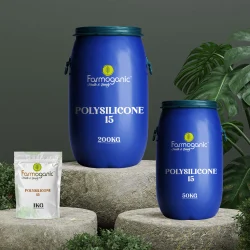 Polysilicone 15View Details
207574-74-1 -
 Powder Polysilicone-15 CAS 207574-74-1View Details
207574-74-1 -
 Product IntroductionView Details
 -
 Product InrtroductionView Details
 -
 DGO24View Details
 -
 DGO25View Details
 -
 DGO29View Details
 -
 DGO32View Details