
Lithium chromate
- CAS NO.:14307-35-8
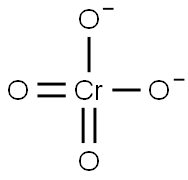
- Empirical Formula: CrLi2O4
- Molecular Weight: 129.8757
- MDL number: MFCD00016175
- EINECS: 238-244-7
- SAFETY DATA SHEET (SDS)
- Update Date: 2026-05-28 03:19:29
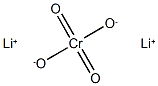
What is Lithium chromate ?
Description
Lithium chromate is a yellow crystalline powder. Molecular weight = 165.92; 129.87 (lithium chromate(VI)); 131.90 (dilithium chromate); Melting point =75℃.Hazard Identification (based on NFPA-704 M RatingSystem): Health 2, Flammability 0, Reactivity 0. Soluble inwater.
Chemical properties
Lithium chromate is a yellow crystalline powder.
The Uses of Lithium chromate
Lithium Chromate is used in preparation method method of permeable crystalline cement-based waterproof coating by using maifanstone composite high water-absorbing resin and its application in building.
General Description
A yellow crystalline solid. The primary hazard is the threat to the environment. Immediate steps should be taken to limit its spread to the environment. Lithium chromate is used as a corrosion inhibitor and in the manufacture of other chemicals.
Air & Water Reactions
Deliquescent. Water soluble
Reactivity Profile
Lithium chromate is an oxidizing agent. Can oxidize combustibles [USCG, 1999]. Combining the chromate with zirconium can be explosive given the right proportions of reactants, [Z. Anorg., 1930, 191, 113].
Health Hazard
INHALATION: Corrosive to skin and mucous membranes causing dermatitis and slow healing ulcers. EYES: Conjunctivitis and lacrimation. INGESTION: Violent gastroenteritis, peripheral vascular collapse, vertigo, muscle cramps, coma, hemorrhagic diathesis, fever, liver damage and renal failure.
Potential Exposure
Used as a corrosion inhibitor, heat transfer agent; and oxidizing agent in leather and metal finishing. Also used in photography, wood preservatives; batteries, safety matches, and cement
First aid
If this chemical gets into the eyes, remove anycontact lenses at once and irrigate immediately for at least15 min, occasionally lifting upper and lower lids. Seek medical attention immediately. If this chemical contacts theskin, remove contaminated clothing and wash immediatelywith soap and water. Seek medical attention immediately. Ifthis chemical has been inhaled, remove from exposure,begin rescue breathing (using universal precautions, including resuscitation mask) if breathing has stopped and CPR ifheart action has stopped. Transfer promptly to a medicalfacility. When this chemical has been swallowed, get medical attention. Give large quantities of water and inducevomiting. Do not make an unconscious person vomit.
Storage
Color Code—Blue: Health Hazard/Poison: Storein a secure poison location. Prior to working with thischemical you should be trained on its proper handling andstorage. A regulated, marked area should be establishedwhere this chemical is handled, used, or stored in compliance with OSHA Standard 1910.1045. Store in tightlyclosed containers in a cool, well-ventilated area away from acids, hydrazine, chromic acid, combustible materials, sulfur, aluminum, plastics, and reducing agents.
Shipping
UN3288 Toxic solids, inorganic, n.o.s., Hazard Class: 6.1; Labels: 6.1-Poisonous materials, Technical Name Required.
Incompatibilities
Aqueous solution is caustic. A strong oxidizer; strong reaction with reducing agents, combustibles, organic material, hydrazine, chromic acid; sulfur, acids. Attacks plastics and aluminum
Properties of Lithium chromate
| Melting point: | 844℃ |
| Density | 1.355 |
| form | crystal |
| color | yellow |
| Water Solubility | 94.6 g/L at 25 ºC |
| CAS DataBase Reference | 14307-35-8(CAS DataBase Reference) |
| EPA Substance Registry System | Lithium chromate (14307-35-8) |
Safety information for Lithium chromate
| Signal word | Warning |
| Pictogram(s) |
 Exclamation Mark Irritant GHS07 |
| GHS Hazard Statements |
H315:Skin corrosion/irritation H319:Serious eye damage/eye irritation |
| Precautionary Statement Codes |
P280:Wear protective gloves/protective clothing/eye protection/face protection. P302+P352:IF ON SKIN: wash with plenty of soap and water. P305+P351+P338:IF IN EYES: Rinse cautiously with water for several minutes. Remove contact lenses, if present and easy to do. Continuerinsing. P332+P313:IF SKIN irritation occurs: Get medical advice/attention. P337+P313:IF eye irritation persists: Get medical advice/attention. |
Computed Descriptors for Lithium chromate
Lithium chromate manufacturer
New Products
2-(2-Chlorophenyl)glycine Propiolic Acid 1-(3-Hydroxy-4-methoxyphenyl)-2-nitroethene (±)-amino(2-fluorophenyl)acetic acid trans-3-Benzyloxy-4-methoxy-beta-nitrostyrene 1-Pentadecanol 2,4-Dihydroxybenzaldehyde Dipropyl disulfide Pyrrolo[1,2-a]pyrimidine-6-carboxylic acid, 4,6,7,8-tetrahydro-4-oxo-, sodium salt (1:1), (6S) Obidoxime hydrochloride API 4 pentyn 1 ol N-Vinylformamide Methacrylate-PEG-Methacrylate, Mn:35000 2,4-Dihydroxyacetophenone 2-Chloro 5-Fluoro Pyridine Vasicinone 2-Chloroisonicotinic Acid Tween 80 or Polysorbate 80 2-Butyn-1-oL N-(4-Cyano-3-(trifluoromethyl)phenyl)-2-methyloxirane-2-carboxamide N-(4-fluoro-2-methoxy-5-nitrophenyl)-4-(1-methyl-1H-indol-3-yl)pyrimidin-2-amine Pirtobrutinib intd. 2-Pentyn-1-oL 4-NitrobenzotrifluorideRelated products of tetrahydrofuran



You may like
-
 14307-35-8 99%View Details
14307-35-8 -
 Lithium chromate 98.00% CAS 14307-35-8View Details
14307-35-8 -
 Indian Platinum Technical Grade Lithium Chromate Powder, For LaboratoryView Details
14307-35-8 -
 Chemical Grade Lithium Chromate AnhydrousView Details
14307-35-8 -
 Lithium Chromate 20% SolutionView Details
14307-35-8 -
 Powder Lithium ChromateView Details
14307-35-8 -
 Lithium Chromate Solution(3O %)View Details
14307-35-8 -
 Technical Grade Lithium Chromate GranulesView Details
14307-35-8