
KIRENOL
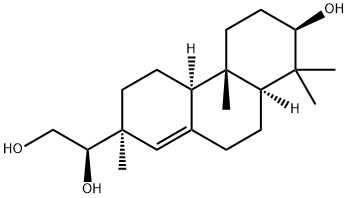
Synonym(s):(1R)-1-[(2S,4aR,4bS,6S,8R,8aS)-6-hydroxy-8-(hydroxymethyl)-2,4b,8-trimethyl-4,4a,5,6,7,8a,9,10-octahydro-3H-phenanthren-2-yl]ethane-1,2-diol
- CAS NO.:52659-56-0
- Empirical Formula: C20H34O4
- Molecular Weight: 338.49
- MDL number: MFCD00210519
- SAFETY DATA SHEET (SDS)
- Update Date: 2026-11-04 17:01:46
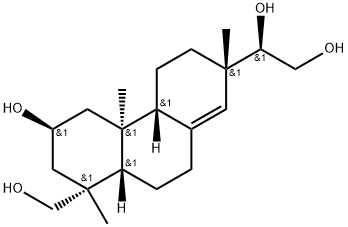
What is KIRENOL?
Description
Kirenol is a diterpenoid that has been found in S. orientalis and has diverse biological activities, including anti-arthritic and anti-inflammatory properties. It inhibits Gram-positive and Gram-negative bacterial growth in disc diffusion assays with MICs ranging from 39 to 156 and 312.5 to 625 μg/ml, respectively. Kirenol also reduces K652 chronic myeloid leukemia cell viability with a 48 hour IC50 value of 18.19 μg/ml and induces apoptosis. In vivo, kirenol (2 mg/kg, p.o.) reduces motor deficit, delays disease onset by approximately five days, and downregulates inflammatory CD4+IFN-γ+ Th1 cells and CD4+IL-17A+ Th17 cells in a mouse model of experimental autoimmune encephalomyelitis (EAE). Intragastric administration of kirenol (1-4 mg/kg) reduces the arthritis index, NF-kB activity, and paw swelling and increases annexin-1 expression without affecting glucocorticoid receptor α (GRα) expression in the synovium in a rat model of collagen-induced arthritis. Topical administration of kirenol (0.3-0.5% w/w) reduces edema induced by carrageenan, complete Freund''s adjuvant (CFA), and formalin in rats up to 44, 67, and 65%, respectively.
The Uses of KIRENOL
Kirenol is a pharmaceutical agent that induces apoptosis in human chronic myeloid leukemia cells.
Definition
ChEBI: Kirenol is a diterpenoid.
Properties of KIRENOL
| Melting point: | 197.0 to 201.0 °C |
| Boiling point: | 516.9±35.0 °C(Predicted) |
| Density | 1.17±0.1 g/cm3(Predicted) |
| storage temp. | -20°C Freezer |
| solubility | Ethanol (Slightly), Methanol (Slightly) |
| form | Solid |
| pka | 14.06±0.20(Predicted) |
| color | White to Light Yellow |
| CAS DataBase Reference | 52659-56-0 |
Safety information for KIRENOL
| Signal word | Warning |
| Pictogram(s) |
 Exclamation Mark Irritant GHS07 |
| GHS Hazard Statements |
H315:Skin corrosion/irritation H319:Serious eye damage/eye irritation H335:Specific target organ toxicity, single exposure;Respiratory tract irritation |
| Precautionary Statement Codes |
P261:Avoid breathing dust/fume/gas/mist/vapours/spray. P305+P351+P338:IF IN EYES: Rinse cautiously with water for several minutes. Remove contact lenses, if present and easy to do. Continuerinsing. |
Computed Descriptors for KIRENOL
New Products
2-(2-Chlorophenyl)glycine Propiolic Acid 1-(3-Hydroxy-4-methoxyphenyl)-2-nitroethene (±)-amino(2-fluorophenyl)acetic acid trans-3-Benzyloxy-4-methoxy-beta-nitrostyrene 1-Pentadecanol 4-(4-Αminophenyl)-3-Morpholinone 3-Morpholino-1-(4-(2-oxopiperidin-1-yl) phenyl)-5,6-dihyropyridin-2-(1H)-one 1-(4-Aminophenyl)-3-morpholino-5,6-dihydropyridin-2(1H)-one N-cyanoacetylurethane 1H-IndazoleRelated products of tetrahydrofuran


You may like
-
 Kirenol CAS 52659-56-0View Details
52659-56-0 -
Kirenol CAS 52659-56-0View Details
52659-56-0 -
471-25-0 Propiolic Acid 98+View Details
471-25-0 -
84145-28-8 98+View Details
84145-28-8 -
trans-3-Benzyloxy-4-methoxy-beta-nitrostyrene 98+View Details
63909-29-5 -
2-(2-Chlorophenyl)glycine 88744-36-9 98+View Details
88744-36-9 -
40216-83-9 trans-4-Hydroxy-L-proline methyl ester hydrochloride 98+View Details
40216-83-9 -
1-(3-Hydroxy-4-methoxyphenyl)-2-nitroethene 98+View Details
39816-35-8