
Iodine
- CAS NO.:7553-56-2
- Empirical Formula: I2
- Molecular Weight: 253.81
- MDL number: MFCD00011355
- EINECS: 231-442-4
- SAFETY DATA SHEET (SDS)
- Update Date: 2026-06-24 18:39:39

What is Iodine?
Description
Iodine was discovered in 1811 by Bernard Courtois, and is classed among the rarer elements. Iodine is a required element by many species, including humans. It has been recognized as preventative against goiter since 1819, and is used in iodized salt for this purpose. Iodine is also used as a dough oxidizer in commercial bread making.
Chemical properties
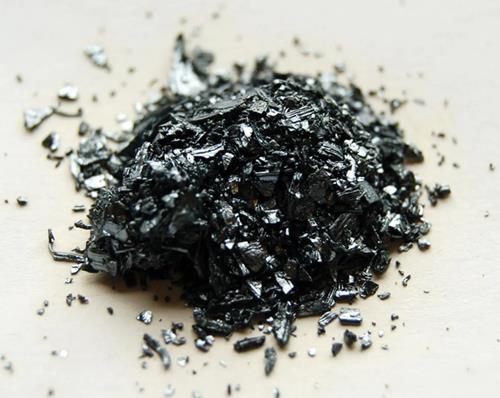
Iodine is available as bluish-black crystals with a metallic luster and a pungent odor. It is slightly soluble in water (0.03 g/100 g). It is stable under ordinary conditions of use and storage. It reacts violently or explosively with acetaldehyde and acetylene, and reacts with ammonium hydroxide to form shock-sensitive iodides on drying.
Iodine occurs in many different forms that can be blue, brown, yellow, red, white, or colorless. Most forms of iodine easily dissolve in water or alcohol.
The Uses of Iodine
To the SM (1.77 Kg, 8.58 mol) in anhydrous DMF (8 L) under N2 at 10 C was added NIS (1.93 Kg, 8.58 mol) in portions over 10 min. The reaction mixture was stirred at RT for 2 h, after which time it was cooled using an ice bath and quenched with sat aq Na2CO3 (5 L) and extracted with EtOAc (2 x 15 L). The combined organics were washed with sat aq Na2CO3 (2 x 5 L), H2O (3 x 2 L), dried (Na2SO4), and concentrated in vacuo. The resulting crude material was purified by silica gel column chromatography (25-40% EtOAc/hexanes) to provide the product. [1.47 Kg, 57% over 2 steps]
Background
Iodine is commonly used as an antiseptic for minor cuts and abrasions, preventing infections that may result from contaminated wounds. Additionally, iodine has been studied in the treatment of fibrocystic disease and breast cancer.
Indications
Investigated for use/treatment in breast disorders (unspecified) and pain (acute or chronic).
Production Methods
The principal method used to recover iodine from oil brines involves the oxidation of iodide by chlorine, followed by removal of the volatile iodine from solution with an airstream. The iodine is reabsorbed in solution and reduced to hidrotic acid with sulfur dioxide. The solution is then chlorinated to precipitate free iodine, which is further purified by treatment with concentrated sulfuric acid.
Biological Functions
Inhibition of the release of thyroid hormone by iodide is the basis for its use in hyperthyroidism. Iodide decreases the vascularity of the enlarged thyroid gland and also lowers the elevated BMR. It also has been suggested that excess iodide might change the conformation of thyroglobulin, making the protein less susceptible to thyroidal proteolysis.
Hazard
Iodine vapors are an irritant to eyes, nose and mucous membranes.Inhalation can cause headache, irritation, and congestion of lungs. Oralintake can produce burning of the mouth, vomiting, diarrhea, and abdominalcramps. Skin contact can cause rashes.
Toxicity evaluation
Iodine is a powerful oxidizing agent and has a direct action on cells by precipitating proteins. The affected cells may be destroyed. In addition to the primary irritant action of iodine, this compound can act as a potent sensitizer.
Properties of Iodine
| Melting point: | 113 °C (lit.) |
| Boiling point: | 184 °C (lit.) |
| Density | 1.32 g/mL at 25 °C |
| vapor density | 9 (vs air) |
| vapor pressure | 0.31 mm Hg ( 25 °C) |
| Flash point: | <10℃ |
| storage temp. | Store at RT. |
| solubility | Miscible with chloroform, carbon tetrachloride, carbon disulfide, cyclohexane, methanol, ethyl acetate, toluene, benzene, n-hexane, butan-2-ol, bromoethane, n-heptane, glycerol and diethyl ether. |
| appearance | Metallic gray solid |
| form | particles (round) |
| color | Red-brown |
| Specific Gravity | 4.93 |
| PH | 5.4 (H2O)(saturated solution) |
| Odor | Sharp, characteristic odor |
| Resistivity | 1.3E15 μΩ-cm |
| Water Solubility | 0.3 g/L (20 ºC) |
| Crystal Structure | Rhombic |
| Merck | 14,5014 |
| BRN | 3587194 |
| Exposure limits | Ceiling 0.1 ppm (~1mg/m3) (ACGIH,
MSHA, OSHA, and NIOSH); IDLH 10 ppm
(NIOSH). |
| CAS DataBase Reference | 7553-56-2(CAS DataBase Reference) |
| NIST Chemistry Reference | Iodine(7553-56-2) |
| EPA Substance Registry System | Iodine (7553-56-2) |
Safety information for Iodine
| Signal word | Danger |
| Pictogram(s) |
 Exclamation Mark Irritant GHS07  Health Hazard GHS08  Environment GHS09 |
| GHS Hazard Statements |
H315:Skin corrosion/irritation H319:Serious eye damage/eye irritation H335:Specific target organ toxicity, single exposure;Respiratory tract irritation H372:Specific target organ toxicity, repeated exposure H400:Hazardous to the aquatic environment, acute hazard |
| Precautionary Statement Codes |
P273:Avoid release to the environment. P280:Wear protective gloves/protective clothing/eye protection/face protection. P314:Get medical advice/attention if you feel unwell. P301+P312:IF SWALLOWED: call a POISON CENTER or doctor/physician IF you feel unwell. |
Computed Descriptors for Iodine
| InChIKey | PNDPGZBMCMUPRI-UHFFFAOYSA-N |
Iodine manufacturer
CEFA CILINAS BIOTICS PVT LTD
New Products
2-(2-Chlorophenyl)glycine Propiolic Acid 1-(3-Hydroxy-4-methoxyphenyl)-2-nitroethene (±)-amino(2-fluorophenyl)acetic acid trans-3-Benzyloxy-4-methoxy-beta-nitrostyrene 1-Pentadecanol 4-(4-Αminophenyl)-3-Morpholinone 3-Morpholino-1-(4-(2-oxopiperidin-1-yl) phenyl)-5,6-dihyropyridin-2-(1H)-one 1-(4-Aminophenyl)-3-morpholino-5,6-dihydropyridin-2(1H)-one N-cyanoacetylurethane 1H-IndazoleRelated products of tetrahydrofuran




You may like
-
 Iodine, Crystalline CAS 7553-56-2View Details
7553-56-2 -
Iodine CAS 7553-56-2View Details
7553-56-2 -
Iodine CAS 7553-56-2View Details
7553-56-2 -
Iodine CAS 7553-56-2View Details
7553-56-2 -
Iodine CAS 7553-56-2View Details
7553-56-2 -
Iodine CAS 7553-56-2View Details
7553-56-2 -
Iodine CAS 7553-56-2View Details
7553-56-2 -
 1.6 % Liquid Iodophor, For Laboratory, Grade Standard: Reagent GradeView Details
39392-86-4