
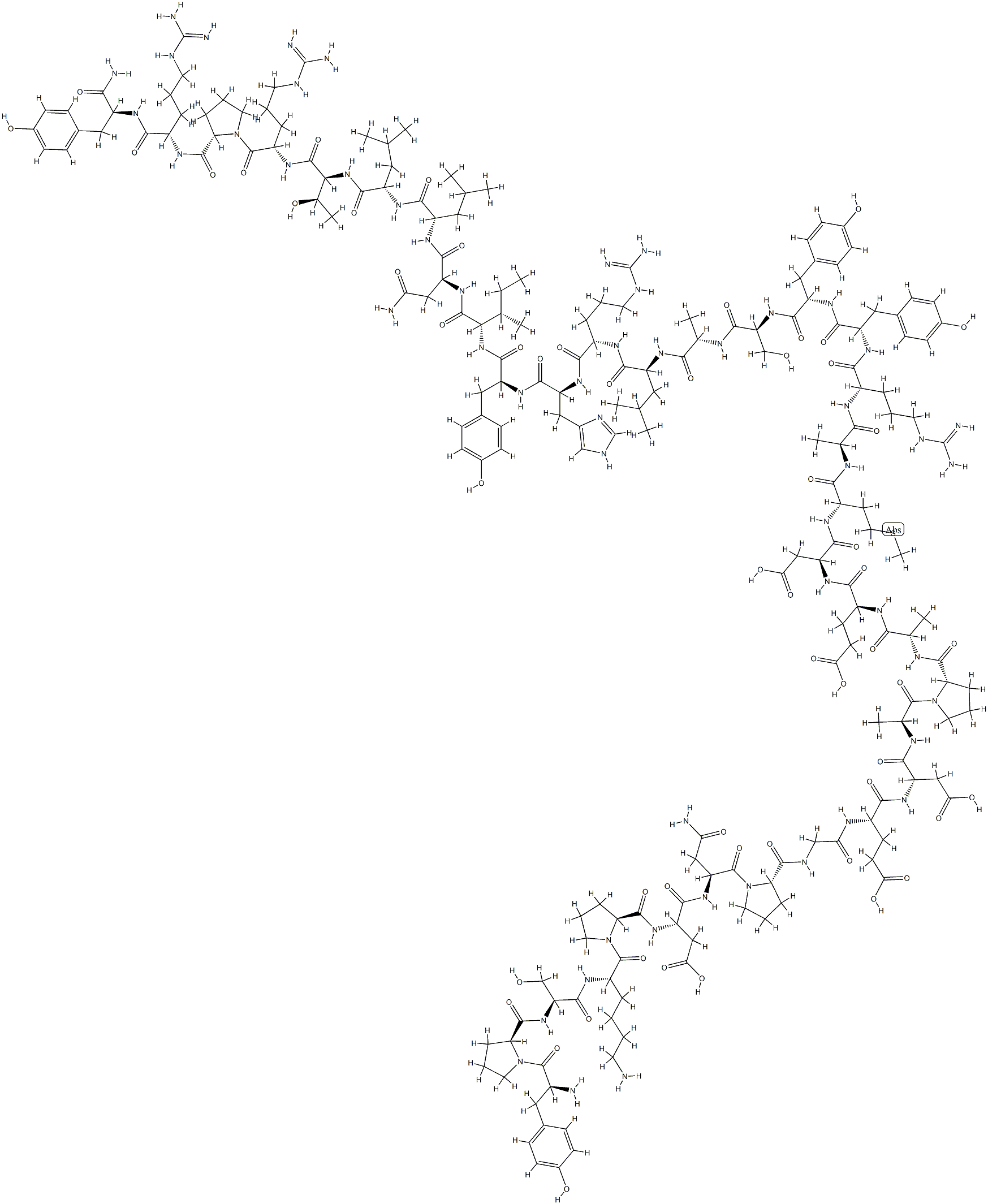
GALANIN, PORCINE
- CAS NO.:88813-36-9
- Empirical Formula: C146H213N43O40
- Molecular Weight: 3210.52
- MDL number: MFCD00133353
- SAFETY DATA SHEET (SDS)
- Update Date: 2026-04-24 14:58:27
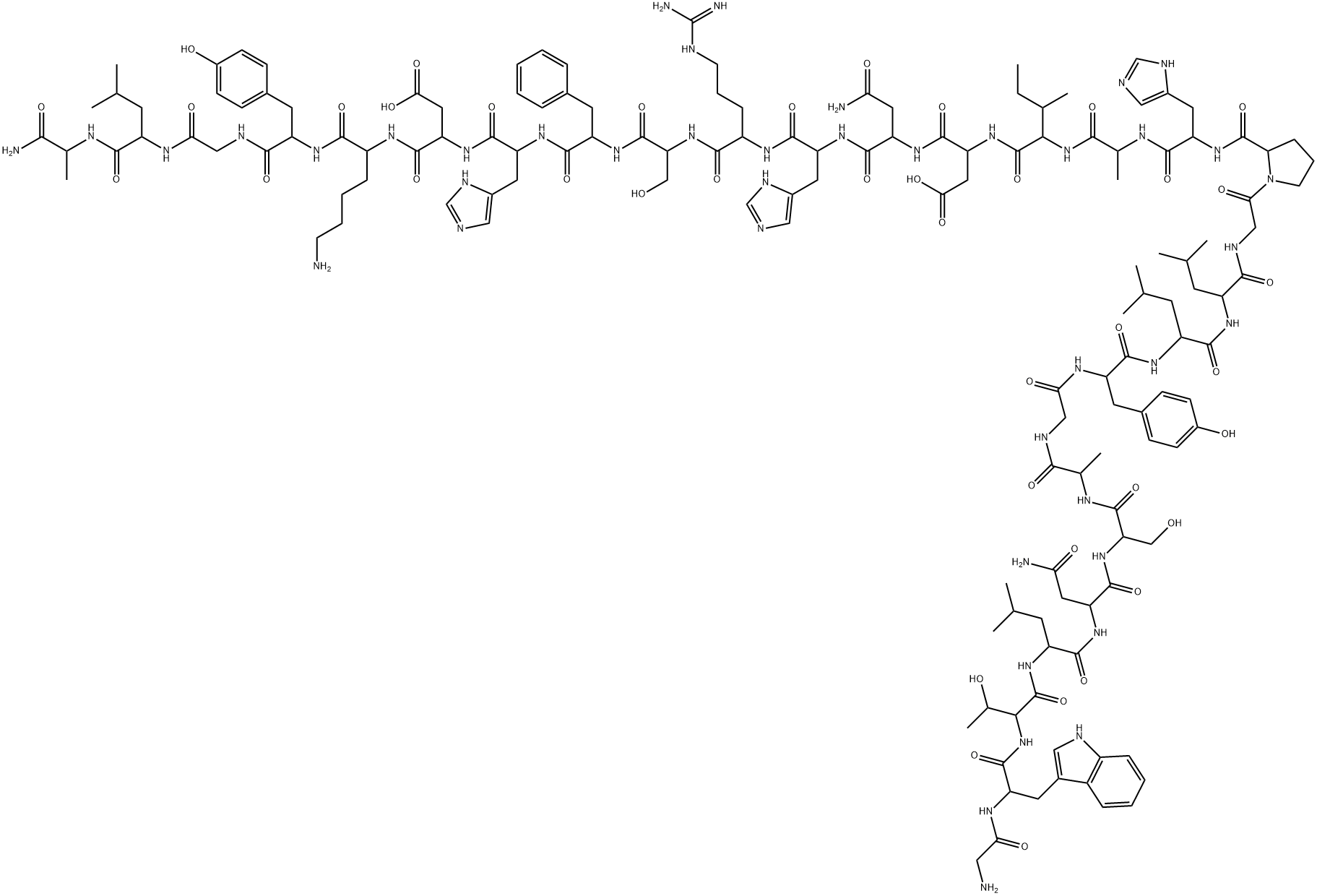
What is GALANIN, PORCINE?
Description
GAL is expressed in the brain and peripheral organs, and has diverse physiological actions, including energy homeostasis, reproduction, nociception, and cognition. GAL was isolated in 1983 from the porcine intestine by Tatemoto and colleagues. The GAL peptide has been purified from the chicken, alligator, and fish species, including trout, tuna, bowfin, dogfish, and sturgeon.
Biological Functions
Galanin is colocalized with acetylcholine, 5-HT , and NE in neurons or in brain regions implicated in cognitive and affective behavior, suggesting a possible role in the regulation of 5-HT and NA neurotransmission in depressive states and during the course of antidepressant therapy. Three galanin receptor subtypes have been cloned and studied, but little is known about their specific contributions to behavioral processes. In the CNS, galanin inhibits acetylcholine release, suggesting a possible role for galanin in cholinergic dysfunction; inhibits neurotransmitter release and neuronal firing rate; and inhibits signal transduction by inhibition of phosphatidyl inositol hydrolysis, leading to symptoms of depression. Thus, blocking the inhibitory effects of galanin on monoamine neurotransmitters with galanin receptor antagonists would be predicted to mimic or augment the action of the other monoamine classes of antidepressants."
Clinical Use
Since its discovery in 1983, the neuropeptide galanin has been found to be involved in a wide range of functions, including pain sensation, sexual activity, feeding, and learning and memory. Galanin is widely distributed in the central and peripheral nervous systems and in the endocrine system, and it acts as a inhibitory neuromodulator of NE and 5-HT in the brain. The 29- to 30-amino-acid sequence of galanin is conserved (almost 90% among species), indicating the importance of the molecule among species.
Properties of GALANIN, PORCINE
| Density | 1.50±0.1 g/cm3(Predicted) |
| RTECS | LW5952050 |
| storage temp. | −20°C |
| form | powder |
| color | White to off-white |
| Water Solubility | Soluble to 0.50 mg/ml in water |
Safety information for GALANIN, PORCINE
Computed Descriptors for GALANIN, PORCINE
New Products
5-bromo-4-fluoro-2-nitrobenzaldehyde (R)-(-)-2-Amino-1-propanol Cyclobutanone Fmoc-OSu 1-(2-Chloroethyl)pyrrolidine Hydrochloride 2-Amino-2-(4-methylphenyl)acetic acid β-Bromostyrene Ethyl 3-phenylpropanoate Phenethyl cinnamate Dipropyl disulfide 4 pentyn 1 ol N-Vinylformamide Methacrylate-PEG-Methacrylate, Mn:35000 2,4-Dihydroxyacetophenone 2-Chloro 5-Fluoro Pyridine Vasicinone 2-Chloroisonicotinic Acid Tween 80 or Polysorbate 80 2-Butyn-1-oL 2-Pentyn-1-oL 4-Nitrobenzotrifluoride N-(4-fluoro-2-methoxy-5-nitrophenyl)-4-(1-methyl-1H-indol-3-yl)pyrimidin-2-amine Pirtobrutinib intd. N-(4-Cyano-3-(trifluoromethyl)phenyl)-2-methyloxirane-2-carboxamideRelated products of tetrahydrofuran

You may like
-
 Fmoc-OSu 98+View Details
82911-69-1 -
(R)-(-)-2-Amino-1-propanol 35320-23-1 98+View Details
35320-23-1 -
7250-67-1 1-(2-Chloroethyl)pyrrolidine Hydrochloride 98+View Details
7250-67-1 -
13227-01-5 98+View Details
13227-01-5 -
7250-67-1 1-(2-Chloroethyl)pyrrolidine Hydrochloride 98+View Details
7250-67-1 -
13227-01-5 98+View Details
13227-01-5 -
7250-67-1 1-(2-Chloroethyl)pyrrolidine Hydrochloride 98+View Details
7250-67-1 -
13227-01-5 98+View Details
13227-01-5