
FUNGAL HEMICELLULASE
- Molecular Weight: 0
What is FUNGAL HEMICELLULASE?
Description
The most abundant carbohydrate in nature is cellulose, the principal structural material of plants. Cellulose is a water insoluble P-(l-4) linkage. Cotton is almost pure cellulose, whereas structural parts of plants - wood, straw, stalks, etc. - contain about 50% cellulose. In these plant structural materials the cellulose is bound together by lignin, and there are also present varying amounts of other carbohydrates, hexosans and pentosans besides cellulose. These other carbohydrate polymers associated with cellulose in nature are of ill-defined composition and may be classified as hemicelluloses. These occur in almost all plant tissues - wood, straw, stalks, hulls, seeds, etc. - in relatively low to relatively high concentrations. Some, the gums, are water-soluble or dispersible; others are insoluble. Mannose, galactose, xylose and arabinose are the most common sugars found in the various hemicelluloses, but other sugars also often occur. Frequently more than one kind of sugar is present in common hemicelluloses. For example, the principal component of guar gum is a complex galactomannan. Cellulosic materials are degraded in nature by certain microorganisms. These microorganisms obviously produce enzymes that have long been sought because of the availability of huge amounts of cellulosic plant wastes as potential sources for glucose of chemical and food industries, the interest by food technologists in upgrading fibrous food products, and the potential as a digestive aid for man and animals and in waste disposal systems.
The cellulases may be divided into two major type, the C,-type enzymes which act on native cellulose giving linear, insoluble glucose chains and the Cx enzymes which act upon these or swollen or ground cotton, carboxymethyl cellulose or cellulodextrins to produce soluble, low molecular weight products. Included in theCx enzymes are various fractions which differ significantly in pH optima and temperature stability. Some of these fractions are endoenzymes and act in a random manner, and some are exoenzymes.
Safety information for FUNGAL HEMICELLULASE
New Products
5-bromo-4-fluoro-2-nitrobenzaldehyde Cyclobutanone (R)-(-)-2-Amino-1-propanol Fmoc-OSu 1-(2-Chloroethyl)pyrrolidine Hydrochloride 2-Amino-2-(4-methylphenyl)acetic acid 2,4-Dihydroxybenzaldehyde Obidoxime hydrochloride API Pyrrolo[1,2-a]pyrimidine-6-carboxylic acid, 4,6,7,8-tetrahydro-4-oxo-, sodium salt (1:1), (6S) Dipropyl disulfide 4 pentyn 1 ol N-Vinylformamide Methacrylate-PEG-Methacrylate, Mn:35000 2,4-Dihydroxyacetophenone 2-Chloro 5-Fluoro Pyridine Vasicinone 2-Chloroisonicotinic Acid Tween 80 or Polysorbate 80 2-Butyn-1-oL 2-Pentyn-1-oL 4-Nitrobenzotrifluoride N-(4-Cyano-3-(trifluoromethyl)phenyl)-2-methyloxirane-2-carboxamide N-(4-fluoro-2-methoxy-5-nitrophenyl)-4-(1-methyl-1H-indol-3-yl)pyrimidin-2-amine Pirtobrutinib intd.You may like
-
 7250-67-1 1-(2-Chloroethyl)pyrrolidine Hydrochloride 98+View Details
7250-67-1 -
7250-67-1 1-(2-Chloroethyl)pyrrolidine Hydrochloride 98+View Details
7250-67-1 -
13227-01-5 98+View Details
13227-01-5 -
545445-44-1 3-Morpholino-1-(4-(2-oxopiperidin-1-yl) phenyl)-5,6-dihyropyridin-2-(1H)-one 98%View Details
545445-44-1 -
6629-04-5 98%View Details
6629-04-5 -
4-(4-Αminophenyl)-3-Morpholinone 98%View Details
438056-69-0 -
1-(4-Aminophenyl)-3-morpholino-5,6-dihydropyridin-2(1H)-one 1267610-26-3 98%View Details
1267610-26-3 -
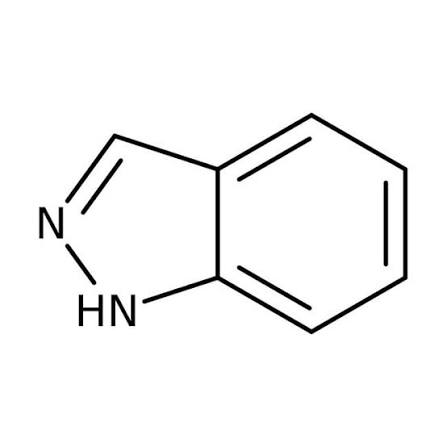 1H-Indazole | CAS No. 271-44-3 | Pharmaceutical IntermediateView Details
271-44-3