
Ethephon
Synonym(s):2-Chloroethylphosphonic acid;Ethephon
- CAS NO.:16672-87-0
- Empirical Formula: C2H6ClO3P
- Molecular Weight: 144.49
- MDL number: MFCD00002142
- EINECS: 240-718-3
- SAFETY DATA SHEET (SDS)
- Update Date: 2026-07-31 15:25:14
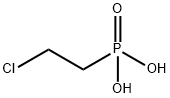
What is Ethephon?
Chemical properties
white to beige powder
Chemical properties
Ethephon is a white to tan powder. Commercial product is a white, waxy solid. Commercial products may be available as aqueous solutions or soluble concentrates.
The Uses of Ethephon
2-Chloroethyl)phosphonic acid (Ethephon) is the most widely used plant growth regulator. Ethephon is often used on wheat, coffee, tobacco, cotton, and rice in order to help the plant's fruit reach mat urity more quickly. The toxicity of Ethephon is actually very low, and any Ethephon used on the plant is converted very quickly to ethylene.
The Uses of Ethephon
Accelerates the preharvest ripening of fruits and vegetables.
Definition
ChEBI: A phosphonic acid compound having a 2-chloroethyl substituent attached to the P-atom.
Agricultural Uses
Plant growth regulator: Ethephon is a plant growth regulator used to promote fruit ripening, abscission, flower induction, and other responses. It is registered for use on a number of food, feed and nonfood crops (rubber plants, flax), greenhouse nursery stock, and outdoor residential ornamental plants, but is used primarily on cotton. Ethephon is applied to plant foliage by either ground or aerial equipment. It also may be applied by hand sprayer to certain home garden vegetables and ornamentals. Use practice limitations include prohibitions against applying ethephon through any type of irrigation system; feeding or grazing livestock in treated areas; and treating within 2 to 60 days of harvest, depending on the crop.
Trade name
AMCHEM® 68-250; ARVEST®; BASE® 250; BOLL’D®; BROMEFLOR®; BROMOFLOR®; CAMPOSAN®; CEPHA®; CEPHA® 10LS; CERONE®; CHIPCO® FLOREL PRO; ETHEPON®; ETHEL®; ETHEVERSE®; ETHREL®; FINISH®; FLORDIMEX®; FLOREL®; G-996®; KAMPOSAN®; PREP®; ROLLFRUCT®; TERPAL® (with mepiquat chloride); T-EXTRA®; TOMATHREL®
Safety Profile
Moderately toxic by ingestion. Mddly toxic by skin contact. A plant growth regulator. Caution: Spray formulations are quite acidic, about pH 1 .O. May be irritating to exposed skin and eyes, or if inhaled. When heated to decomposition it emits toxic fumes of Cl and POx.
Potential Exposure
Ethephon is an organophosphonate plant growth regulator used to promote fruit ripening, abscission, flower induction, and other responses. It is registered for use on a number of food, animal feed and nonfood crops (rubber plants, flax), greenhouse nursery stock, and outdoor residential ornamental plants, but is used primarily on cotton. Ethephon is applied to plant foliage by either ground or aerial equipment. It also may be applied by hand sprayer to certain home garden vegetables and ornamentals. Use practice limitations include prohibitions against applying ethephon through any type of irrigation system; feeding or grazing livestock in treated areas; and treating within 2 to 60 days of harvest, depending on the crop
Environmental Fate
Soil. Degrades rapidly in soil to phosphoric acid, ethylene and chloride ions (Hartley
and Kidd, 1987) and naturally occurring substances (Humburg et al., 1989).
Chemical/Physical. In an aqueous solution at pH 3.5, ethepon begins to hydrolyze,
releasing ethylene (Windholz et al., 1983).
Shipping
UN2928 Toxic solids, corrosive, organic, n.o.s., Hazard Class: 6.1; Labels: 6.1-Poisonous materials, 8-Corrosive material, Technical Name Required
Incompatibilities
Hygroscopic. Aqueous solutions are highly acidic. May cause corrosion if metals, especially when moisture is present. Contact with flammable material may cause fire and explosions. Contact with combustible or oxidizable materials may form heat-, shock-, and frictionsensitive explosive mixtures. Static electricity may also cause explosions. Keep away from all acids, especially dibasic organic acids, ammonium compounds, antimony sulfide, arsenic trioxide, metal sulfides, powdered metals, calcium aluminum hydride, cyanides, manganese dioxide, phosphorus, selenium, sulfur, thiocyanates, and zinc.
Waste Disposal
Destruction by alkali hydrolysis or incineration. Containers must be disposed of properly by following package label directions or by contacting your local or federal environmental control agency, or by contacting your regional EPA office.
Properties of Ethephon
| Melting point: | 70-72 °C(lit.) |
| Boiling point: | 265°C(lit.) |
| Density | 1.2000 |
| storage temp. | 2-8°C |
| Water Solubility | Completely soluble in water |
| solubility | DMF: 30 mg/ml,DMSO: 30 mg/ml,Ethanol: 25 mg/ml,PBS (pH 7.2): 10 mg/ml |
| form | Powder |
| pka | 1.88±0.10(Predicted) |
| color | White to beige |
| Sensitive | Hygroscopic |
| Merck | 14,3732 |
| BRN | 1751208 |
| Stability: | Hygroscopic |
| CAS DataBase Reference | 16672-87-0(CAS DataBase Reference) |
| NIST Chemistry Reference | Phosphonic acid, (2-chloroethyl)-(16672-87-0) |
| EPA Substance Registry System | Ethephon (16672-87-0) |
Safety information for Ethephon
| Signal word | Danger |
| Pictogram(s) |
 Corrosion Corrosives GHS05  Skull and Crossbones Acute Toxicity GHS06  Environment GHS09 |
| GHS Hazard Statements |
H311:Acute toxicity,dermal H314:Skin corrosion/irritation H411:Hazardous to the aquatic environment, long-term hazard |
| Precautionary Statement Codes |
P260:Do not breathe dust/fume/gas/mist/vapours/spray. P273:Avoid release to the environment. P280:Wear protective gloves/protective clothing/eye protection/face protection. P301+P330+P331:IF SWALLOWED: Rinse mouth. Do NOT induce vomiting. P303+P361+P353:IF ON SKIN (or hair): Remove/Take off Immediately all contaminated clothing. Rinse SKIN with water/shower. P305+P351+P338:IF IN EYES: Rinse cautiously with water for several minutes. Remove contact lenses, if present and easy to do. Continuerinsing. |
Computed Descriptors for Ethephon
| InChIKey | UDPGUMQDCGORJQ-UHFFFAOYSA-N |
Ethephon manufacturer
New Products
2-(2-Chlorophenyl)glycine Propiolic Acid 1-(3-Hydroxy-4-methoxyphenyl)-2-nitroethene (±)-amino(2-fluorophenyl)acetic acid trans-3-Benzyloxy-4-methoxy-beta-nitrostyrene 1-Pentadecanol 2,4-Dihydroxybenzaldehyde Dipropyl disulfide Pyrrolo[1,2-a]pyrimidine-6-carboxylic acid, 4,6,7,8-tetrahydro-4-oxo-, sodium salt (1:1), (6S) Obidoxime hydrochloride API 4 pentyn 1 ol N-Vinylformamide Methacrylate-PEG-Methacrylate, Mn:35000 2,4-Dihydroxyacetophenone 2-Chloro 5-Fluoro Pyridine Vasicinone 2-Chloroisonicotinic Acid Tween 80 or Polysorbate 80 2-Butyn-1-oL N-(4-Cyano-3-(trifluoromethyl)phenyl)-2-methyloxirane-2-carboxamide N-(4-fluoro-2-methoxy-5-nitrophenyl)-4-(1-methyl-1H-indol-3-yl)pyrimidin-2-amine Pirtobrutinib intd. 2-Pentyn-1-oL 4-NitrobenzotrifluorideRelated products of tetrahydrofuran



You may like
-
 (2-Chloroethyl)phosphonic Acid CAS 16672-87-0View Details
16672-87-0 -
Ethephon 40% aqueous solution 40% CAS 16672-87-0View Details
16672-87-0 -
2-Chloroethylphosphonic acid, ≥96% CAS 16672-87-0View Details
16672-87-0 -
2-Chloroethylphosphonic acid, solution CAS 16672-87-0View Details
16672-87-0 -
 Red Liquid Ethephone 39 Sl, Packaging Size: 1 ltrView Details
16672-87-0 -
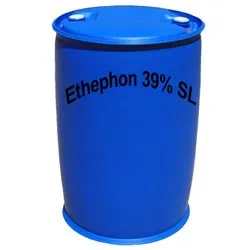 Liquid Ethephon 39% SL Plant Growth Regulator, Packaging Size: 200LView Details
16672-87-0 -
 Ethephone 39 Sl, C2H6ClO3P, Packaging Size: 250 KgView Details
16672-87-0 -
 ETHEPHONView Details
16672-87-0