
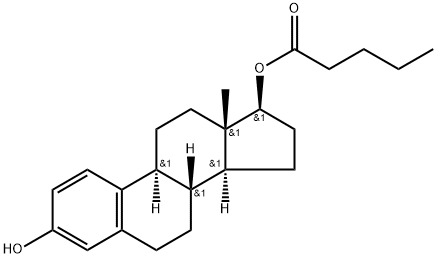
estra-1,3,5(10)-triene-3,17beta-diol diheptanoate
- CAS NO.:7732-97-0
- Empirical Formula: C32H48O4
- Molecular Weight: 496.72112
- MDL number: MFCD03695580
- EINECS: 231-792-8
- SAFETY DATA SHEET (SDS)
- Update Date: 2022-12-21 16:56:50
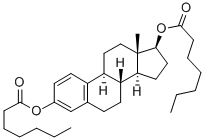
What is estra-1,3,5(10)-triene-3,17beta-diol diheptanoate?
The Uses of estra-1,3,5(10)-triene-3,17beta-diol diheptanoate
Estradiol Dienanthate is a metabolite of estradiol (E888000), which is the major estrogen secreted by the premenopausal ovary.
Indications
Estradiol dienanthate is not currently available in any FDA or Health Canada approved products.
Background
Estradiol Dienanthate is a pro-drug ester of Estradiol, a naturally occurring hormone that circulates endogenously within the human body. Estradiol is the most potent form of all mammalian estrogenic steroids and acts as the major female sex hormone. As a pro-drug of estradiol, estradiol benzoate therefore has the same downstream effects within the body through binding to the Estrogen Receptor (ER) including ERα and ERβ subtypes, which are located in various tissues including in the breasts, uterus, ovaries, skin, prostate, bone, fat, and brain.
Estradiol is commonly produced with an ester side-chain as endogenous estradiol has very low oral bioavailability on its own (2-10%). First-pass metabolism by the gut and the liver quickly degrades the estradiol molecule before it gets a chance to enter systemic circulation and exert its estrogenic effects . Esterification of estradiol aims to improves absorption and bioavailability after oral administration (such as with Estradiol valerate) or to sustain release from depot intramuscular injections (such as with Estradiol Cypionate) through improved lipophilicity. Following absorption, the esters are cleaved, resulting in the release of endogenous estradiol, or 17β-estradiol. Ester pro-drugs of estradiol are therefore considered to be bioidentical forms of estrogen .
Estradiol dienanthate is not currently available in any commercially available products in Canada or the US.
Pharmacokinetics
Estradiol, the principal intracellular human estrogen, is substantially more active than its metabolites, estrone and estriol, at the cellular level.
Metabolism
Exogenous estrogens are metabolized using the same mechanism as endogenous estrogens. Estrogens are partially metabolized by cytochrome P450.
Safety information for estra-1,3,5(10)-triene-3,17beta-diol diheptanoate
New Products
Cis-Tosylate 1,2,3,9-Tetrahydro-9-Methyl-4H-Carbazole-4-One Dibenzo[b,f][1,4]thiazepin-11(10H)-one Dibenzoyl-L-tartaric acid Anhydrous (Resolution Reagent) N-BOC-piperidine-4-carboxylic acid 1-Benzhydrylazetane-3-carbonitrile AMINO-(3-CHLORO-PHENYL)-ACETIC ACID 2-(2-Chlorophenyl)glycine (±)-amino(2-fluorophenyl)acetic acid 8-oxa-1,3-diazaspiro[4.5]decane-2,4-dione BENZOIC ACID-D METHANE SULFONIC ACID-D4 PHOSPORIC ACID-D3 85 W% IN D2O DEUTERIUM OXIDE FOR NMR TOLUENE-D3 BENZENE-D6 1-Acetyl-4-(4-hydroxyphenyl)piperazine 1-(3-Chlorophenyl)piperazine hydrochlorideRelated products of tetrahydrofuran
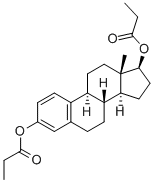


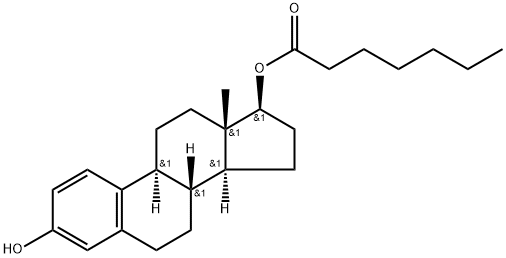

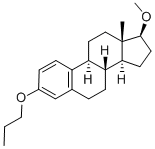
You may like
-
 7292-71-9 AMINO-(3-CHLORO-PHENYL)-ACETIC ACID 98+View Details
7292-71-9 -
84145-28-8 98+View Details
84145-28-8 -
2-(2-Chlorophenyl)glycine 98+View Details
88744-36-9 -
8-oxa-1,3-diazaspiro[4.5]decane-2,4-dione 39124-19-1 98+View Details
39124-19-1 -
7292-71-9 AMINO-(3-CHLORO-PHENYL)-ACETIC ACID 98+View Details
7292-71-9 -
84145-28-8 98+View Details
84145-28-8 -
2-(2-Chlorophenyl)glycine 98+View Details
88744-36-9 -
8-oxa-1,3-diazaspiro[4.5]decane-2,4-dione 39124-19-1 98+View Details
39124-19-1