
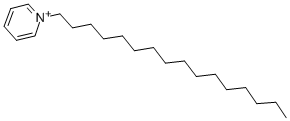
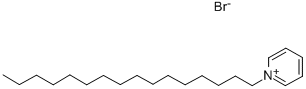
Cetylpyridinium
- CAS NO.:7773-52-6
- Empirical Formula: C21H38N
- Molecular Weight: 0
- MDL number: MFCD00642462
- SAFETY DATA SHEET (SDS)
- Update Date: 2026-11-09 13:48:12
What is Cetylpyridinium?
Absorption
Most available formulations consisting of cetylpyridinium chloride as an active ingredient are either mouthwashes, tootpastes, lozenges, or mouth sprays. The oral retention of cetylpyridinium chloride given as 1 min mouth rinse of 10 mL of 2.2 MMOL solution was recorded as 65% of the administered dose .
Additionally, it has been recorded that quaternary ammonium compounds like Cetylpyridinium chloride are generally poorly absorbed by the oral route . Furthermore, although systemic absorption from the parenteral route of administration is possible, systemic effects from percutaneous absorption through intact skin is considered rare .
Toxicity
Ingestion of cetylpyridinium chloride in large doses may cause gastric upset and central nervous system depression . However, such overdose symptoms are only observed in doses 70 times greater than the concentrations of cetylpyridinium chloride found in most over-the-counter cetylpyridinium chloride products .
Definition
ChEBI: Cetylpyridinium is a pyridinium ion.
Indications
Typically employed as the cetylpyridinium chloride salt, this compound is commonly used as an active ingredient in various over-the-counter mouthwashes, toothpastes, lozenges, and mouth sprays where it is generally indicated for antiseptic actions, gingivitis and plaque prevention, as well as action or prevention against some other oropharyngeal bacterial infections .
Background
Cetylpyridinium is a quaternary ammonium with broad-spectrum antiseptic properties. Its salt form, cetylpyridinium chloride, is typically found as an active ingredient in mouthwashes, toothpastes, lozenges, throat sprays, breath sprays, and nasal sprays. In these products, it generally mediates an antiseptic activity and protective action against dental plaque and reducing gingivitis.
Pharmacokinetics
Cetylpyridinium chloride is considered a cationic disinfectant with properties and uses similar to other such cationic surfactants . In particular, cetylpyridinium chloride has demonstrated a rapid bactericidal and fungicide effect on gram-positive pathogens and yeasts, respectively . Cetylpyridinium chloride is subsequently utilized in a variety of preparations for the local treatment of minor infections . Despite the variety of formulations in which cetylpyridinium chloride may appear as an active ingredient, it is generally accepted that it only elicits a local effect owing to the compound's relatively poor absorption by route of exposure .
Metabolism
No readily available data regarding the metabolism of cetylpyridinium chloride is available and various products that actually contain cetylpyridinium chloride as an active ingredient suggest that no pharmacokinetic data are available for the agent .
Properties of Cetylpyridinium
| Melting point: | 79-82 °C |
Safety information for Cetylpyridinium
Computed Descriptors for Cetylpyridinium
New Products
2-(2-Chlorophenyl)glycine Propiolic Acid 1-(3-Hydroxy-4-methoxyphenyl)-2-nitroethene (±)-amino(2-fluorophenyl)acetic acid trans-3-Benzyloxy-4-methoxy-beta-nitrostyrene 1-Pentadecanol 4-(4-Αminophenyl)-3-Morpholinone 3-Morpholino-1-(4-(2-oxopiperidin-1-yl) phenyl)-5,6-dihyropyridin-2-(1H)-one 1-(4-Aminophenyl)-3-morpholino-5,6-dihydropyridin-2(1H)-one N-cyanoacetylurethane 1H-IndazoleRelated products of tetrahydrofuran


You may like
-
 40216-83-9 trans-4-Hydroxy-L-proline methyl ester hydrochloride 98+View Details
40216-83-9 -
471-25-0 Propiolic Acid 98+View Details
471-25-0 -
84145-28-8 98+View Details
84145-28-8 -
trans-3-Benzyloxy-4-methoxy-beta-nitrostyrene 98+View Details
63909-29-5 -
2-(2-Chlorophenyl)glycine 88744-36-9 98+View Details
88744-36-9 -
40216-83-9 trans-4-Hydroxy-L-proline methyl ester hydrochloride 98+View Details
40216-83-9 -
629-76-5 98+View Details
629-76-5 -
1-(3-Hydroxy-4-methoxyphenyl)-2-nitroethene 98+View Details
39816-35-8