
CARAMEL
- CAS NO.:8028-89-5
- Empirical Formula: C7H10O2
- Molecular Weight: 0
- MDL number: MFCD00146294
- EINECS: 232-435-9
- Update Date: 2026-06-24 18:39:39
What is CARAMEL?
Chemical properties
Caramel color is one of the oldest and most widely used food-color additives. Caramel has an odor of burnt sugar and a pleasant, bitter taste. However, at the low levels used in food, the taste is not perceptible. Internationally, the Joint FAO/WHO Expert Committee on Food Additives and Contaminants (JECFA) has divided caramel color into four classes, depending on the reactants used in its manufacturing. For further details, see Burdock (1997).
The Uses of CARAMEL
caramel is used as a coloring agent. It provides products with a slight touch of brown. Some sources also state that it acts as a soothing agent in skin care preparations. Caramel is a concentrated solution obtained from heating sugar or glucose solutions.
The Uses of CARAMEL
Pharmaceutic aid (color).
The Uses of CARAMEL
Caramel is a colorant that is an amorphous, dark brown product resulting from the controlled heat treatment of carbohydrates such as dextrose, sucrose, and malt syrup. it is available in liquid and powdered forms, providing shades of brown. in coloring a food with caramel, the food components must have the same charge as the particles of caramel, otherwise the particles will attract one another and precipitate out. caramel can exist as several types, for example, acid-proof caramel of negative charge which is used in carbonated beverages, acidified solutions, bakers’ and confectioners’ caramel which are used in baked goods; and dried caramel for dry mixes. major uses are in coloring beverages such as colas and root beers and in baked goods.
Definition
A sugar-based food colorant made from liquid corn syrup by heating in the presence of catalysts to approximately 250F (121C) for several hours, cooling to 200F (93C), and filtering. The brown color results from either Maillard reactions, true caramelization, or oxidative reactions. Caramels are colloidal in nature, the particles being held in solution by either positive or negative electric charges.
Preparation
Made by heating sugar or glucose, adding small amounts of alkali, alkaline carbonate or a trace of mineral acid during the heating.
Safety Profile
Mutation data reported. When heated to decomposition it emits acrid smoke and irritating fumes.
Properties of CARAMEL
| Density | 1.35 g/cm3 |
| FEMA | 2235 | CARAMEL COLOR |
| Odor | at 100.00 %. burnt sugar |
| EPA Substance Registry System | Caramel color (8028-89-5) |
Safety information for CARAMEL
Computed Descriptors for CARAMEL
CARAMEL manufacturer
New Products
5-bromo-4-fluoro-2-nitrobenzaldehyde Cyclobutanone (R)-(-)-2-Amino-1-propanol Fmoc-OSu 1-(2-Chloroethyl)pyrrolidine Hydrochloride 2-Amino-2-(4-methylphenyl)acetic acid 2,4-Dihydroxybenzaldehyde Obidoxime hydrochloride API Pyrrolo[1,2-a]pyrimidine-6-carboxylic acid, 4,6,7,8-tetrahydro-4-oxo-, sodium salt (1:1), (6S) Dipropyl disulfide 4 pentyn 1 ol N-Vinylformamide Methacrylate-PEG-Methacrylate, Mn:35000 2,4-Dihydroxyacetophenone 2-Chloro 5-Fluoro Pyridine Vasicinone 2-Chloroisonicotinic Acid Tween 80 or Polysorbate 80 2-Butyn-1-oL 2-Pentyn-1-oL 4-Nitrobenzotrifluoride N-(4-Cyano-3-(trifluoromethyl)phenyl)-2-methyloxirane-2-carboxamide N-(4-fluoro-2-methoxy-5-nitrophenyl)-4-(1-methyl-1H-indol-3-yl)pyrimidin-2-amine Pirtobrutinib intd.Related products of tetrahydrofuran



You may like
-
 Caramel 8028-89-5 99%View Details
8028-89-5 -
7250-67-1 1-(2-Chloroethyl)pyrrolidine Hydrochloride 98+View Details
7250-67-1 -
13227-01-5 98+View Details
13227-01-5 -
545445-44-1 3-Morpholino-1-(4-(2-oxopiperidin-1-yl) phenyl)-5,6-dihyropyridin-2-(1H)-one 98%View Details
545445-44-1 -
6629-04-5 98%View Details
6629-04-5 -
4-(4-Αminophenyl)-3-Morpholinone 98%View Details
438056-69-0 -
1-(4-Aminophenyl)-3-morpholino-5,6-dihydropyridin-2(1H)-one 1267610-26-3 98%View Details
1267610-26-3 -
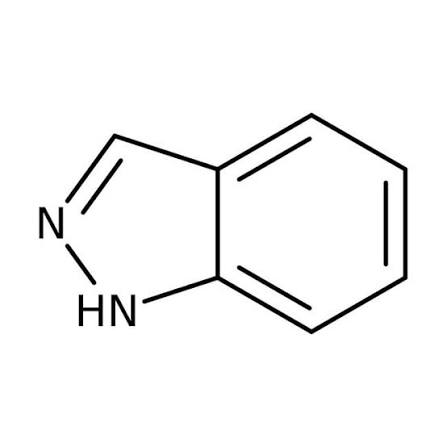 1H-Indazole | CAS No. 271-44-3 | Pharmaceutical IntermediateView Details
271-44-3