
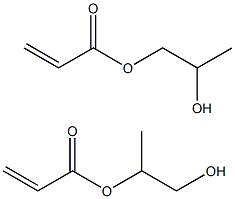
Acrylates copolymer
- CAS NO.:25133-97-5
- Empirical Formula: C14H22O6
- Molecular Weight: 286.32
- EINECS: 253-242-6
- SAFETY DATA SHEET (SDS)
- Update Date: 2026-07-31 13:43:42
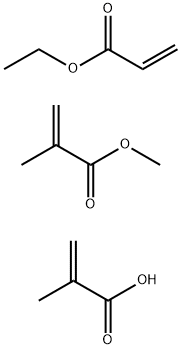
What is Acrylates copolymer?
The Uses of Acrylates copolymer
acrylates copolymer is able to absorb skin secretions, thereby reducing skin shine and providing an improved skin surface for makeup application. Acrylates copolymer also imparts a pleasant feel to a cosmetic preparation and helps reduce any feeling of oiliness the product may have. It is incorporated into numerous types of cosmetic formulations including skin cleansers, oil control treatments, makeup, and loose and compressed powders. When used in conjunction with a variety of other ingredients, including glycerine, cyclomethicone, retinyl palmitate, and vegetable oils, acrylates copolymer prolongs the availability of these other ingredients to the skin through a form of time-release activity. It also helps counteract some negative properties when applied to the skin, or further enhance positive ones. For example, acrylates copolymer reduces the tackiness and greasiness of glycerine while prolonging its availability in the interstitial network of the skin. When present with retinyl palmitate, acrylates copolymer improves the stability of the formulation and increases its skin contact time.
What are the applications of Application
Acrylates copolymers are a widely used class of polymers, primarily used as film-forming agents, thickeners, stabilizers, and adhesives. In cosmetics and personal care products, they provide waterproofing, friction resistance, and long-lasting hold by forming a continuous film on the skin, hair, or nails, making them common in products such as sunscreens, foundations, mascaras, hairsprays, and nail polishes. As thickeners and suspending agents, they effectively increase the viscosity of water-based products and help stabilize insoluble components in the formulation (such as pearlescent agents, glitter, or active particles), improving the texture and appearance of the product. Furthermore, acrylate copolymers play a crucial role in industries such as coatings, adhesives, and textiles due to their excellent adhesion, weather resistance, and film-forming properties.
Properties of Acrylates copolymer
| Density | 1.10 (30% aq.) |
| EPA Substance Registry System | 2-Propenoic acid, 2-methyl-, polymer with ethyl 2-propenoate and methyl 2-methyl-2-propenoate (25133-97-5) |
Safety information for Acrylates copolymer
Computed Descriptors for Acrylates copolymer
Acrylates copolymer manufacturer
New Products
2-(2-Chlorophenyl)glycine Propiolic Acid 1-(3-Hydroxy-4-methoxyphenyl)-2-nitroethene (±)-amino(2-fluorophenyl)acetic acid trans-3-Benzyloxy-4-methoxy-beta-nitrostyrene 1-Pentadecanol 2,4-Dihydroxybenzaldehyde Dipropyl disulfide Pyrrolo[1,2-a]pyrimidine-6-carboxylic acid, 4,6,7,8-tetrahydro-4-oxo-, sodium salt (1:1), (6S) Obidoxime hydrochloride API 4 pentyn 1 ol N-Vinylformamide Methacrylate-PEG-Methacrylate, Mn:35000 2,4-Dihydroxyacetophenone 2-Chloro 5-Fluoro Pyridine Vasicinone 2-Chloroisonicotinic Acid Tween 80 or Polysorbate 80 2-Butyn-1-oL N-(4-Cyano-3-(trifluoromethyl)phenyl)-2-methyloxirane-2-carboxamide N-(4-fluoro-2-methoxy-5-nitrophenyl)-4-(1-methyl-1H-indol-3-yl)pyrimidin-2-amine Pirtobrutinib intd. 2-Pentyn-1-oL 4-NitrobenzotrifluorideRelated products of tetrahydrofuran

You may like
-
 25133-97-5 Ethyl acrylate, methyl methacrylate, methacrylic acid polymer 98%View Details
25133-97-5 -
 Acrylates Copolymer CAS 25133-97-5View Details
25133-97-5 -
 Acrylates Co PolymerView Details
25133-97-5 -
 471-25-0 Propiolic Acid 98+View Details
471-25-0 -
84145-28-8 98+View Details
84145-28-8 -
2-(2-Chlorophenyl)glycine 88744-36-9 98+View Details
88744-36-9 -
40216-83-9 trans-4-Hydroxy-L-proline methyl ester hydrochloride 98+View Details
40216-83-9 -
1-(3-Hydroxy-4-methoxyphenyl)-2-nitroethene 98+View Details
39816-35-8