
4-(Trifluoromethyl)benzyl alcohol
- CAS NO.:349-95-1
- Empirical Formula: C8H7F3O
- Molecular Weight: 176.14
- MDL number: MFCD00004661
- EINECS: 206-494-6
- SAFETY DATA SHEET (SDS)
- Update Date: 2026-05-28 05:24:19
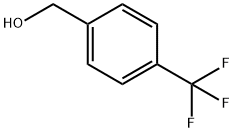
What is 4-(Trifluoromethyl)benzyl alcohol?
Chemical properties
Colorless to light yellow liqui
The Uses of 4-(Trifluoromethyl)benzyl alcohol
4-(Trifluoromethyl)benzyl alcohol, is used as a pharmaceutical intermediate, it is also used to predict the NMR spectrum. 4-(Trifluoromethyl)benzyl alcohol is employed as a reagent in, for example, kinetic studies of phosphonoformate prodrugs and aquachromium(IV).
Definition
ChEBI: 4-(trifluoromethyl)benzyl alcohol is an aromatic primary alcohol. It is functionally related to a benzyl alcohol.
Synthesis Reference(s)
Tetrahedron Letters, 29, p. 4057, 1988 DOI: 10.1016/S0040-4039(00)80416-5
General Description
Photocatalytic oxidation of 4-(trifluoromethyl)benzyl alcohol to corresponding aldehydes on TiO2 photocatalyst under O2 atmosphere has been reported.
Properties of 4-(Trifluoromethyl)benzyl alcohol
| Melting point: | 22-25 °C |
| Boiling point: | 78-80 °C/4 mmHg (lit.) |
| Density | 1.286 g/mL at 25 °C (lit.) |
| refractive index | n |
| Flash point: | 213 °F |
| storage temp. | Keep in dark place,Sealed in dry,Room Temperature |
| form | Liquid After Melting |
| pka | 13.91±0.10(Predicted) |
| Specific Gravity | 1.286 |
| color | Clear colorless to light brown |
| Water Solubility | Soluble in water. |
| BRN | 1450174 |
| InChI | InChI=1S/C8H7F3O/c9-8(10,11)7-3-1-6(5-12)2-4-7/h1-4,12H,5H2 |
| CAS DataBase Reference | 349-95-1(CAS DataBase Reference) |
| NIST Chemistry Reference | 4-(Trifluoromethyl)benzyl alcohol(349-95-1) |
Safety information for 4-(Trifluoromethyl)benzyl alcohol
| Signal word | Warning |
| Pictogram(s) |
 Exclamation Mark Irritant GHS07 |
| GHS Hazard Statements |
H315:Skin corrosion/irritation H319:Serious eye damage/eye irritation H335:Specific target organ toxicity, single exposure;Respiratory tract irritation |
| Precautionary Statement Codes |
P261:Avoid breathing dust/fume/gas/mist/vapours/spray. P304+P340:IF INHALED: Remove victim to fresh air and Keep at rest in a position comfortable for breathing. P305+P351+P338:IF IN EYES: Rinse cautiously with water for several minutes. Remove contact lenses, if present and easy to do. Continuerinsing. P405:Store locked up. |
Computed Descriptors for 4-(Trifluoromethyl)benzyl alcohol
| InChIKey | MOOUWXDQAUXZRG-UHFFFAOYSA-N |
| SMILES | C1(CO)=CC=C(C(F)(F)F)C=C1 |
New Products
1-(4-methoxyphenyl)-4-(4-Nitrophenyl)Piperazine (IT-1) 1,2,3,9-Tetrahydro-9-Methyl-4H-Carbazole-4-One Dibenzo[b,f][1,4]thiazepin-11(10H)-one Cis-Tosylate Dibenzoyl-L-tartaric acid Anhydrous (Resolution Reagent) 1-Benzhydrylazetane-3-carbonitrile 8-oxa-1,3-diazaspiro[4.5]decane-2,4-dione (±)-amino(2-fluorophenyl)acetic acid 2-(2-Chlorophenyl)glycine AMINO-(3-CHLORO-PHENYL)-ACETIC ACID 2'-Fluoroacetophenone METHANOL-D1(OD) N-ETHYL-D5-AMINE HYDROCHLORIDE BENZOIC ACID-D CHLOROFORM-D BENZENE-D6 TOLUENE-D3 2-Hydroxybutanenitrile 1-Benzylindolin-2-one Ethyl 2-bromo-3-oxobutanoate 4-(3-chloropropyl)morpholine 1-Benzylindoline-2,3-dione 3-Oxocyclobutanecarboxylic acid 1-(3-Chlorophenyl)piperazine hydrochlorideRelated products of tetrahydrofuran

You may like
-
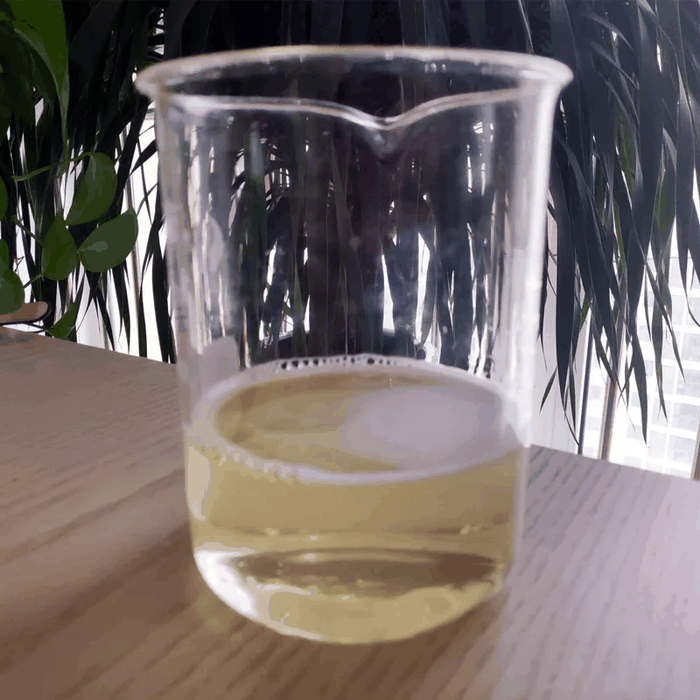 349-95-1 4-(Trifluoromethyl)benzyl alcohol 98%View Details
349-95-1 -
 349-95-1 4-(Trifluoromethyl)-benzyl alcohol 98%View Details
349-95-1 -
4-(Trifluoromethyl)benzyl Alcohol CAS 349-95-1View Details
349-95-1 -
5-Bromo-2-chloro- benzoic acid 21739-92-4 98%View Details
21739-92-4 -
52092-43-0 2-Bromo-4-nitropyridine-N-oxide 98%View Details
52092-43-0 -
2,4,6-Trichloro-5-nitropyrimidine 98%View Details
4359-87-9 -
1-Methylpiperidine-4-thiol 1072-99-7 98%View Details
1072-99-7 -
68886-07-7 98%View Details
68886-07-7
Statement: All products displayed on this website are only used for non medical purposes such as industrial applications or scientific research, and cannot be used for clinical diagnosis or treatment of humans or animals. They are not medicinal or edible.