
2-CHLORO-4H-1,3,2-BENZODIOXAPHOSPHORIN-4-ONE
Synonym(s):Salicyl chlorophosphite;SalPCl
- CAS NO.:5381-99-7
- Empirical Formula: C7H4ClO3P
- Molecular Weight: 202.53
- MDL number: MFCD00013353
- SAFETY DATA SHEET (SDS)
- Update Date: 2026-05-28 02:46:49
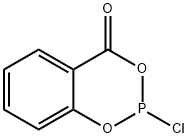
What is 2-CHLORO-4H-1,3,2-BENZODIOXAPHOSPHORIN-4-ONE?
Chemical properties
White Crystalline Solid
The Uses of 2-CHLORO-4H-1,3,2-BENZODIOXAPHOSPHORIN-4-ONE
2-Chloro-4H-1,3,2-benzodioxaphosphorin-4-one is a reagent used in phosphorylation and phosphitylation of alcohols and in the formation of H-phosphonates. It is also reactive cyclic phosphitylating reagent involved in fast coupling rates and hydrolytic cleavage more readily compare to that of a acyclic analog.
The Uses of 2-CHLORO-4H-1,3,2-BENZODIOXAPHOSPHORIN-4-ONE
Highly reactive cyclic phosphitylating reagent which provides fast coupling rates, and hydrolytic cleavage occurs more readily than with acyclic analogs
The Uses of 2-CHLORO-4H-1,3,2-BENZODIOXAPHOSPHORIN-4-ONE
2-Chloro-1,3,2-benzodioxaphosphorin-4-one is used as a reagent:
- In the phosphorylation and phosphitylation of alcohols.
- In the formation of H-phosphonates which are commonly utilized in the synthesis of nucleotides.
- To synthesize nucleoside triphosphates by treating with acyl protected nucleoside.
Properties of 2-CHLORO-4H-1,3,2-BENZODIOXAPHOSPHORIN-4-ONE
| Melting point: | 36-40 °C (lit.) |
| Boiling point: | 127-128 °C/11 mmHg (lit.) |
| Flash point: | >230 °F |
| storage temp. | 2-8°C |
| solubility | Soluble in acetonitrile, dichloromethane, tetrahydrofuron and dimethylformamide. |
| form | solid |
| color | White or Colorless to Orange to Green |
| BRN | 1311951 |
| Stability: | Water Sensitive |
| CAS DataBase Reference | 5381-99-7(CAS DataBase Reference) |
Safety information for 2-CHLORO-4H-1,3,2-BENZODIOXAPHOSPHORIN-4-ONE
| Signal word | Danger |
| Pictogram(s) |
 Corrosion Corrosives GHS05 |
| GHS Hazard Statements |
H314:Skin corrosion/irritation |
| Precautionary Statement Codes |
P260:Do not breathe dust/fume/gas/mist/vapours/spray. P280:Wear protective gloves/protective clothing/eye protection/face protection. P363:Wash contaminated clothing before reuse. P303+P361+P353:IF ON SKIN (or hair): Remove/Take off Immediately all contaminated clothing. Rinse SKIN with water/shower. P305+P351+P338:IF IN EYES: Rinse cautiously with water for several minutes. Remove contact lenses, if present and easy to do. Continuerinsing. |
Computed Descriptors for 2-CHLORO-4H-1,3,2-BENZODIOXAPHOSPHORIN-4-ONE
New Products
2-Bromo-4-hydroxypyridine Dibenzoyl-L-tartaric acid Anhydrous (Resolution Reagent) Dibenzo[b,f][1,4]thiazepin-11(10H)-one 1,2,3,9-Tetrahydro-9-Methyl-4H-Carbazole-4-One Cis-Tosylate 1-(4-methoxyphenyl)-4-(4-Nitrophenyl)Piperazine (IT-1) 2'-Fluoroacetophenone 1-aminocyclobutanecarbonitrile hydrochloride AMINO-O-TOLYL-ACETIC ACID N-Methyl-2-amino-2-methylpropionamide 4-(FMOC-AMINO)-TETRAHYDROPYRAN-4-CARBOXYLIC ACID 1-Aminocyclobutanecarboxylic Acid Hydrochloride METHANOL-D1(OD) TERTIARY BUTANOL-D9 N-ETHYL-D5-AMINE HYDROCHLORIDE BENZOIC ACID-D CHLOROFORM-D TOLUENE-D3 2-(2-Bromophenyl)ethanol Boc-D-Glu(OMe)-OMe 2,5 Dibromopyridine Ethyl 4-hydroxy-3-oxobutanoate Dimethyl (2S)-2-((tert-butoxycarbonyl)amino)-4-(cyanomethyl)pentanedioate 1-(3-Chlorophenyl)piperazine hydrochlorideRelated products of tetrahydrofuran
You may like
-
 2-Chloro-4H-1,3,2-benzodioxaphosphorin-4-one CAS 5381-99-7View Details
5381-99-7 -
2-Chloro-4H-1,3,2-benzodioxaphosphorin-4-one CAS 5381-99-7View Details
5381-99-7 -
2-Chloro-1,3,2-benzodioxaphosphorin-4-one CAS 5381-99-7View Details
5381-99-7 -
106914-07-2 N-Methyl-2-amino-2-methylpropionamide 98+View Details
106914-07-2 -
129592-98-9 98+View Details
129592-98-9 -
1-aminocyclobutanecarbonitrile hydrochloride 845821-84-3 98+View Details
845821-84-3 -
98071-16-0 1-Aminocyclobutanecarboxylic Acid Hydrochloride 98+View Details
98071-16-0 -
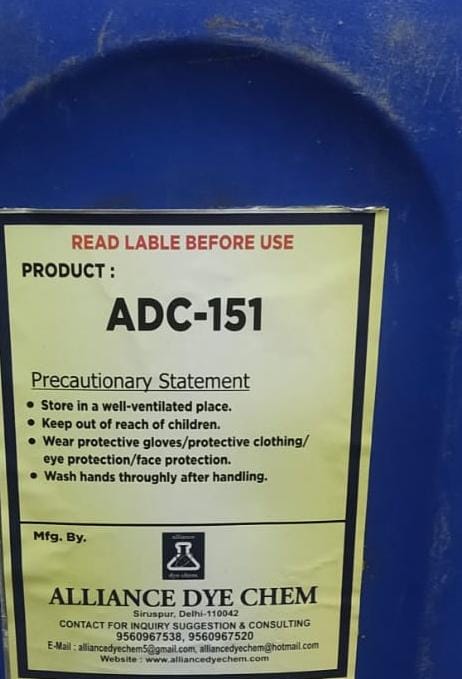 ADC-151View Details
27176-87-0
Statement: All products displayed on this website are only used for non medical purposes such as industrial applications or scientific research, and cannot be used for clinical diagnosis or treatment of humans or animals. They are not medicinal or edible.