
1,2-Propyleneglycol diacetate
Synonym(s):1,2-Diacetoxypropane;1,2-Propanediol diacetate;1,2-Propylene glycol diacetate;DOWANOL PGDA;Propylene diacetate
- CAS NO.:623-84-7
- Empirical Formula: C7H12O4
- Molecular Weight: 160.17
- MDL number: MFCD00026201
- EINECS: 210-817-6
- SAFETY DATA SHEET (SDS)
- Update Date: 2026-05-27 23:12:58
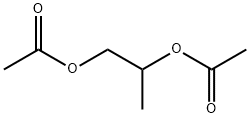
What is 1,2-Propyleneglycol diacetate?
Chemical properties
Clear colourless liquid.10% soluble in water, miscible with alcohol and oils.
The Uses of 1,2-Propyleneglycol diacetate
1,2-Diacetoxypropane is used in preparation method of antibacterial thermoplastic resin compound and its application.
The Uses of 1,2-Propyleneglycol diacetate
Propylene glycol diacetate may be used as an emulsifier, solubilizer or solvent in pharmaceuticals.
Definition
ChEBI: Propyleneglycol diacetate is a dicarboxylic acid.
Preparation
Propylene glycol diacetate is produced by Acetylation of Propylene glycol.
General Description
Propylene glycol diacetate is a non ionic water soluble surfactant.
Flammability and Explosibility
Non flammable
Purification Methods
Wash the ester with aqueous NaHCO3 in the presence of solid NaCl, dry it with MgSO4 and fractionally distil it. [Beilstein 2 H 142, 2 II 156, 2 III 312, 2 IV 220.]
Properties of 1,2-Propyleneglycol diacetate
| Melting point: | -31 °C |
| Boiling point: | 191 °C(lit.) |
| Density | 1.05 g/mL at 25 °C(lit.) |
| vapor pressure | <1 hPa (20 °C) |
| FEMA | 4464 | PROPYLENEGLYCOL DIACETATE |
| refractive index | n |
| Flash point: | 187 °F |
| storage temp. | Store below +30°C. |
| solubility | 90g/l |
| form | clear liquid |
| color | Colorless to Almost colorless |
| Odor | at 100.00 %. fruity acetic |
| explosive limit | 2.8-12.7%(V) |
| Water Solubility | 76g/L at 20℃ |
| JECFA Number | 1976 |
| BRN | 1768914 |
| CAS DataBase Reference | 623-84-7(CAS DataBase Reference) |
| NIST Chemistry Reference | 1,2-Propanediol, diacetate(623-84-7) |
| EPA Substance Registry System | 1,2-Propanediol, diacetate (623-84-7) |
Safety information for 1,2-Propyleneglycol diacetate
| Signal word | Warning |
| Pictogram(s) |
 Exclamation Mark Irritant GHS07 |
| GHS Hazard Statements |
H227:Flammable liquids H319:Serious eye damage/eye irritation |
| Precautionary Statement Codes |
P305+P351+P338:IF IN EYES: Rinse cautiously with water for several minutes. Remove contact lenses, if present and easy to do. Continuerinsing. P337+P313:IF eye irritation persists: Get medical advice/attention. P403+P235:Store in a well-ventilated place. Keep cool. |
Computed Descriptors for 1,2-Propyleneglycol diacetate
New Products
9-Mesityl-10-methylacridinium perchlorate Sulfapyridine Fmoc-OSu (R)-(-)-2-Amino-1-propanol Cyclobutanone 5-bromo-4-fluoro-2-nitrobenzaldehyde 4 pentyn 1 ol N-Vinylformamide Phenethyl cinnamate Pyrrolo[1,2-a]pyrimidine-6-carboxylic acid, 4,6,7,8-tetrahydro-4-oxo-, sodium salt (1:1), (6S) Ethyl 3-phenylpropanoate β-Bromostyrene Methacrylate-PEG-Methacrylate, Mn:35000 2,4-Dihydroxyacetophenone 2-Chloro 5-Fluoro Pyridine Vasicinone 2-Chloroisonicotinic Acid Tween 80 or Polysorbate 80 5-Bromo-1-Pentyne 1-(2-Methyl-5-nitrophenyl)guanidine Nitrate Methyl trans-4-Aminocyclohexanecarboxylate Hydrochloride N-(4-Cyano-3-(trifluoromethyl)phenyl)-2-methyloxirane-2-carboxamide 4-Nitrobenzotrifluoride 2-Pentyn-1-oLRelated products of tetrahydrofuran


You may like
-
 623-84-7 1,2-Propyleneglycol diacetate 99%View Details
623-84-7 -
 1,2-Diacetoxypropane CAS 623-84-7View Details
623-84-7 -
1,2-Propylene glycol diacetate CAS 623-84-7View Details
623-84-7 -
Propylene glycol diacetate CAS 623-84-7View Details
623-84-7 -
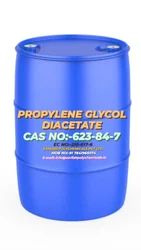 Propylene Glycol DiacetateView Details
623-84-7 -
1191-95-3 Cyclobutanone 98+View Details
1191-95-3 -
Fmoc-OSu 98+View Details
82911-69-1 -
(R)-(-)-2-Amino-1-propanol 35320-23-1 98+View Details
35320-23-1
Statement: All products displayed on this website are only used for non medical purposes such as industrial applications or scientific research, and cannot be used for clinical diagnosis or treatment of humans or animals. They are not medicinal or edible.