
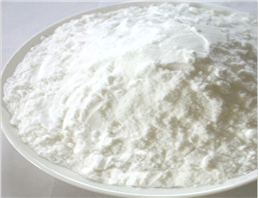

Prilocaine
Product Details
- Product Name Prilocaine
- CAS No.751-50-6
- EINECS No.211-957-0
- MFC13H20N2O
- MW220.31
- AppearanceneatWhite to off-white
- Melting point 37-38°
- Boiling point bp0.1 159-162°
- density 1.0117 (rough estimate)
- Water Solubility 6.169g/L(25 ºC)
- storage temp. 2-8°C
Heidi 098
| Prilocaine Basic information |
| Product Name: | Prilocaine |
| Synonyms: | astra1512;o-Propionotoluidide, 2-(propylamino)- (6CI, 8CI);Propanamide, N-(2-methylphenyl)-2-(propylamino)- (9CI);N-(2-methylphenyl)-2-(propylamino)propionamide;Prilocaine (200 mg);2-(PropylaMino)-N-(o-tolyl)propanaMide;Prilocaine HCl (base);Prilocaine N-(2-Methylphenyl)-2-propylamino-propanamide |
| CAS: | 721-50-6 |
| MF: | C13H20N2O |
| MW: | 220.31 |
| EINECS: | 211-957-0 |
| Product Categories: | Pharmaceutical Intermediates;Inhibitors;research chemical;Active Pharmaceutical Ingredients |
| Mol File: | 721-50-6.mol |
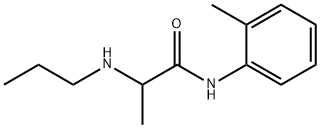 |
|
| Prilocaine Chemical Properties |
| Melting point | 37-38° |
| Boiling point | bp0.1 159-162° |
| density | 1.0117 (rough estimate) |
| refractive index | nD20 1.5298 |
| solubility | Slightly soluble in water, very soluble in acetone and in ethanol (96 per cent). |
| form | neat |
| pka | pKa 7.32 or 7.89 (Uncertain) |
| Water Solubility | 6.169g/L(25 ºC) |
| InChIKey | MVFGUOIZUNYYSO-UHFFFAOYSA-N |
| CAS DataBase Reference | 721-50-6(CAS DataBase Reference) |
| NIST Chemistry Reference | Propanamide, n-(2-methylphenyl)-2-(propylamino)-(721-50-6) |
| Safety Information |
| HS Code | 2924296000 |
| Hazardous Substances Data | 721-50-6(Hazardous Substances Data) |
| Prilocaine Usage And Synthesis |
| Local anesthetic drug | Prilocaine belongs to amide local anesthetic drug with its anesthesia intensity and speed being similar as lidocaine but with a longer duration period and weaker effect on vasodilation. It has a lower toxicity than lidocaine. It is clinically for local anesthesia, especially suitable for treating patients who are not allowed to use adrenaline. [Pharmacological] its 3% solution has a similar local anesthesia efficacy as the anesthesia drug of 2% lidocaine together with adrenaline. It has a slow onset time which lasts about 6~7min and the duration time of about 1.5~2h. It has a strong penetration capability through mucous membranes. Adrenaline has a slightly prolonged duration of action. PPB is 55% and T1/2 of about 1.5h. It is subject to liver metabolism with its metabolites nitroso toluidine being able to oxidize hemoglobin to form methemoglobin. It can be transported to the fetus through the placenta. [Adverse reactions] once the usage amount exceeds 600mg, methaemoglobinaemia can occur with cyanosis, tachycardia, headache, dizziness and weakness occurring. [Note] patients of anemia, congenital or acquired methaemoglobinaemia, respiratory failure or heart failure and hypoxic patients should be disabled. It is forbidden for applied to obstetric anesthesia. [Usage and dosage] infiltration anesthesia: 0.5% to 1% solution with the duration of action of 1 to 1.5 hours. Nerve blocking anesthesia: use 1% to 2% solution with the duration of action being 2-3 hours. Epidural anesthesia: use10 to 30 mL of 1.5%~1% solution with the duration of action of 2.5 to 3.5 hours. Use a maximum dose of 600 mg. 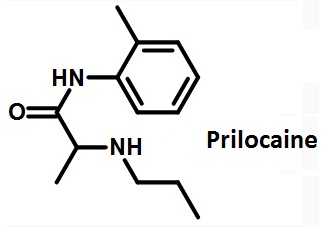 Figure 1 the structural formula of prilocaine The above information is edited by the Chemicalbook of Dai Xiongfeng. |
| Chemical Properties | It is a kind of needle-like crystals with the melting point being 37-38 ℃ and the boiling point being 159-162 ℃ (0.133kPa), and refractive index (nD20) being 1.5299. Its hydrochloride ([1786-81-8]) is a white crystalline powder. The Melting point is 167-168 ℃. It is soluble in water and ethanol, slightly soluble in chloroform. It has sour taste and bitter taste and is odorless. |
| Uses | It is a kind of local anesthetic drug. The product has better efficacy than procaine and the local anesthesia intensity and speed being similar as lidocaine but with longer duration time and less toxicity as well as smaller accumulation effect. It is suitable for epidural anesthesia, conduction anesthesia and infiltration anesthesia. |
| Production method | O-toluidine and α-bromo-propionyl bromide are condensed and further have reaction with propylamine obtain prilocaine. |
| Chemical Properties | White or almost white, crystalline powder. |
| Uses | Prilocaine is a local anesthetic of the amino amide type. Prilocaine is often used in dentistry. Prilocaine is also often combined with lidocaine as a preparation for dermal anesthesia (lidocaine/prilocaine or EMLA), for treatment of conditions like paresthesia. |
| Definition | ChEBI: An amino acid amide in which N-propyl-DL-alanine and 2-methylaniline have combined to form the amide bond; used as a local anaesthetic. |
| General Description | Prilocaine hydrochloride is a water-soluble salt available asa solution for nerve block or infiltration in dental procedures.Prilocaine is used for intravenous regional anesthesiaas the risk of CNS toxicity is low because of the quick metabolism.Prilocaine prepared in the crystal form is used inEMLA for topical administration to decrease painful needlesticks in children. Prilocaine 4% solution should be protectedfrom light and the manufacturer recommends discardingif the solution turns pinkish or slightly darker than lightyellow. Solutions are available in various concentrations upto 4%, with or without epinephrine and with or withoutpreservatives. |
| Clinical Use | Prilocaine metabolism has beenstudied extensively in animal models, less is known aboutthe human metabolites or the human CYP enzymes involvedin their formation . The metabolism of prilocainein the liver yields o-toluidine, which is a possiblecarcinogen. Many aromatic amines, including o-toluidinehave been shown to be mutagenic, and metabolites of otoluidinehave been shown to form DNA adducts.Metabolites of o-toluidine are also believed to be responsiblefor the methemoglobinemia observed with prilocaineuse. To decrease the potential for methemoglobinemia, strictadherence to the maximum recommended dose should befollowed. Metabolism of prilocaine is extensive with lessthan 5% of a dose excreted unchanged in the urine. |
Company Profile Introduction
Technology research and transfer of pilot screening, pilot scale-up and mass production solutions , for pharmaceutical intermediates, biologicals and fine chemicals (Not including inflammable , explosive , hazardous goods ) ; Market : Nano material , metal catalyst , raw material of cosmetics , pharmaceutical intermediates , chemicals , photoelectric material , import and export of technology and goods (For projects subject to approval according to law, business activities can be carried out only after approval by relevant departments ).
Recommended supplier

- Since:2020-12-17
- Address: Room 702, Floor 7, Building 10, National University Science Park, High-Tech Zone, Zhengzhou City, He
INQUIRY