| Chemical Properties |
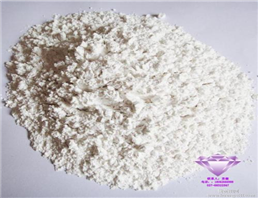
Colorless crystalline solid or white powder. Odorless. |
| Uses |
Nonselective herbicide. |
| Uses |
Nonselective preemergence and postemergence herbicide used to control most annual and perennial broad-leaved weeds, grasses and brush weeds on noncrop land. |
| Definition |
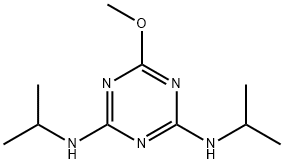
ChEBI: A methoxy-1,3,5-triazine that is 6-methoxy-1,3,5-triazine-2,4-diamine in which the one of the hydrogens of each amino group is substituted by an isopropyl group. |
| Hazard |
Toxic by ingestion. |
| Agricultural Uses |
Herbicide: A non-selective pre-emergence and post-emergence herbicide. Use around buildings, storage areas, industrial sites, fences, recreational areas, rights-of-way, railroads, pipelines, lumberyards, tank farms, and similar areas. Controls broadleaf weeds and grasses over an extended period of time. Not listed for use in EU countries. Registered for use in the U.S. |
| Trade name |
ACME® Prometon; G-31435®; GESAFRAM® 50; GESAFRAM®; GESAGRAM®; GROUND ZERO®; KLEENWALK®; NIX®; NOXALL®; ONTRACK®; PRIMATOL® (prometon); PROMETONE®; WEED-GO® |
| Potential Exposure |
A nonselective pre-emergence and postemergence triazine herbicide. Use around buildings, storage areas, industrial sites, fences, recreational areas, rights-of-way, railroads, pipelines, lumberyards, tank farms, and similar areas. Controls broadleaf weeds and grasses over an extended period of time |
| Environmental Fate |
Soil. Degrades in soil yielding hydroxy metabolites and dealkylation of the side chains (Hartley and Kidd, 1987).
Photolytic. Pelizzetti et al. (1990) studied the aqueous photocatalytic degradation of prometon and other s-triazines (ppb level) using simulated sunlight (λ >340 nm) and titanium dioxide as a photocatalyst. Prometon rapidly degraded forming cyanuric acid, nitrates, the intermediate tentatively identified as 2,4-diamino-6-hydroxy-N,N′-bis(1-methylethyl)-1,3,5-triazine and other intermediate compounds similar to those found for atrazine. Mineralization of cyanuric acid to carbon dioxide was not observed (Pelizzetti et al., 1990). |
| Shipping |
UN2763 Triazine pesticides, solid, toxic, Hazard Class: 6.1; Labels: 6.1-Poisonous materials. |
| Incompatibilities |
Incompatible with oxidizers (chlorates, nitrates, peroxides, permanganates, perchlorates, chlorine, bromine, fluorine, etc.); contact may cause fires or explo- sions. Keep away from alkaline materials, strong bases, strong acids, oxoacids, epoxides. UV causes decomposition. |
| Waste Disposal |
Dissolve or mix the material with a combustible solvent and burn in a chemical incinerator equipped with an afterburner and scrubber. All federal, state, and local environmental regulations must be observed. In accordance with 40CFR165, follow recom- mendations for the disposal of pesticides and pesticide containers. Containers must be disposed of properly by following package label directions or by contacting your local or federal environmental control agency, or by contacting your regional EPA office. |