
Thymosin beta 4
- CAS NO.:77591-33-4
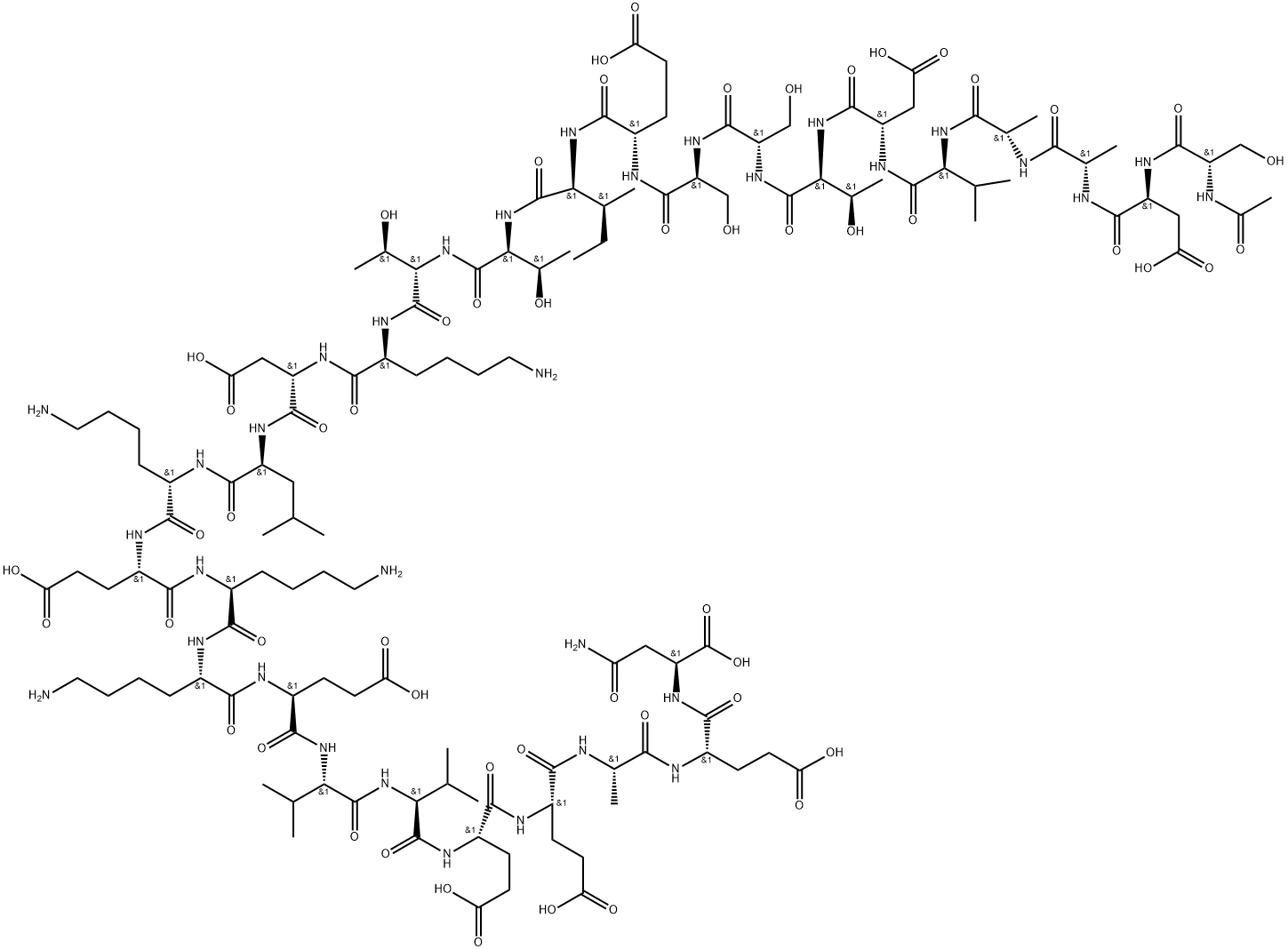
- Empirical Formula: C212H350N56O78S
- Molecular Weight: 4963.4408
- MDL number: MFCD00082073
- EINECS: 1592732-453-0
- SAFETY DATA SHEET (SDS)
- Update Date: 2026-07-06 17:03:36
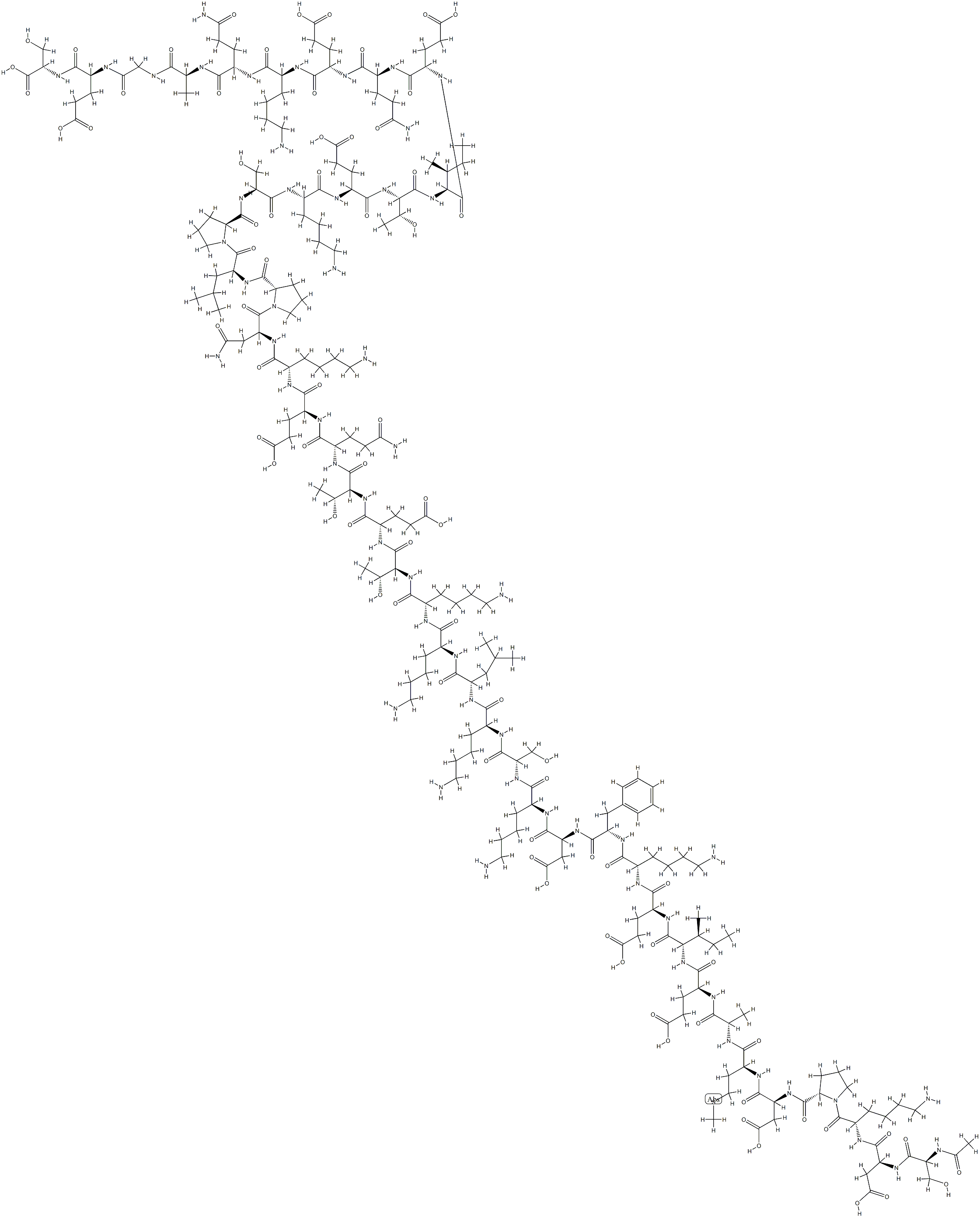
What is Thymosin beta 4?
Description
Thymosin β-4 is an endogenous pro-angiogenic, fibroblast-activating peptide that is involved in hormone regulation. Thymosin β-4 also exhibits immunomodulatory and cardioprotective activities. Thymosin β-4 improves would healing in cardiac issue and improves cardiac function in vivo. Thymosin β-4 binds G-actin filaments, preventing actin polymerization.
What are the applications of Application
Thymosin β4 is an actin-sequestering peptide that modulates inflammation and healing in different tissues
Benefits
Thymosin Beta-4 is a 43-amino-acid peptide that promotes healing throughout the body. It also has anti-inflammatory properties. Found naturally in higher concentrations at injury sites, the water-soluble protein can repair tissue damage and regulate cell migration to a site. It can improve wound healing and repair not only the skin, but also the brain, spinal cord, and heart. Medical professionals consider Thymosin Beta-4 a safe and powerful substance in its natural or synthetic form known as TB-500.
In addition, TB4 has a low molecular weight and doesn’t bind to the extracellular matrix. This enables it to easily travel throughout body tissues, which promotes a faster rate of healing. The peptide travels long distances, so it usually doesn’t have to be injected directly at the injury site. While some believe injecting it closer to an injured area yields better results, clinical evidence suggests otherwise.
Mechanism of action
Recent studies have revealed that the first gene to be upregulated after an injury is a Thymosin beta 4 gene. As the body begins the recovery process,Thymosin beta 4 aids in the creation of new vessels in the injured area, which carry blood, nutrients, and reparative substances to the site. It also has anti-inflammatory properties and works to decrease the amount of inflammatory substances, called cytokines. Inflammation plays a large role in many of the symptoms associated with a number of other conditions (i.e., Lyme disease, CFS, FM, autoimmune diseases, infections, etc.), making the potential impact of Tβ4 quite extensive.
Clinical Use
Thymosin beta 4 has been used in the treatment of HIV, AIDS, Influenza, colds, and various infections. It has been utilized in the management of various inflammatory conditions, as well as part of treatment following a heart attack due to its cardio and neuroprotective effects.
Side Effects
Many studies have found that Thymosin beta 4 is a safely consumable peptide. The main side effect of Thymosin beta 4 is related to its anti-apoptotic activity, as it may promote the metastatic potential of tumor cells and enable rapid spread. Additionally, common mild side effects of this peptide include redness and discomfort at joints, and in some cases, it may even cause tiredness, lethargy, and headaches.
Properties of Thymosin beta 4
| storage temp. | Keep in dark place,Inert atmosphere,Store in freezer, under -20°C |
| Water Solubility | Water : 50 mg/mL?(10.07 mM;?Need ultrasonic) |
Safety information for Thymosin beta 4
Computed Descriptors for Thymosin beta 4
| InChIKey | UGPMCIBIHRSCBV-XNBOLLIBSA-N |
New Products
2-Bromo-4-hydroxypyridine Dibenzoyl-L-tartaric acid Anhydrous (Resolution Reagent) Dibenzo[b,f][1,4]thiazepin-11(10H)-one 1,2,3,9-Tetrahydro-9-Methyl-4H-Carbazole-4-One Cis-Tosylate 1-(4-methoxyphenyl)-4-(4-Nitrophenyl)Piperazine (IT-1) 2'-Fluoroacetophenone 1-aminocyclobutanecarbonitrile hydrochloride AMINO-O-TOLYL-ACETIC ACID N-Methyl-2-amino-2-methylpropionamide 4-(FMOC-AMINO)-TETRAHYDROPYRAN-4-CARBOXYLIC ACID 1-Aminocyclobutanecarboxylic Acid Hydrochloride METHANOL-D1(OD) TERTIARY BUTANOL-D9 N-ETHYL-D5-AMINE HYDROCHLORIDE BENZOIC ACID-D CHLOROFORM-D TOLUENE-D3 2-(2-Bromophenyl)ethanol Boc-D-Glu(OMe)-OMe 2,5 Dibromopyridine Ethyl 4-hydroxy-3-oxobutanoate Dimethyl (2S)-2-((tert-butoxycarbonyl)amino)-4-(cyanomethyl)pentanedioate 1-(3-Chlorophenyl)piperazine hydrochlorideRelated products of tetrahydrofuran


You may like
-
 98071-16-0 1-Aminocyclobutanecarboxylic Acid Hydrochloride 98+View Details
98071-16-0 -
106914-07-2 N-Methyl-2-amino-2-methylpropionamide 98+View Details
106914-07-2 -
129592-98-9 98+View Details
129592-98-9 -
4-(FMOC-AMINO)-TETRAHYDROPYRAN-4-CARBOXYLIC ACID 98+View Details
285996-72-7 -
1-aminocyclobutanecarbonitrile hydrochloride 845821-84-3 98+View Details
845821-84-3 -
98071-16-0 1-Aminocyclobutanecarboxylic Acid Hydrochloride 98+View Details
98071-16-0 -
 ADC-151View Details
27176-87-0 -
 Nickel Acetate | Eastmen Chemicals - Manufacturer, Supplier, Exporter metallic saltsView Details