
Quinolinic acid
Synonym(s):Quinolinic acid
- CAS NO.:89-00-9
- Empirical Formula: C7H5NO4
- Molecular Weight: 167.12
- MDL number: MFCD00006295
- EINECS: 201-874-8
- SAFETY DATA SHEET (SDS)
- Update Date: 2026-09-12 16:06:46
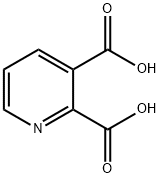
What is Quinolinic acid?
Chemical properties
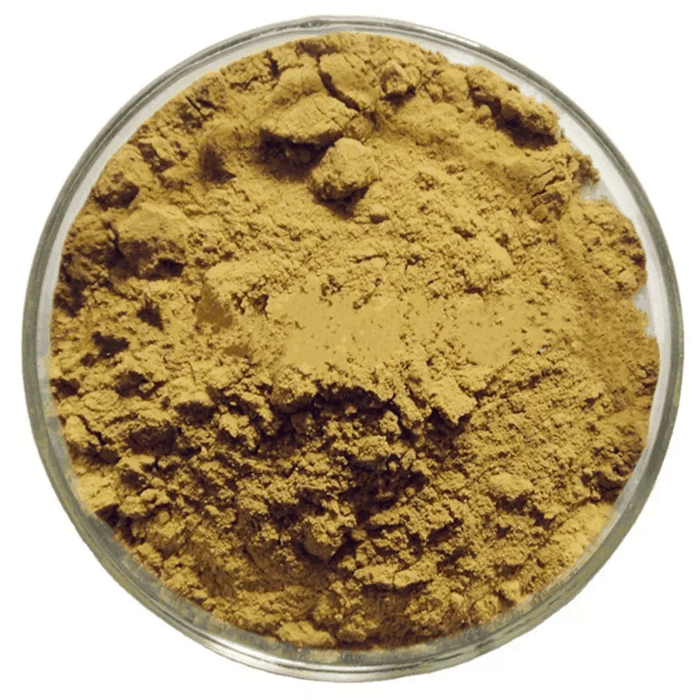
White powder;Light yellow powder
The Uses of Quinolinic acid
Quinolinic acid is an endogenous NMDA agonist. Quinolinic acid is a metabolite of tryptophan that acts as a putative NMDA receptor agonist. Quinolinic acid is an ?excitotoxic? metabolite and an agonist of N-methyl-D-aspartate receptors. properties of KYNA raise the possibility of a functional link between KYNA and QUIN in the brain which may be of relevance for an understanding of human neurodegenerative disorders. Quinolinic acid is a potent endogenous excitant at amino acid receptors in CNS.
The Uses of Quinolinic acid
Inhibits glucose synthesis
The Uses of Quinolinic acid
An inhibitor of glucose synthesis.
The Uses of Quinolinic acid
A matabolite of tryptophan and a putative NMDA receptor agonist.
What are the applications of Application
Quinolinic acid is a matabolite of tryptophan and a putative NMDA receptor agonist
Definition
ChEBI: Quinolinic acid is a pyridinedicarboxylic acid that is pyridine substituted by carboxy groups at positions 2 and 3. It is a metabolite of tryptophan. It has a role as a NMDA receptor agonist, a human metabolite, a mouse metabolite and an Escherichia coli metabolite. It is a conjugate acid of a quinolinate(1-) and a quinolinate.
Synthesis Reference(s)
Journal of the American Chemical Society, 71, p. 3020, 1949 DOI: 10.1021/ja01177a021
Hazard
A poison by skin contact. Moderately toxic by ingestion. A mild skin irritant.
Industrial uses
The use of quinolinic acid during flotation of hematite results in the adsorption of quinoline on hematite, allowing amine to selectively adsorb onto the hematite surface.
Biological Activity
Endogenous NMDA agonist and transmitter candidate. May distinguish between NMDA receptor subtypes.
Safety Profile
A poison by skin contact. Moderately toxic by ingestion. Experimental reproductive effects. A mdd skinn irritant. When heated to decomposition it emits toxic vapors of NOx.
Storage
Room temperature
Properties of Quinolinic acid
| Melting point: | 188-190 °C (dec.) (lit.) |
| Boiling point: | 295.67°C (rough estimate) |
| Density | 1.5216 (rough estimate) |
| refractive index | 1.6280 (estimate) |
| storage temp. | Keep in dark place,Sealed in dry,Room Temperature |
| solubility | 10g/l |
| form | Crystalline Powder |
| pka | 2.43(at 25℃) |
| color | White to light yellow-beige |
| Odor | odorless |
| Water Solubility | 0.55 g/100 mL |
| Merck | 14,8073 |
| BRN | 137110 |
| CAS DataBase Reference | 89-00-9(CAS DataBase Reference) |
| EPA Substance Registry System | 2,3-Pyridinedicarboxylic acid (89-00-9) |
Safety information for Quinolinic acid
| Signal word | Warning |
| Pictogram(s) |
 Exclamation Mark Irritant GHS07 |
| GHS Hazard Statements |
H319:Serious eye damage/eye irritation H335:Specific target organ toxicity, single exposure;Respiratory tract irritation |
| Precautionary Statement Codes |
P261:Avoid breathing dust/fume/gas/mist/vapours/spray. P264:Wash hands thoroughly after handling. P264:Wash skin thouroughly after handling. P271:Use only outdoors or in a well-ventilated area. P280:Wear protective gloves/protective clothing/eye protection/face protection. P305+P351+P338:IF IN EYES: Rinse cautiously with water for several minutes. Remove contact lenses, if present and easy to do. Continuerinsing. |
Computed Descriptors for Quinolinic acid
| InChIKey | GJAWHXHKYYXBSV-UHFFFAOYSA-N |
Quinolinic acid manufacturer
ASM Organics
New Products
5-bromo-4-fluoro-2-nitrobenzaldehyde Cyclobutanone (R)-(-)-2-Amino-1-propanol Fmoc-OSu 1-(2-Chloroethyl)pyrrolidine Hydrochloride 2-Amino-2-(4-methylphenyl)acetic acid 2,4-Dihydroxybenzaldehyde Obidoxime hydrochloride API Pyrrolo[1,2-a]pyrimidine-6-carboxylic acid, 4,6,7,8-tetrahydro-4-oxo-, sodium salt (1:1), (6S) Dipropyl disulfide 4 pentyn 1 ol N-Vinylformamide Methacrylate-PEG-Methacrylate, Mn:35000 2,4-Dihydroxyacetophenone 2-Chloro 5-Fluoro Pyridine Vasicinone 2-Chloroisonicotinic Acid Tween 80 or Polysorbate 80 2-Butyn-1-oL 2-Pentyn-1-oL 4-Nitrobenzotrifluoride N-(4-Cyano-3-(trifluoromethyl)phenyl)-2-methyloxirane-2-carboxamide N-(4-fluoro-2-methoxy-5-nitrophenyl)-4-(1-methyl-1H-indol-3-yl)pyrimidin-2-amine Pirtobrutinib intd.Related products of tetrahydrofuran


You may like
-
 2,3-Pyridine dicarboxylic acid 98%View Details
 -
 2,3-Pyridine dicarboxylic acid 99%View Details
89-00-9 / 339155-13-4 -
 2,3-Pyridine dicarboxylic acid 89-00-9 / 339155-13-4 98%View Details
89-00-9 / 339155-13-4 -
 89-00-9 Pyridine-2,3-dicarboxylic acid, 99% 99%View Details
89-00-9 -
2,3-Pyridinedicarboxylic Acid CAS 89-00-9View Details
89-00-9 -
Quinolinic acid CAS 89-00-9View Details
89-00-9 -
2,3-Pyridinedicarboxylic acid CAS 89-00-9View Details
89-00-9 -
 1H-Indazole | CAS No. 271-44-3 | Pharmaceutical IntermediateView Details
271-44-3