
PHYTIN
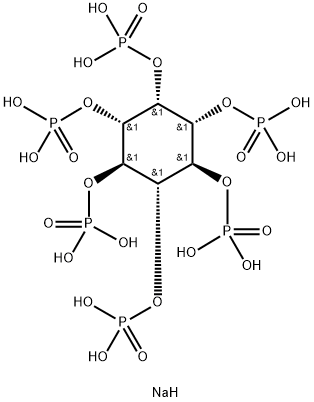
Synonym(s):myo-Inositol hexakis(dihydrogen phosphate);Inositol hexakisphosphate;Inositol hexaphosphoric acid;InsP6
- CAS NO.:7776-28-5
- Empirical Formula: C6H6Ca6O24P6
- Molecular Weight: 888.41
- MDL number: MFCD00082315
- EINECS: 231-897-9
- SAFETY DATA SHEET (SDS)
- Update Date: 2026-05-28 05:16:16
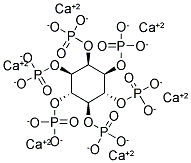
What is PHYTIN?
Chemical properties
C12H30Ca5MgO54P12
The Uses of PHYTIN
A calcium salt form of phytic acid (P398700), the principal storage form of phosphorus in many plant tissues, especially bran and seeds. It has antioxidant effect as well as neuroprotective effect by chelating iron.
Agricultural Uses
Phytin is a major organic phosphorus compound in seeds
and is the source of phosphorus for new seedlings, till
they start absorbing it from the soil. The phosphorus
reserve in seeds is the calcium/magnesium salts of
inositol hexaphosphoric acid (phytic acid). It is used as a
fertilizer since it can advantageously be absorbed by
plants, and is found in the soil as a product of the
degradation of organic matter.
Inositol phosphate is thought to be of microbial origin
and can exist in several stereoisomeric forms; phosphate
esters of myo-, scyllo-, neo- and chrio-inositol have been
characterized in soil. Myo-inositol hexaphosphoric acid
(phytic acid), is usually a major pool of
organic phosphorus, which is fairly stable in an alkaline
medium but which gradually hydrolyzes (optimum pH
4.0) to a range of intermediate inositol phosphates, and
finally, to inositol in acidic media. Enzyme phylase also
hydrolyzes myo-inositol phosphates. Myo-inositol
phosphates account for between less than 1 and 62% of
the total soil phosphorus.
Safety information for PHYTIN
| Signal word | Warning |
| Pictogram(s) |
 Exclamation Mark Irritant GHS07 |
| GHS Hazard Statements |
H302:Acute toxicity,oral H315:Skin corrosion/irritation H319:Serious eye damage/eye irritation H335:Specific target organ toxicity, single exposure;Respiratory tract irritation |
| Precautionary Statement Codes |
P261:Avoid breathing dust/fume/gas/mist/vapours/spray. P305+P351+P338:IF IN EYES: Rinse cautiously with water for several minutes. Remove contact lenses, if present and easy to do. Continuerinsing. |
New Products
9-Mesityl-10-methylacridinium perchlorate Sulfapyridine Fmoc-OSu (R)-(-)-2-Amino-1-propanol Cyclobutanone 5-bromo-4-fluoro-2-nitrobenzaldehyde 4 pentyn 1 ol N-Vinylformamide Phenethyl cinnamate Pyrrolo[1,2-a]pyrimidine-6-carboxylic acid, 4,6,7,8-tetrahydro-4-oxo-, sodium salt (1:1), (6S) Ethyl 3-phenylpropanoate β-Bromostyrene Methacrylate-PEG-Methacrylate, Mn:35000 2,4-Dihydroxyacetophenone 2-Chloro 5-Fluoro Pyridine Vasicinone 2-Chloroisonicotinic Acid Tween 80 or Polysorbate 80 5-Bromo-1-Pentyne 1-(2-Methyl-5-nitrophenyl)guanidine Nitrate Methyl trans-4-Aminocyclohexanecarboxylate Hydrochloride 2-Pentyn-1-oL 4-Nitrobenzotrifluoride N-(4-Cyano-3-(trifluoromethyl)phenyl)-2-methyloxirane-2-carboxamideRelated products of tetrahydrofuran
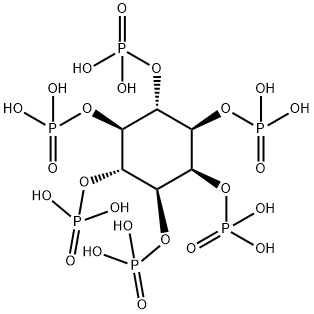
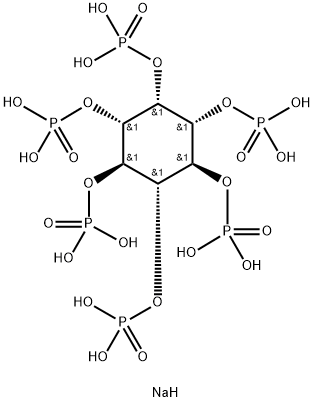
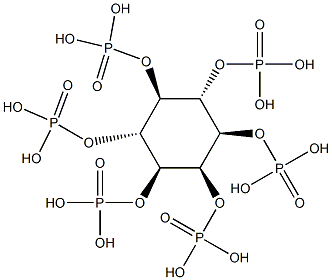


You may like
-
 Calcium phytate 90.00% CAS 7776-28-5View Details
7776-28-5 -
1191-95-3 Cyclobutanone 98+View Details
1191-95-3 -
Fmoc-OSu 98+View Details
82911-69-1 -
(R)-(-)-2-Amino-1-propanol 35320-23-1 98+View Details
35320-23-1 -
1191-95-3 Cyclobutanone 98+View Details
1191-95-3 -
213382-45-7 98+View Details
213382-45-7 -
Fmoc-OSu 98+View Details
82911-69-1 -
(R)-(-)-2-Amino-1-propanol 35320-23-1 98+View Details
35320-23-1