
Phytase
- CAS NO.:37288-11-2
- Molecular Weight: 0
- MDL number: MFCD00131910
- EINECS: 609-386-0
- Update Date: 2026-05-28 01:39:31
What is Phytase?
Description
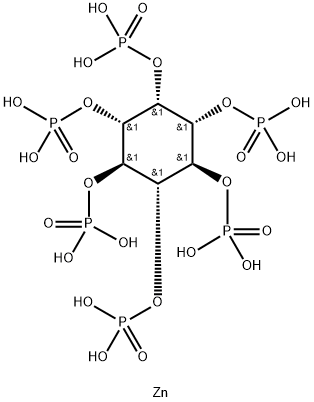
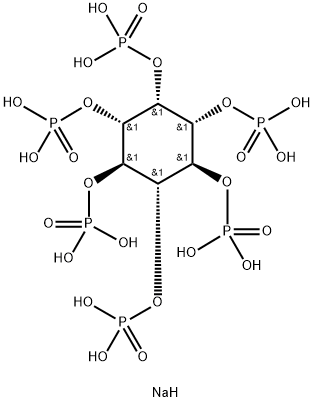
Phytases are phosphatases able to hydrolyze O–P bonds in phytic acid liberating
inorganic phosphate. Phytases can be grouped according to the attack on the
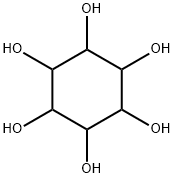
hexaphosphoric ester into 3-phytase (myo-inositol-hexakisphosphate 3-phosphohydrolase,
EC 3.1.3.8) as well as 4-phytase (myo-inositol-hexakisphosphate 4-
phosphohydrolase, EC 3.1.3.26), releasing the phosphate at the corresponding
position at the inositol ring.
Phytic acid is used by plants to store different type of anions (Cu2+, Fe2+/3+,
Ca2+, Mg2+, etc.). The resulting salts are known as phytates. Nonruminant animals
do not have the enzymatic ability to hydrolyze phytates; therefore, phosphate and
minerals are not absorbed, but rather they pass through the intestinal tract undigested.
The addition of phytases to food and feed does therefore enhance the
availability of phosphate and minerals bound in phytates.
More than 20 years ago, the first commercial phytase product for feed, Natuphos,
was released. Nowadays, several other phytase products are available on
the market for the improvement of animal feed, such as Ronozyme from Novozymes
and Finase from AB Enzymes. The range of applications in nonruminant feed is large, as discussed in several reviews on the usage of phytases in the fodder
of pigs, poultry, and fish. Additionally, phytase might also be
used in food for the improvement of the nutritional value of cereal food products
by degrading phytate.
Commercial recombinant production of phytases occurs generally, if not
exclusively, in ascomycetes, whereas the phytase genes originate from
different phyla: bacteria, ascomycetes, and basidiomycetes (Peniophora lycii).
Industrial production takes place in liquid media in stirred bioreactors on a
6 9 120 m3 scale. In addition, the cultivation of phytase producing filamentous
fungi in solid-state or solid-substrate fermentation systems has also been
studied, but it lacks industrial adaptability. Another opportunity for the production
of phytases is the usage of transgenic plants, such as maize, rice, soybean, and
wheat.
Properties of Phytase
| Density | 1.33-1.42g/cm3 at 20℃ |
| storage temp. | −20°C |
Safety information for Phytase
Computed Descriptors for Phytase
Phytase manufacturer
New Products
2-(2-Chlorophenyl)glycine Propiolic Acid 1-(3-Hydroxy-4-methoxyphenyl)-2-nitroethene (±)-amino(2-fluorophenyl)acetic acid trans-3-Benzyloxy-4-methoxy-beta-nitrostyrene 1-Pentadecanol 2,4-Dihydroxybenzaldehyde Dipropyl disulfide Pyrrolo[1,2-a]pyrimidine-6-carboxylic acid, 4,6,7,8-tetrahydro-4-oxo-, sodium salt (1:1), (6S) Obidoxime hydrochloride API 4 pentyn 1 ol N-Vinylformamide Methacrylate-PEG-Methacrylate, Mn:35000 2,4-Dihydroxyacetophenone 2-Chloro 5-Fluoro Pyridine Vasicinone 2-Chloroisonicotinic Acid Tween 80 or Polysorbate 80 2-Butyn-1-oL N-(4-Cyano-3-(trifluoromethyl)phenyl)-2-methyloxirane-2-carboxamide N-(4-fluoro-2-methoxy-5-nitrophenyl)-4-(1-methyl-1H-indol-3-yl)pyrimidin-2-amine Pirtobrutinib intd. 2-Pentyn-1-oL 4-NitrobenzotrifluorideRelated products of tetrahydrofuran



You may like
-
 37288-11-2 Phytase 98%View Details
37288-11-2 -
471-25-0 Propiolic Acid 98+View Details
471-25-0 -
84145-28-8 98+View Details
84145-28-8 -
trans-3-Benzyloxy-4-methoxy-beta-nitrostyrene 98+View Details
63909-29-5 -
2-(2-Chlorophenyl)glycine 88744-36-9 98+View Details
88744-36-9 -
40216-83-9 trans-4-Hydroxy-L-proline methyl ester hydrochloride 98+View Details
40216-83-9 -
629-76-5 98+View Details
629-76-5 -
1-(3-Hydroxy-4-methoxyphenyl)-2-nitroethene 98+View Details
39816-35-8