
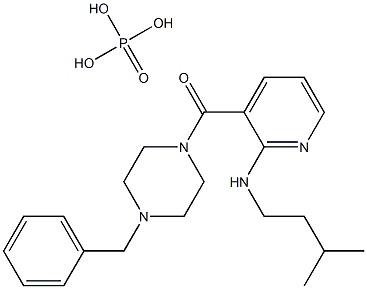
NSI-189 Phosphate
- CAS NO.:1270138-41-4
- Empirical Formula: C22H33N4O5P
- Molecular Weight: 464.494981
- EINECS: 447-990-4
- SAFETY DATA SHEET (SDS)
- Update Date: 2026-07-08 07:26:47
What is NSI-189 Phosphate?
Description
NSI-189 phosphate (NSI-189) is a novel neurogenic molecule with pleiotropic properties, including antidepressant, procognitive, synaptoplastic, and neurotrophic activities demonstrated in preclinical studies. Its antidepressant activity is monoamine-independent.
The Uses of NSI-189 Phosphate
NSI-189 is a novel oral drug which was developed by Neuralstem for the treatment of cognitive disorders. Now the drug is being tested in phase II of clinical trials in patients suffering from major depressive disorder. The mechanism of NSI-189 action is explained by its ability to stimulate the generation of new neurons in the hippocampus, however the exact target molecule is still unknown.
Biological Functions
NSI-189 is a neurogenic. It allows the brain to develop healthy brain cells at a quicker rate than usual, which means that people suffering from depression, mental disorders, or degenerative conditions might all benefit from using NSI-189. This compound has also been shown to possess an anti-stress effect.
Possesses antidepressant properties that may improve cognitive function, treat traumatic brain injury, Alzheimer's Disease (AD), Post-Traumatic Stress Disorder (PTSD), and stroke, and prevent cognitive and memory decline in aging.
NSI-189 can increase neurotrophic factors such as Stem Cell Factor (SCF), Brain-Derived Neurotrophic Factor (BDNF), Vascular Endothelial Growth Factor (VEGF), and Glial-Derived Neurotrophic Factor (GDNF).
NSI-189 may effectively treat MDD as well as other psychiatric disorders by increasing neurogenesis (growth) in the hippocampus.
NSI-189 is a benzylpiperizine-aminiopyridine, a novel chemical entity that stimulates neurogenesis of human hippocampus-derived neural stem cells.
NSI 189 is currently in research for treating other neurological disorders such as Alzheimer's disease, brain injury, stroke, traumatic stress disorder.
A rise in the energy levels, and increase libido, and sexual performance has been noted by some individuals.
NSI-189 may be able to protect nerves from toxicity in diabetes. It may help with nerve pain and neuropathy in diabetes.
Side Effects
Most of the clinical research on NSI 189 is on animals, and there are only very few on humans.
Nonetheless, patients'side effects are reported regardless of taking it in small or higher doses.
People who use the drug at 40 mg may still experience dry mouth, restlessness, sleepiness, headaches, dizziness, rash, hyperthermia, and palpitations.
There are no serious long term side effects reported on animals when administered in high doses.
Across all three doses, NSI-189 was well-tolerated with no serious adverse events.
The mean half-life of the drug was 17.4 to 20.5 hours, with steady-state reached after 96 to 120 hours.
Clinical claims and research
NSI-189 is an experimental drug currently being researched for the possible use in treating major depressive disorder, and various neurological conditions, such as traumatic brain injury, Alzheimer's disease, post-traumatic stress disorder (PTSD), and stroke. NSI-189 is not currently available as over-the-counter (OTC) drug, and you should not attempt to purchase the drug without a prescription written by a doctor. If you think you need a drug to help you, you should talk to a doctor.
Mode of action
NSI-189 may promote neurogenesis in the hippocampus-derived neural stem cell and affect the parts responsible for learning, memory, and emotion. This happens along with different processes.
The drug is a benzylpiperazine-aminopyridine that may pass the blood-brain barrier.
Neurogenesis is stimulated in the hippocampal slices, specifically the left side of the human brain.
In some cases, as in after stroke, it may increase Ki67 and MAP2. It also aids in the improvement of BDNF, GDNF, and VEGF.
Noted activities are likewise seen on the Skp, Cullin, F-box containing complex.
Current market and forecast
Neuralstem has cracked down on vendors and the patent for NSI-189 doesn't expire until 2035.
Hopefully in the future if NSI-189 does well, it will be a prescription.
NSI-189 have very limited research in humans and most trials have been on animal models.
Safety information for NSI-189 Phosphate
NSI-189 Phosphate manufacturer
New Products
9-Mesityl-10-methylacridinium perchlorate Sulfapyridine Fmoc-OSu (R)-(-)-2-Amino-1-propanol Cyclobutanone 5-bromo-4-fluoro-2-nitrobenzaldehyde 4 pentyn 1 ol N-Vinylformamide Phenethyl cinnamate Pyrrolo[1,2-a]pyrimidine-6-carboxylic acid, 4,6,7,8-tetrahydro-4-oxo-, sodium salt (1:1), (6S) Ethyl 3-phenylpropanoate β-Bromostyrene Methacrylate-PEG-Methacrylate, Mn:35000 2,4-Dihydroxyacetophenone 2-Chloro 5-Fluoro Pyridine Vasicinone 2-Chloroisonicotinic Acid Tween 80 or Polysorbate 80 Methyl trans-4-Aminocyclohexanecarboxylate Hydrochloride N-(4-fluoro-2-methoxy-5-nitrophenyl)-4-(1-methyl-1H-indol-3-yl)pyrimidin-2-amine Pirtobrutinib intd. 4-Nitrobenzotrifluoride 2-Pentyn-1-oL N-(4-Cyano-3-(trifluoromethyl)phenyl)-2-methyloxirane-2-carboxamideRelated products of tetrahydrofuran

You may like
-
 RAW NSI-189 Phosphate (Powder) APIView Details
1270138-41-4 -
 RAW NSI-189 Phosphate (Powder) APIView Details
1270138-41-4 -
 RAW NSI-189 Phosphate (Powder) APIView Details
1270138-41-4 -
RAW NSI-189 Phosphate (Powder) APIView Details
1270138-41-4 -
NSI-189 Phosphate PowderView Details
1270138-41-4 -
 RAW NSI-189 Phosphate (Powder) APIView Details
1270138-41-4 -
 RAW NSI-189 Phosphate (Powder) APIView Details
1270138-41-4 -
 RAW NSI-189 Phosphate (Powder) APIView Details
1270138-41-4