
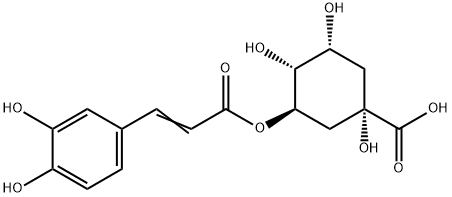
Neochlorogenic acid
Synonym(s):trans-5-O-Caffeoylquinic acid;5-O-(trans-3,4-Dihydroxycinnamoyl)-D -quinic acid
- CAS NO.:906-33-2
- Empirical Formula: C16H18O9
- Molecular Weight: 354.31
- MDL number: MFCD10566639
- EINECS: 212-997-1
- SAFETY DATA SHEET (SDS)
- Update Date: 2026-08-20 20:20:01
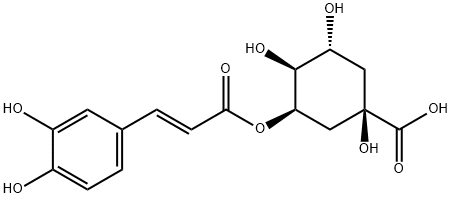
What is Neochlorogenic acid?
The Uses of Neochlorogenic acid
(E)-Neochlorogenic Acid is an antioxidant compound used in the treatment of oxidative stress and related afflictions.
Definition
ChEBI: A cinnamate ester obtained by formal condensation of the carboxy group of trans-caffeic acid with the 5-hydroxy group of quinic acid.
General Description
This substance is a primary reference substance with assigned absolute purity (considering chromatographic purity, water, residual solvents, inorganic impurities). The exact value can be found on the certificate. Produced by PhytoLab GmbH & Co. KG
Biochem/physiol Actions
Neochlorogenic acid has been found to have an inhibitory effect on the biosynthesis of melanin. Therefore it can be used on harvested fruits to prevent brown rot infection caused by?Monilinia laxa. It also shows impressive antioxidant, antibacterial, antiviral and antipyretic characteristics. Neochlorogenic acid has the potential to be used in the management of acute and chronic inflammatory diseases due to its anti-inflammatory activity. It may function as chemopreventive compounds due to growth inhibition seen in breast cancer cell line MDA-MB-435.
Properties of Neochlorogenic acid
| Melting point: | 204-206 °C (decomp) |
| Boiling point: | 665.0±55.0 °C(Predicted) |
| Density | 1.65±0.1 g/cm3(Predicted) |
| storage temp. | 2-8°C |
| solubility | DMSO (Slightly), Ethanol (Slightly, Heated, Sonicated), Methanol (Slightly, Heat |
| pka | 3.90±0.50(Predicted) |
| form | neat |
| form | Solid |
| color | White to Off-White |
| Stability: | Hygroscopic |
| CAS DataBase Reference | 906-33-2 |
Safety information for Neochlorogenic acid
| Signal word | Warning |
| Pictogram(s) |
 Exclamation Mark Irritant GHS07 |
| GHS Hazard Statements |
H302:Acute toxicity,oral H315:Skin corrosion/irritation H319:Serious eye damage/eye irritation H335:Specific target organ toxicity, single exposure;Respiratory tract irritation |
| Precautionary Statement Codes |
P261:Avoid breathing dust/fume/gas/mist/vapours/spray. P280:Wear protective gloves/protective clothing/eye protection/face protection. P301+P312:IF SWALLOWED: call a POISON CENTER or doctor/physician IF you feel unwell. P302+P352:IF ON SKIN: wash with plenty of soap and water. P305+P351+P338:IF IN EYES: Rinse cautiously with water for several minutes. Remove contact lenses, if present and easy to do. Continuerinsing. |
Computed Descriptors for Neochlorogenic acid
| InChIKey | CWVRJTMFETXNAD-NXLLHMKUSA-N |
New Products
5-bromo-4-fluoro-2-nitrobenzaldehyde (R)-(-)-2-Amino-1-propanol Cyclobutanone Fmoc-OSu 1-(2-Chloroethyl)pyrrolidine Hydrochloride 2-Amino-2-(4-methylphenyl)acetic acid Obidoxime hydrochloride API Decanoic acid, 2-[4-(phenylmethoxy)phenyl]ethyl ester Piperazine, 1-(3-methoxyphenyl)-, hydrochloride (1:1) 4-Bromo-2,6-difluoroaniline 4 pentyn 1 ol N-Vinylformamide Methacrylate-PEG-Methacrylate, Mn:35000 2,4-Dihydroxyacetophenone 2-Chloro 5-Fluoro Pyridine Vasicinone 2-Chloroisonicotinic Acid Tween 80 or Polysorbate 80 2-Pentyn-1-oL 4-Nitrobenzotrifluoride N-(4-Cyano-3-(trifluoromethyl)phenyl)-2-methyloxirane-2-carboxamide N-(4-fluoro-2-methoxy-5-nitrophenyl)-4-(1-methyl-1H-indol-3-yl)pyrimidin-2-amine Pirtobrutinib intd. 2-Butyn-1-oLRelated products of tetrahydrofuran

You may like
-
 Neochlorogenic Acid CAS 906-33-2View Details
906-33-2 -
Neochlorogenic acid CAS 906-33-2View Details
906-33-2 -
Neochlorogenic acid CAS 906-33-2View Details
906-33-2 -
7250-67-1 1-(2-Chloroethyl)pyrrolidine Hydrochloride 98+View Details
7250-67-1 -
7250-67-1 1-(2-Chloroethyl)pyrrolidine Hydrochloride 98+View Details
7250-67-1 -
13227-01-5 98+View Details
13227-01-5 -
7250-67-1 1-(2-Chloroethyl)pyrrolidine Hydrochloride 98+View Details
7250-67-1 -
13227-01-5 98+View Details
13227-01-5