
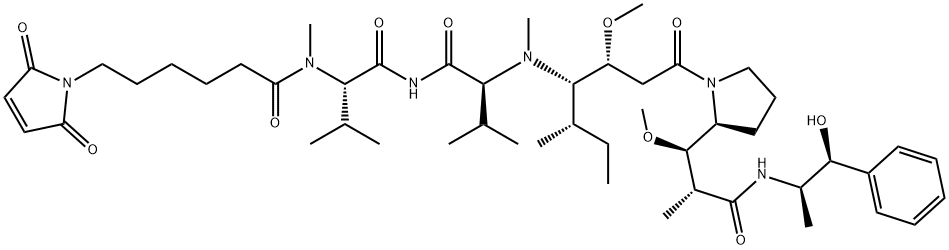
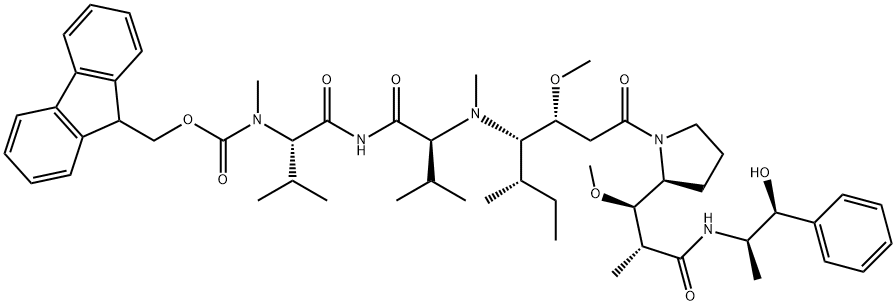
MonoMethylauristatin F
- CAS NO.:745017-94-1
- Empirical Formula: C39H65N5O8
- Molecular Weight: 731.96
- MDL number: MFCD25976742
- SAFETY DATA SHEET (SDS)
- Update Date: 2026-05-28 05:22:16
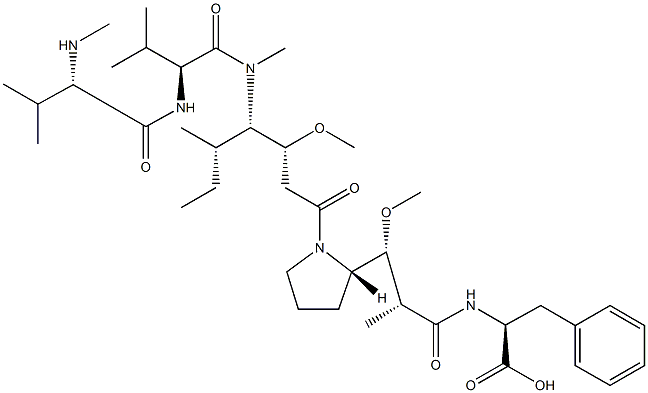
What is MonoMethylauristatin F?
Description
MMAF (Monomethylauristatin F) is an effective tubulin polymerization inhibitor, used as an anti-tumor drug. MMAF (Monomethylauristatin F) is widely used as the cytotoxic component of antibody-conjugated drugs (ADCs), such as Vorsetuzumab mafodotin and SGN-CD19A.
The Uses of MonoMethylauristatin F
Monomethyl Auristatin F is an antimicrotubule agent. A potent mitotic inhibitor.
Biological Activity
MMAF (Monomethylauristatin F) is a potent tubulin polymerization inhibitor and is used as a antitumor agent. MMAF (Monomethylauristatin F) is widely used as a cytotoxic component of antibody-drug conjugates (ADCs) such as vorsetuzumab mafodotin and SGN-CD19A.
Biotechnological Applications
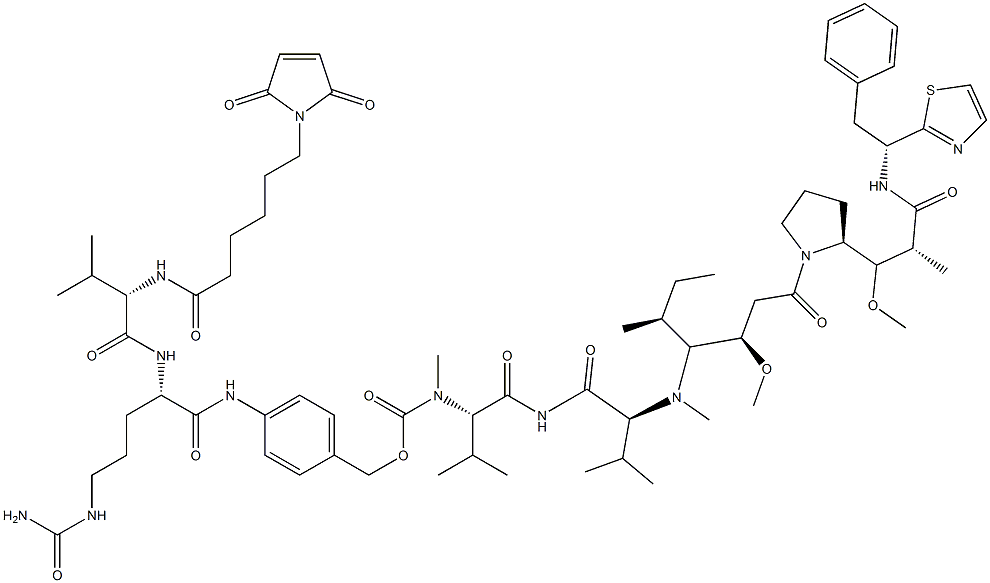
MMAF is a new auristatin derivative with a charged C-terminal phenylalanine that attenuates its cytotoxic activity compared to its uncharged counterpart, Monomethyl auristatin E (MMAE). Because of MMAF is highly toxic, it cannot be used as a drug itself. MMAF induces potent antitumor effects when conjugated via protease cleavable linkers to a monoclonal antibody targeting internalizing, tumor-specific cell surface antigens. The linker to the monoclonal antibody is stable in extracellular fluid, but is cleaved by cathepsin once the conjugate has entered a tumor cell, thus activating the anti-mitotic mechanism.
in vitro
MMAF inhibits anaplastic large cell lymphoma Karpas 299, breast carcinoma H3396, renal cell carcinoma 786-O and Caki-1 cells with IC50s of 119, 105, 257 and 200 nM in vitro cytotoxicity assay.
Properties of MonoMethylauristatin F
| Boiling point: | 896.8±65.0 °C(Predicted) |
| Density | 1.116±0.06 g/cm3(Predicted) |
| storage temp. | Sealed in dry,Room Temperature |
| solubility | Soluble in DMSO |
| pka | 3.56±0.10(Predicted) |
| form | A solid |
| color | White to off-white |
| Stability: | Hygroscopic |
Safety information for MonoMethylauristatin F
| Signal word | Warning |
| Pictogram(s) |
 Exclamation Mark Irritant GHS07 |
| GHS Hazard Statements |
H302:Acute toxicity,oral H315:Skin corrosion/irritation H319:Serious eye damage/eye irritation H335:Specific target organ toxicity, single exposure;Respiratory tract irritation |
| Precautionary Statement Codes |
P261:Avoid breathing dust/fume/gas/mist/vapours/spray. P280:Wear protective gloves/protective clothing/eye protection/face protection. P301+P312:IF SWALLOWED: call a POISON CENTER or doctor/physician IF you feel unwell. P302+P352:IF ON SKIN: wash with plenty of soap and water. P305+P351+P338:IF IN EYES: Rinse cautiously with water for several minutes. Remove contact lenses, if present and easy to do. Continuerinsing. |
Computed Descriptors for MonoMethylauristatin F
New Products
Cis-Tosylate Dibenzo[b,f][1,4]thiazepin-11(10H)-one Dibenzoyl-L-tartaric acid Anhydrous (Resolution Reagent) 1,2,3,9-Tetrahydro-9-Methyl-4H-Carbazole-4-One N-BOC-piperidine-4-carboxylic acid 1-Benzhydrylazetane-3-carbonitrile AMINO-(3-CHLORO-PHENYL)-ACETIC ACID 2-(2-Chlorophenyl)glycine (±)-amino(2-fluorophenyl)acetic acid 8-oxa-1,3-diazaspiro[4.5]decane-2,4-dione TRIFLOURO ACETICACID-D METHANE SULFONIC ACID-D4 PHOSPORIC ACID-D3 85 W% IN D2O DEUTERIUM OXIDE FOR NMR TOLUENE-D3 BENZENE-D6 1-Acetyl-4-(4-hydroxyphenyl)piperazine 1-(3-Chlorophenyl)piperazine hydrochlorideRelated products of tetrahydrofuran
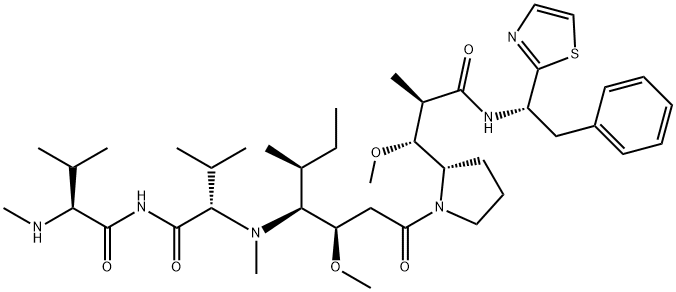
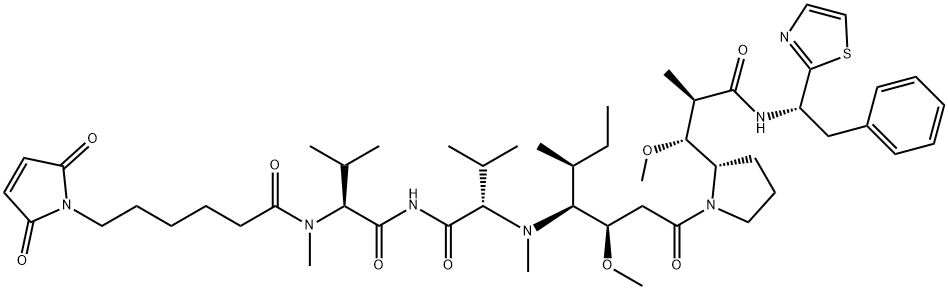
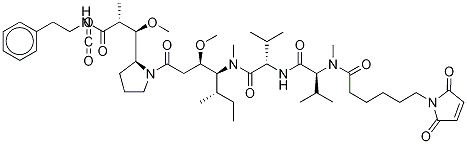
You may like
-
 Monomethyl auristatin f 95% CAS 745017-94-1View Details
745017-94-1 -
7292-71-9 AMINO-(3-CHLORO-PHENYL)-ACETIC ACID 98+View Details
7292-71-9 -
84145-28-8 98+View Details
84145-28-8 -
2-(2-Chlorophenyl)glycine 98+View Details
88744-36-9 -
7292-71-9 AMINO-(3-CHLORO-PHENYL)-ACETIC ACID 98+View Details
7292-71-9 -
84145-28-8 98+View Details
84145-28-8 -
2-(2-Chlorophenyl)glycine 98+View Details
88744-36-9 -
8-oxa-1,3-diazaspiro[4.5]decane-2,4-dione 39124-19-1 98+View Details
39124-19-1