
L-Glucose
- CAS NO.:921-60-8
- Empirical Formula: C6H12O6
- Molecular Weight: 180.16
- MDL number: MFCD00148913
- EINECS: 213-068-3
- SAFETY DATA SHEET (SDS)
- Update Date: 2026-10-27 18:05:19
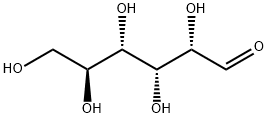
What is L-Glucose?
Description
L-(−)-Glucose is an enantiomer of the more common D-glucose. L-Glucose is not bioavailable to cells as an energy source because it cannot be phosphorylated by hexokinase. However, certain L-glucose-utilizing bacteria that contain NAD+-dependent L-glucose dehydrogenases capable of oxidizing L-glucose have been identified.
Chemical properties
white powder
The Uses of L-Glucose
L-Glucose is the enantiomer of D-Glucose (G595000), a naturally occurring carbohydrate used in an abundance of cellular processes. L-Glucose is a synthetic sugar used in the formation of L-Glucose Pen taacetate (G596510), a potential therapeutic agent regarding type II diabetes. In addition, L-glucose can be used as a colon cleansing agent for before a colonoscopy procedure.
The Uses of L-Glucose
L-(-)-Glucose is an enantiomer of the more common D-glucose a naturally occurring carbohydrate used in an abundance of cellular processes. L-Glucose is a synthetic sugar used in the formation of L-Glucose Pen taacetate, a potential therapeutic agent regarding type II diabetes. In addition, L-glucose can be used as a colon cleansing agent for before a colonoscopy procedure.
The Uses of L-Glucose
L-(-)-Glucose has been used in phospho-buffered saline (PBS) solution to induce metabolic responses in Saccharomyces cerevisiae. It has also been used to study the substrate competition pattern of IICB glucose transporter.
What are the applications of Application
L-(?)-Glucose is an enantiomer of the more common D-glucose
Definition
ChEBI: The L-enantiomer of aldehydo-glucose.
General Description
L-(?)-Glucose is an enantiomer of the more common D-glucose. L-Glucose cannot be used by cells as an energy source because it cannot be phosphorylated by hexokinase.
Properties of L-Glucose
| Melting point: | 153-156 °C(lit.) |
| Boiling point: | 232.96°C (rough estimate) |
| Density | 1.2805 (rough estimate) |
| refractive index | -52 ° (C=5, H2O) |
| storage temp. | 2-8°C |
| solubility | H2O: 0.1 g/mL, clear, colorless |
| form | aqueous ethanol solution |
| pka | 12.45±0.20(Predicted) |
| color | White |
| Water Solubility | Soluble in water, alcohol. |
| Merck | 14,4459 |
| BRN | 1724626 |
| Stability: | Stable. Combustible. Incompatible with strong oxidizing agents. |
| CAS DataBase Reference | 921-60-8(CAS DataBase Reference) |
Safety information for L-Glucose
| Signal word | Warning |
| Pictogram(s) |
 Exclamation Mark Irritant GHS07 |
| GHS Hazard Statements |
H227:Flammable liquids |
| Precautionary Statement Codes |
P210:Keep away from heat/sparks/open flames/hot surfaces. — No smoking. P280:Wear protective gloves/protective clothing/eye protection/face protection. P370+P378:In case of fire: Use … for extinction. P403+P235:Store in a well-ventilated place. Keep cool. |
Computed Descriptors for L-Glucose
| InChIKey | WQZGKKKJIJFFOK-UZJJNQGWSA-N |
New Products
2-(2-Chlorophenyl)glycine Propiolic Acid 1-(3-Hydroxy-4-methoxyphenyl)-2-nitroethene (±)-amino(2-fluorophenyl)acetic acid trans-3-Benzyloxy-4-methoxy-beta-nitrostyrene 1-Pentadecanol 4-(4-Αminophenyl)-3-Morpholinone 3-Morpholino-1-(4-(2-oxopiperidin-1-yl) phenyl)-5,6-dihyropyridin-2-(1H)-one 1-(4-Aminophenyl)-3-morpholino-5,6-dihydropyridin-2(1H)-one N-cyanoacetylurethane 1H-IndazoleRelated products of tetrahydrofuran


You may like
-
 L-Glucose 95% CAS 921-60-8View Details
921-60-8 -
L-(-)-Glucose CAS 921-60-8View Details
921-60-8 -
L-(−)-Glucose CAS 921-60-8View Details
921-60-8 -
471-25-0 Propiolic Acid 98+View Details
471-25-0 -
84145-28-8 98+View Details
84145-28-8 -
2-(2-Chlorophenyl)glycine 88744-36-9 98+View Details
88744-36-9 -
40216-83-9 trans-4-Hydroxy-L-proline methyl ester hydrochloride 98+View Details
40216-83-9 -
1-(3-Hydroxy-4-methoxyphenyl)-2-nitroethene 98+View Details
39816-35-8