
JAS239
- CAS NO.:1630288-74-2
- Empirical Formula: C31H37ClN2O2
- Molecular Weight: 505.1
- Update Date: 2026-05-11 19:39:08
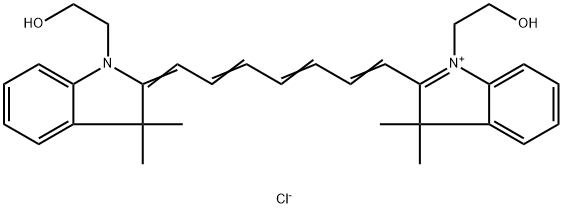
What is JAS239?
Description
JAS239 is a novel carbocyanine dye that binds and competitively inhibits choline kinase (ChoK) intracellularly. JAS239 attenuated choline phosphorylation and viability in a panel of human breast cancer cell lines. Antibody blockade prevented cellular retention of JAS239 indicating direct interaction with ChoKα independent of the choline transporters and catabolic choline pathways. In mice bearing orthotopic MCF7 breast xenografts, optical imaging with JAS239 distinguished tumors overexpressing ChoKα from their empty vector counterparts and delineated tumor margins.
Safety information for JAS239
JAS239 manufacturer
New Products
9-Mesityl-10-methylacridinium perchlorate Sulfapyridine Fmoc-OSu (R)-(-)-2-Amino-1-propanol Cyclobutanone 5-bromo-4-fluoro-2-nitrobenzaldehyde 4 pentyn 1 ol N-Vinylformamide Phenethyl cinnamate Pyrrolo[1,2-a]pyrimidine-6-carboxylic acid, 4,6,7,8-tetrahydro-4-oxo-, sodium salt (1:1), (6S) Ethyl 3-phenylpropanoate β-Bromostyrene Methacrylate-PEG-Methacrylate, Mn:35000 2,4-Dihydroxyacetophenone 2-Chloro 5-Fluoro Pyridine Vasicinone 2-Chloroisonicotinic Acid Tween 80 or Polysorbate 80 5-Bromo-1-Pentyne 1-(2-Methyl-5-nitrophenyl)guanidine Nitrate Methyl trans-4-Aminocyclohexanecarboxylate Hydrochloride N-(4-Cyano-3-(trifluoromethyl)phenyl)-2-methyloxirane-2-carboxamide 4-Nitrobenzotrifluoride 2-Pentyn-1-oLYou may like
-
 JAS-239 1630288-74-2 98%View Details
1630288-74-2 -
1191-95-3 Cyclobutanone 98+View Details
1191-95-3 -
Fmoc-OSu 98+View Details
82911-69-1 -
(R)-(-)-2-Amino-1-propanol 35320-23-1 98+View Details
35320-23-1 -
1191-95-3 Cyclobutanone 98+View Details
1191-95-3 -
213382-45-7 98+View Details
213382-45-7 -
Fmoc-OSu 98+View Details
82911-69-1 -
(R)-(-)-2-Amino-1-propanol 35320-23-1 98+View Details
35320-23-1
Statement: All products displayed on this website are only used for non medical purposes such as industrial applications or scientific research, and cannot be used for clinical diagnosis or treatment of humans or animals. They are not medicinal or edible.