
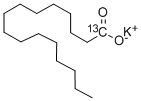
Hexadecanoic acid-1-13C
Synonym(s):Hexadecanoic acid-1-13C
- CAS NO.:57677-53-9
- Empirical Formula: C16H32O2
- Molecular Weight: 257.43
- MDL number: MFCD00002748
- SAFETY DATA SHEET (SDS)
- Update Date: 2026-11-04 16:52:45

What is Hexadecanoic acid-1-13C?
Description
Palmitic acid-13C is intended for use as an internal standard for the quantification of palmitic acid by GC- or LC-MS. Palmitic acid is a common 16-carbon saturated fat that represents 10-20% of human dietary fat intake and comprises approximately 25 and 65% of human total plasma lipids and saturated fatty acids, respectively. Acylation of palmitic acid to proteins facilitates anchoring of membrane-bound proteins to the lipid bilayer and trafficking of intracellular proteins, promotes protein-vesicle interactions, and regulates various G protein-coupled receptor functions. Red blood cell palmitic acid levels are increased in patients with metabolic syndrome compared to patients without metabolic syndrome and are also increased in the plasma of patients with type 2 diabetes compared to individuals without diabetes.
The Uses of Hexadecanoic acid-1-13C
Hexadecanoic-1-13C Acid is a labeled analog of Palmitic Acid (P144500), which is a common fatty acid found in plants and animals. The body converts excess carbohydrates into Palmitic Acid, thus Palmitic Acid is the first fatty acid produced during fatty acid synthesis as well as a precursor for longer fatty acids.
Properties of Hexadecanoic acid-1-13C
| Melting point: | 61-64 °C(lit.) |
| Boiling point: | 271.5 °C100 mm Hg(lit.) |
| Density | 0.855 g/mL at 25 °C |
| storage temp. | Store at -20°C |
| solubility | DMF: 20 mg/ml; DMSO: 20 mg/ml; Ethanol: 30 mg/ml; Ethanol:PBS (pH 7.2) (1:2): 0.25 mg/ml |
| form | A solid |
| color | White to off-white |
Safety information for Hexadecanoic acid-1-13C
| Signal word | Warning |
| Pictogram(s) |
 Exclamation Mark Irritant GHS07 |
| GHS Hazard Statements |
H315:Skin corrosion/irritation H319:Serious eye damage/eye irritation H335:Specific target organ toxicity, single exposure;Respiratory tract irritation |
| Precautionary Statement Codes |
P261:Avoid breathing dust/fume/gas/mist/vapours/spray. P305+P351+P338:IF IN EYES: Rinse cautiously with water for several minutes. Remove contact lenses, if present and easy to do. Continuerinsing. |
Computed Descriptors for Hexadecanoic acid-1-13C
New Products
2-(2-Chlorophenyl)glycine Propiolic Acid 1-(3-Hydroxy-4-methoxyphenyl)-2-nitroethene (±)-amino(2-fluorophenyl)acetic acid trans-3-Benzyloxy-4-methoxy-beta-nitrostyrene 1-Pentadecanol 4-(4-Αminophenyl)-3-Morpholinone 3-Morpholino-1-(4-(2-oxopiperidin-1-yl) phenyl)-5,6-dihyropyridin-2-(1H)-one 1-(4-Aminophenyl)-3-morpholino-5,6-dihydropyridin-2(1H)-one N-cyanoacetylurethane 1H-IndazoleRelated products of tetrahydrofuran






You may like
-
 Palmitic acid-1-13C CAS 57677-53-9View Details
57677-53-9 -
471-25-0 Propiolic Acid 98+View Details
471-25-0 -
84145-28-8 98+View Details
84145-28-8 -
trans-3-Benzyloxy-4-methoxy-beta-nitrostyrene 98+View Details
63909-29-5 -
2-(2-Chlorophenyl)glycine 88744-36-9 98+View Details
88744-36-9 -
40216-83-9 trans-4-Hydroxy-L-proline methyl ester hydrochloride 98+View Details
40216-83-9 -
629-76-5 98+View Details
629-76-5 -
1-(3-Hydroxy-4-methoxyphenyl)-2-nitroethene 98+View Details
39816-35-8