
GINGER
- Molecular Weight: 0
- MDL number: MFCD03700889
- Update Date: 2026-06-24 18:39:39
What is GINGER?
Chemical properties
An herbaceous plant native to Asia, ginger is cultivated in tropical and subtropical countries (Jamaica, India, Africa, southern China and Australia) It can grow 60 to 90 cm (2 to 3 ft) tall and has tuber-like rhizomes with leaf-bearing and fower-bear- ing stems The rhizomes must split for the plant to propagate The African and Cochin variety rhizomes are used most frequently for distillation It has a warm, sweet, strongly aromatic odor; sharp, pungent favor The rhizome is harvested between 6 and 20 months; taste and pungency increase with maturity Brown ginger is produced from unpeeled rhizomes, whereas white ginger is produced from skinned rhizomes Medicinal use of ginger dates back to ancient history and references to its use are found in Sesruta scriptures of Aurvedic medicine, as well as in Sanskrit writings.
Occurrence
Ginger is found in the tropics of Asia and is now cultivated in the tropics of South America, China, India, Africa, the Caribbean, and parts of the United States.
The Uses of GINGER
Ginger is a spice that is the dried and peeled rhizome of the ginger plant zingiber officinale. the fragrance ranges from pungent to piquant at once; the flavor can be sharp or cooling depending on the food with which it is used. fresh (green) ginger is obtained from the cleaned, peeled, and cured rhizome; dried ginger is the fresh product which has been cured and ground for spice. it is used in desserts, meats, sauces, relishes, baked goods, and beverages.
Composition
The characteristic aroma of ginger is due mainly to the presence of a zingiberol volatile oil The major constituents in the rhizomes are carbohydrates (50 to 70%), lipids (2 to 8%) The lipids include free fatty acids (palmitic, oleic, linoleic, linolenic, capric, lauric and myristic), triglycerides and lecithins.
Anticancer Research
It is an Ayurvedic herb and used in many Indian dishes (Kapoor 2000). Inflammationmarkers that have been proved in clinical research to act as precursors to colon cancercan be reduced significantly by the consumption of ginger powder or ginger roots(Abdullah et al. 2010). A powerful anti-inflammatory, ginger soothes and heals thedigestive tract (Stoilova et al. 2007). Based on research findings, ginger can decreasethe level of inflammatory markers in the gut tissue; increased inflammation andchronic inflammation in the gut are highly associated with developing precancerouslesions or cancerous polyps (Abdullah et al. 2010), and thus ginger has been suggestedas one of the best home remedies for the prevention of colon cancer.
Safety information for GINGER
New Products
5-bromo-4-fluoro-2-nitrobenzaldehyde Cyclobutanone (R)-(-)-2-Amino-1-propanol Fmoc-OSu 1-(2-Chloroethyl)pyrrolidine Hydrochloride 2-Amino-2-(4-methylphenyl)acetic acid 2,4-Dihydroxybenzaldehyde Obidoxime hydrochloride API Pyrrolo[1,2-a]pyrimidine-6-carboxylic acid, 4,6,7,8-tetrahydro-4-oxo-, sodium salt (1:1), (6S) Dipropyl disulfide 4 pentyn 1 ol N-Vinylformamide Methacrylate-PEG-Methacrylate, Mn:35000 2,4-Dihydroxyacetophenone 2-Chloro 5-Fluoro Pyridine Vasicinone 2-Chloroisonicotinic Acid Tween 80 or Polysorbate 80 2-Butyn-1-oL 2-Pentyn-1-oL 4-Nitrobenzotrifluoride N-(4-Cyano-3-(trifluoromethyl)phenyl)-2-methyloxirane-2-carboxamide N-(4-fluoro-2-methoxy-5-nitrophenyl)-4-(1-methyl-1H-indol-3-yl)pyrimidin-2-amine Pirtobrutinib intd.You may like
-
 7250-67-1 1-(2-Chloroethyl)pyrrolidine Hydrochloride 98+View Details
7250-67-1 -
7250-67-1 1-(2-Chloroethyl)pyrrolidine Hydrochloride 98+View Details
7250-67-1 -
13227-01-5 98+View Details
13227-01-5 -
545445-44-1 3-Morpholino-1-(4-(2-oxopiperidin-1-yl) phenyl)-5,6-dihyropyridin-2-(1H)-one 98%View Details
545445-44-1 -
6629-04-5 98%View Details
6629-04-5 -
4-(4-Αminophenyl)-3-Morpholinone 98%View Details
438056-69-0 -
1-(4-Aminophenyl)-3-morpholino-5,6-dihydropyridin-2(1H)-one 1267610-26-3 98%View Details
1267610-26-3 -
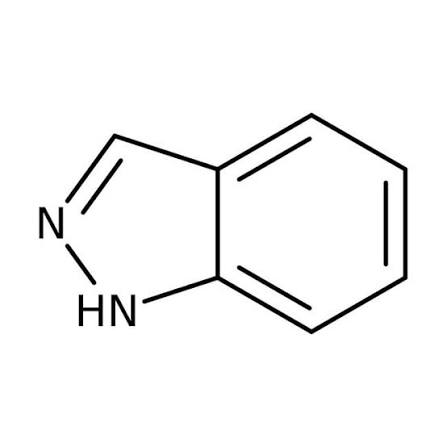 1H-Indazole | CAS No. 271-44-3 | Pharmaceutical IntermediateView Details
271-44-3