
Fructooligosaccharides
Synonym(s):Cellular oncogene fos;FOS;G0/G1 switch regulatory protein 7;G0S7;Proto-oncogene c-Fos
- CAS NO.:308066-66-2
- Molecular Weight: 0
- MDL number: MFCD00677049
- EINECS: 204-465-2
- Update Date: 2025-12-17 09:50:09
What is Fructooligosaccharides?
Description
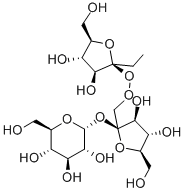
Fructooligosaccharides (FOS) are a form of water-soluble carbohydrate. Composed of short fructose chains, they cannot be digested by the human body. As well as being considered a prebiotic, FOS are commonly used as an alternative sweetener in certain foods and even used as a medicine.
Fructooligosaccharides (FOS) are oligosaccharides that occur naturally in plants such as onion, chicory, garlic, asparagus, banana, artichoke, among many others. They are composed of linear chains of fructose units, linked by beta (2-1) bonds. The length of the fructose chain varies from 2 to 60 with an average degree of polymerization of >10. Fructooligosacchrides are resistant to hydrolysis by the intestinal enzymes, and have been shown to be indigestible by enzymes in the human small intestine but are fermented extensively by microflora in the lower digestive tract.
Chemical properties
contains fructose, glucose and sucrose 15%
The Uses of Fructooligosaccharides
Fructooligosaccharides from chicory may be used in prebiotic nutrition research to study the beneficial effects of fructooligosaccharides (FOS) on physiological processes and health. Fructooligosaccharide may be used in combinations with probiotic bacteria to assess their benefits as intestinal supplements. Fructooligosaccharide may be used in mannose-binding lectin (MBL) research.
General Description
Fructooligosaccharides are composed of glucose-(fructose)n with β?2→1 linkage between the fructose monomer units. The length of the fructose chain varies from 2 to 60 with an average degree of polymerization of >10. Fructooligosacchrides are resistant to hydrolysis by the intestinal enzymes, and have been shown to be indigestible by enzymes in the human small intestine but are fermented extensively by microflora in the lower digestive tract.
Properties of Fructooligosaccharides
| storage temp. | 2-8°C |
| form | buffered aqueous solution |
Safety information for Fructooligosaccharides
Computed Descriptors for Fructooligosaccharides
New Products
Dibenzoyl-L-tartaric acid Anhydrous (Resolution Reagent) Cis-Tosylate Dibenzo[b,f][1,4]thiazepin-11(10H)-one 1,2,3,9-Tetrahydro-9-Methyl-4H-Carbazole-4-One 1-(4-methoxyphenyl)-4-(4-Nitrophenyl)Piperazine (IT-1) BOC Piperazine 1-Benzhydrylazetane-3-carbonitrile 8-oxa-1,3-diazaspiro[4.5]decane-2,4-dione (±)-amino(2-fluorophenyl)acetic acid 2-(2-Chlorophenyl)glycine AMINO-(3-CHLORO-PHENYL)-ACETIC ACID 2'-Fluoroacetophenone METHANOL-D1(OD) TERTIARY BUTANOL-D9 N-ETHYL-D5-AMINE HYDROCHLORIDE BENZOIC ACID-D CHLOROFORM-D TOLUENE-D3 Trans,trans muconic acid HC Blue-16 4-Amino-2-chloro-6,7-dimethoxyquinazoline Ethyl 4,5-bis(2-methoxyethoxy)-2-nitrobenzoate 2,3-Dimethoxypyridine 1-(3-Chlorophenyl)piperazine hydrochlorideRelated products of tetrahydrofuran


You may like
-
 Fructooligosaccharides from chicory CAS 409098-47-1View Details
409098-47-1 -
 Product IntroductionView Details
 -
 Product InrtroductionView Details
 -
 DGO24View Details
 -
 DGO25View Details
 -
 DGO29View Details
 -
 DGO32View Details
 -
 DGO36View Details