
ENTEROKINASE
Synonym(s):Enteropeptidase
- CAS NO.:9014-74-8
- Empirical Formula: NULL
- Molecular Weight: 0
- MDL number: MFCD00131020
- EINECS: 232-761-1
- SAFETY DATA SHEET (SDS)
- Update Date: 2026-05-27 23:59:26
What is ENTEROKINASE?
The Uses of ENTEROKINASE
Typical conditions for fusion protein cleavage:
Adjust the concentration of the fusion protein to 1.5 mg/ml and a pH between 7.0-8.0 with 500 mM Tris-HCl, pH 8.0, 2.0 mM CaCl2, and 1% Tween? 20
Add enterokinase to fusion protein solution at a ratio of ~ 0.02 units per 1 mg fusion protein and mix
Incubate reaction mixture at ~25 °C for 16 hours
Definition
An enzyme found in the small intestine, which converts trypsinogen into trypsin.
General Description
Enterokinase is a highly specific serine protease that is used for the removal of the FLAG peptide from N-terminal and Met-N-terminal fusion proteins. It does not remove the C-terminal FLAG.
Biochem/physiol Actions
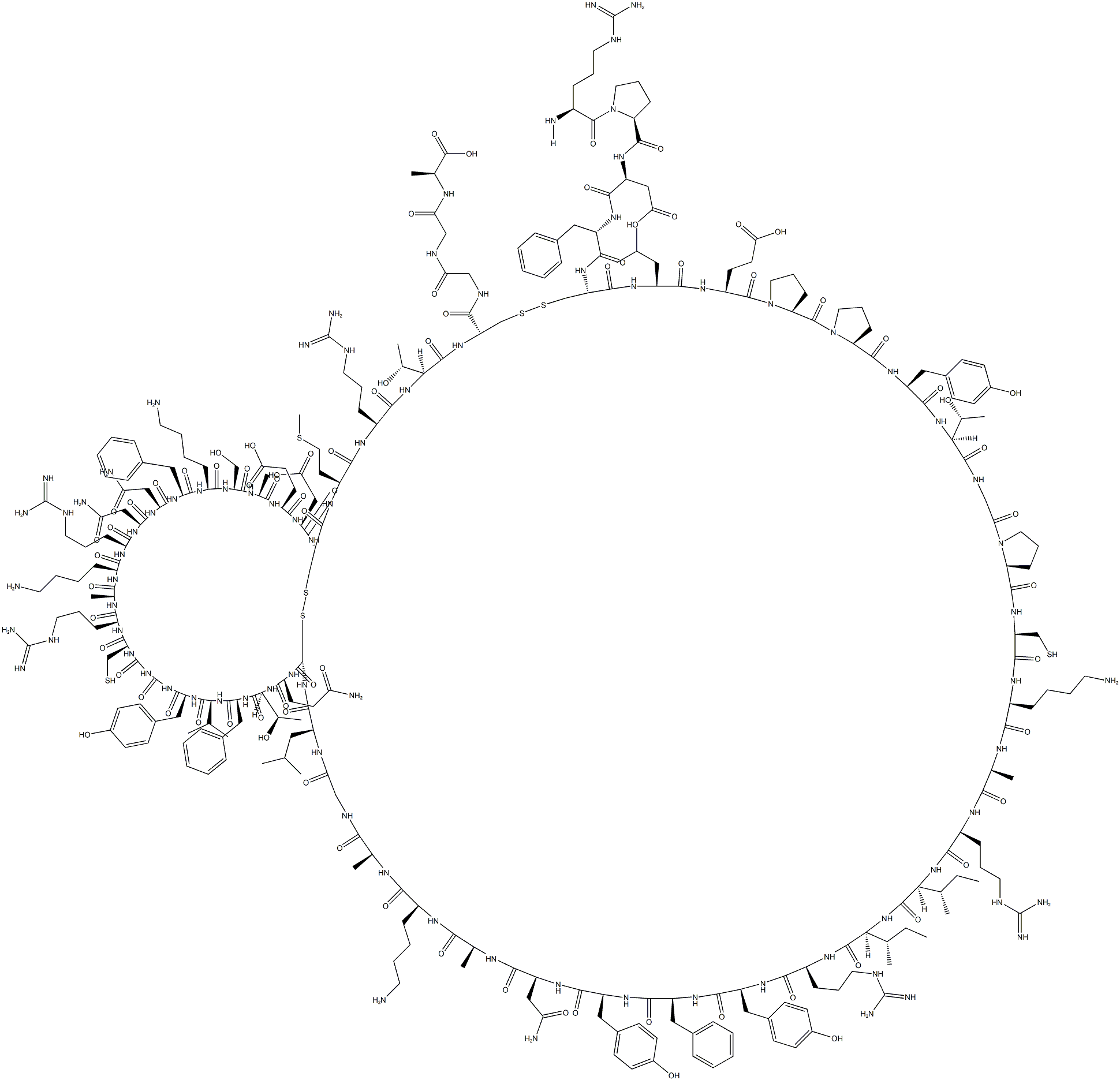
Enterokinase is a membrane bound serine protease that specifically and rapidly converts trypsinogen to trypsin, thereby, triggering the conversion of other zymogens to active enzymes. It has a molecular mass of approximately 150 kDa. The enzyme is a heterodimer consisting of 35-47 kDa subunits. The light and the heavy chains are linked by two disulfide bridges. It is a glycoprotein containing 35% carbohydrate. The polypeptide chain of trypsinogen is hydrolyzed only after an -(Asp)4-Lys- sequence. The enzyme is inhibited by soybean trypsin inhibitor. Enterokinase is typically used in protein modification and amino acid sequence determination.
Properties of ENTEROKINASE
| storage temp. | -20°C |
| form | salt-free, lyophilized powder |
| color | white |
| CAS DataBase Reference | 9014-74-8 |
| EPA Substance Registry System | Peptidase, entero- (9014-74-8) |
Safety information for ENTEROKINASE
| Signal word | Danger |
| Pictogram(s) |
 Exclamation Mark Irritant GHS07  Health Hazard GHS08 |
| GHS Hazard Statements |
H315:Skin corrosion/irritation H319:Serious eye damage/eye irritation H334:Sensitisation, respiratory H335:Specific target organ toxicity, single exposure;Respiratory tract irritation |
| Precautionary Statement Codes |
P261:Avoid breathing dust/fume/gas/mist/vapours/spray. P284:Wear respiratory protection. P304+P340:IF INHALED: Remove victim to fresh air and Keep at rest in a position comfortable for breathing. P305+P351+P338:IF IN EYES: Rinse cautiously with water for several minutes. Remove contact lenses, if present and easy to do. Continuerinsing. P342+P311:IF experiencing respiratory symptoms: call a POISON CENTER or doctor/physician. |
Computed Descriptors for ENTEROKINASE
New Products
9-Mesityl-10-methylacridinium perchlorate Sulfapyridine Fmoc-OSu (R)-(-)-2-Amino-1-propanol Cyclobutanone 5-bromo-4-fluoro-2-nitrobenzaldehyde 4 pentyn 1 ol N-Vinylformamide Phenethyl cinnamate Pyrrolo[1,2-a]pyrimidine-6-carboxylic acid, 4,6,7,8-tetrahydro-4-oxo-, sodium salt (1:1), (6S) Ethyl 3-phenylpropanoate β-Bromostyrene Methacrylate-PEG-Methacrylate, Mn:35000 2,4-Dihydroxyacetophenone 2-Chloro 5-Fluoro Pyridine Vasicinone 2-Chloroisonicotinic Acid Tween 80 or Polysorbate 80 5-Bromo-1-Pentyne 1-(2-Methyl-5-nitrophenyl)guanidine Nitrate Methyl trans-4-Aminocyclohexanecarboxylate Hydrochloride 2-Pentyn-1-oL 4-Nitrobenzotrifluoride N-(4-Cyano-3-(trifluoromethyl)phenyl)-2-methyloxirane-2-carboxamideRelated products of tetrahydrofuran





You may like
-
 Enterokinase from bovine intestine CAS 9014-74-8View Details
9014-74-8 -
Enterokinase from porcine intestine CAS 9014-74-8View Details
9014-74-8 -
Enterokinase CAS 9014-74-8View Details
9014-74-8 -
Enterokinase from porcine intestine CAS 9014-74-8View Details
9014-74-8 -
Recombinant Enterokinase CASView Details
-
1191-95-3 Cyclobutanone 98+View Details
1191-95-3 -
Fmoc-OSu 98+View Details
82911-69-1 -
(R)-(-)-2-Amino-1-propanol 35320-23-1 98+View Details
35320-23-1