
DIAMOND
- Molecular Weight: 0
- MDL number: MFCD00211867
- EINECS: 231-953-2
- Update Date: 2026-08-25 20:17:46
What is DIAMOND?
Chemical properties
Diamond transforms to graphite when heated at 2000℃ in vacuum and transforms to CO2 at 710–900℃ in air.
Physical properties
The space lattice of a diamond belongs to the cubic system, and its diamond structure has a lattice
constant of a=0.3560 nm and a cleavage plane of 111.
Diamond is classified optically as Type I and Type II. Type I shows the absorption bands at 8
and 20.8 mm by the impurities other than the 5 mm absorption band. On the other hand, Type II
shows the 5 mm absorption band only.
The transmittance of Type II is T=60% for wavelengths longer than 6 mm. There is no other
material that shows such an optical property.
The Uses of DIAMOND
Diamond is excellent as a transmission window because it has no absorption in the infrared and farinfrared region. However, large diamond pieces are difficult to obtain, and they are used as a special window (i.e., a window of a Golay cell).
Definition
An allotrope of CARBON. It is the hardest naturally occurring substance and is used for jewelry and, industrially, for cutting and drilling equipment. Each carbon atom is surrounded by four equally spaced carbon atoms arranged tetrahedrally. The carbon atoms form a three-dimensional network with each carbon–carbon bond equal to 0.154 nm and at an angle of 109.5° with its neighbors. In diamonds millions of atoms are covalently bonded to form a giant molecular structure, the great strength of which results from the strong covalent bonds. Diamonds can be formed synthetically from graphite in the presence of a catalyst and under extreme temperature and pressure; although small, such diamonds are of adequate size for many industrial uses.
Definition
diamond: The hardest known mineral(with a hardness of 10 on Mohs’scale). It is an allotropic form of purecarbon that has crystallized in thecubic system, usually as octahedra orcubes, under great pressure. Diamondcrystals may be colourless andtransparent or yellow, brown, orblack. They are highly prized as gemstonesbut also have extensive usesin industry, mainly for cutting andgrinding tools. Diamonds occur in ancientvolcanic pipes of kimberlite;the most important deposits are inSouth Africa but others are found inTanzania, the USA, Russia, and Australia.Diamonds also occur in riverdeposits that have been derived fromweathered kimberlite, notably inBrazil, Za?re, Sierra Leone, and India.Industrial diamonds are increasinglybeing produced synthetically.
Production Methods
Diamond is produced with so called, diamond luster, and is white or transparent. But sometimes yellow, red, orange, green, blue, brown, and black colored diamond exists. Black diamond is called carbonad. The diamond from Kimberley, a major mining source, is called Kimberlite. Recently, diamond has been fabricated under high temperature and pressure, but it is not as large and is used only for abrasives.
Industrial uses
Diamond is the cubic crystalline form of carbon.When pure, diamond is water clear, butimpurities add shades of opaqueness including black. It is the hardest natural material with ahardness on the Knoop scale ranging from 5500to 7000. It will scratch and be scratched by thehardest anthropogenic material Borozon. It hasa specific gravity of 3.5. Diamond has a meltingpoint of around 3871°C, at which point it willgraphitize and then vaporize. Diamonds aregenerally electrical insulators and nonmagnetic.Synthetic diamonds are produced from graphiteat extremely high pressures (5444 to 12,359.9MPa) and temperatures from 1204 to 2427°C.They are up to 0.01 carat in size and are comparableto the quality of industrial diamonds.In powder form they are used in cutting wheels.Of all diamonds mined, about 80% by weightare used in industry. Roughly 45% of the totalindustrial use is in grinding wheels. Tests haveshown that under many conditions syntheticdiamonds are better than mined diamonds inthis application.
Properties of DIAMOND
| Density | 3.5 g/mL at 25 °C(lit.) |
| form | synthetic polycrystalline powder |
| color | Clear, Impurities (i.e. Nitrogen) and irradiation can change color to yellow, green, blue, pink, or brown. |
| Crystal Structure | Cubic, Diamond - Space Group Fd3m |
| Merck | 14,2987 |
| Dielectric constant | 5.5(Ambient) |
Safety information for DIAMOND
Computed Descriptors for DIAMOND
New Products
9-Mesityl-10-methylacridinium perchlorate Sulfapyridine Fmoc-OSu (R)-(-)-2-Amino-1-propanol Cyclobutanone 5-bromo-4-fluoro-2-nitrobenzaldehyde 4 pentyn 1 ol N-Vinylformamide Phenethyl cinnamate Pyrrolo[1,2-a]pyrimidine-6-carboxylic acid, 4,6,7,8-tetrahydro-4-oxo-, sodium salt (1:1), (6S) Ethyl 3-phenylpropanoate β-Bromostyrene Methacrylate-PEG-Methacrylate, Mn:35000 2,4-Dihydroxyacetophenone 2-Chloro 5-Fluoro Pyridine Vasicinone 2-Chloroisonicotinic Acid Tween 80 or Polysorbate 80 5-Bromo-1-Pentyne 1-(2-Methyl-5-nitrophenyl)guanidine Nitrate Methyl trans-4-Aminocyclohexanecarboxylate Hydrochloride N-(4-Cyano-3-(trifluoromethyl)phenyl)-2-methyloxirane-2-carboxamide 4-Nitrobenzotrifluoride 2-Pentyn-1-oLRelated products of tetrahydrofuran


You may like
-
 Igi Certificate 14k white gold 2.78carat lab grown diamond five stone ringView Details
 -
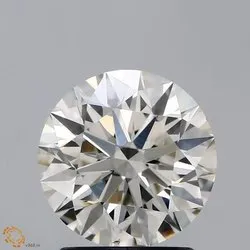 Round HPHT Diamond 3.00 MM, 0.10 PointerView Details
 -
 Akanksha Jewels Real Diamonds Diamond Pendant, 58 mm, 19.6 GramsView Details
 -
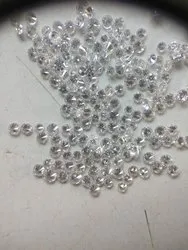 Arihant Creators 3.30 to 3.70 mm (+14-16 Sieves) VVS-VS / DEF Assorted Lab Grown / HPHT DiamondView Details
 -
 Igi 1 Carat Oval Rose Cut Lab Grown Certified Loose DiamondView Details
 -
 White 2.00 Diamond 3X CutView Details
 -
 CVD HPHT Diamond Jewelry IGI Certification 10 to 40 pointer Round Brilliant Cut DiamondView Details
 -
 Round Cut 1.61ct D VS1 HPHT IGI Certified DiamondView Details