
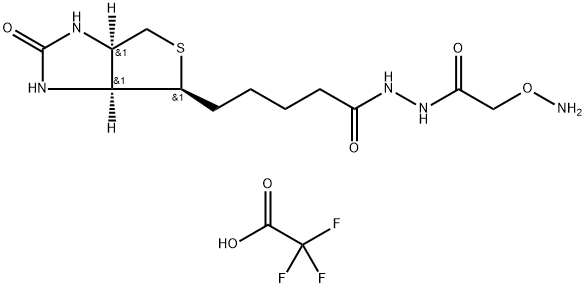
Aldehyde Reactive Probe (trifluoroacetate salt)
- CAS NO.:627090-10-2
- Empirical Formula: C14H22F3N5O6S
- Molecular Weight: 445.41
- MDL number: MFCD03427750
- SAFETY DATA SHEET (SDS)
- Update Date: 2025-12-04 14:24:59
What is Aldehyde Reactive Probe (trifluoroacetate salt)?
Description
DNA is continually damaged by endogenous and environmental agents leading to the formation of abasic (apurinic/apyrimidinic, AP) sites that are disruptive to DNA synthesis. Aldehyde Reactive Probe (ARP) is a biotinylated reagent for the detection and quantification of AP sites in damaged DNA. ARP reacts with aldehyde groups formed when reactive oxygen species depurinate DNA, resulting in covalent linkage of biotin to these AP sites. The biotin-
Properties of Aldehyde Reactive Probe (trifluoroacetate salt)
| storage temp. | Store at -20°C |
| solubility | DMF: 20 mg/ml; DMSO: 15 mg/ml; PBS (pH 7.2): 3 mg/ml |
| form | A crystalline solid |
Safety information for Aldehyde Reactive Probe (trifluoroacetate salt)
Computed Descriptors for Aldehyde Reactive Probe (trifluoroacetate salt)
New Products
Methyl 2-hydroxy-3-nitrobenzoate 1,3-Diethyl-1,3-Diphenylurea 2,4-dihydroxybenzaldehyde 3-(4-morpholinophenylamino)-5-amino-1H-pyrazole-4-carbonitrile Methyl 2-methylquinoline-6-carboxylate 2-((4-morpholinophenylamino) (methylthio) methylene) malononitrile 1,3-Di Iodo Benzene Methyl 2-oxo-2,3-dihydrobenzo[d]oxazole-7-carboxylate 4-(2-Aminoethyl)-7-hydroxy-2H-chromoen-2-one 3-Hydroxy-4-nitrobromobenzene 2-Ethyl-1,4-diaminobenzene 2-Ethylhexyl 4-aminobenzoate Thio AcetamideYou may like
-
 MFCD22560726 98%View Details
MFCD22560726 -
3-Hydroxy-4-nitrobromobenzene 98%View Details
2768-84-0 -
4-(2-Aminoethyl)-7-hydroxy-2H-chromoen-2-one 98%View Details
1234064-08-4. -
2-Ethyl-1,4-diaminobenzene 98%View Details
MFCD19203885 -
85-81-4 6-Methoxy-8-nitroquinoline 98%View Details
85-81-4 -
2-((4-morpholinophenylamino) (methylthio) methylene) malononitrile 98%View Details
-
 Hot Sales:Thio AcetamideView Details
62-55-5 -
 CosmoticsView Details
26218-04-2
Statement: All products displayed on this website are only used for non medical purposes such as industrial applications or scientific research, and cannot be used for clinical diagnosis or treatment of humans or animals. They are not medicinal or edible.