
1,8-Bis(dimethylamino)naphthalene
Synonym(s):N,N,N′,N′-Tetramethyl-1,8-naphthalenediamine;1,8-Bis(dimethylamino)naphthalene;DMAN;Proton-sponge
- CAS NO.:20734-58-1
- Empirical Formula: C14H18N2
- Molecular Weight: 214.31
- MDL number: MFCD00003920
- EINECS: 244-001-6
- SAFETY DATA SHEET (SDS)
- Update Date: 2026-05-28 03:48:20
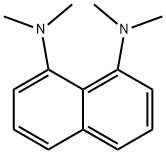
What is 1,8-Bis(dimethylamino)naphthalene?
Chemical properties
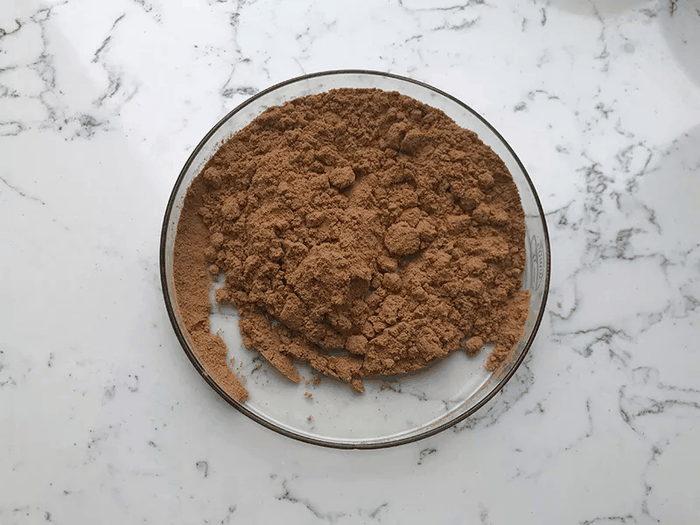
1,8-Bis(dimethylamino)naphtalene is pale brownish-pink crystalline powder
The Uses of 1,8-Bis(dimethylamino)naphthalene
1,8-Bis(dimethylamino)naphthalene, also referred to as protone sponge, is a lipophilic proton trapping agent. 1,8-Bis(dimethylamino)naphthalene is used in the matrix for mass spectroscopy analysis of lipids and fatty acids.
The Uses of 1,8-Bis(dimethylamino)naphthalene
Very strong base in organic synthesis and catalysis.
The Uses of 1,8-Bis(dimethylamino)naphthalene
Very strong base with weak nucleophilic character due to steric effects.
What are the applications of Application
1,8-Bis(dimethylamino)naphthalene is a very strong base
Definition
ChEBI: N1,N1,N8,N8-tetramethylnaphthalene-1,8-diamine is a member of naphthalenes.
General Description
Proton-sponge is also referred as 1,8-dimethylamino naphthalene. It is very strong base with weak nucleophilic character due to steric effects. It also participates in the reactions between arachno-6,9-C2B8H14 and selected acyl chlorides. It has been tested as an effective H+ scavenger.
Solubility in organics
Soluble in most organic solvents, such as methanol and chloroform.
Purification Methods
It is prepared by methylating 1,8-diaminonaphthalene, and likely impurities are methylated products. The tetramethyl compound is a stronger base than the unmethylated, di and trimethylated derivatives. The pKa values are: 1,8-(NH2)2 = 4.61, 1,8-(NHMe)2 = 5.61, 1-NHMe-8-NHMe2 = 6.43 and 1,8-(NMe2)2 = 12.34. The mixture is then treated with H2O at pH 8 (where all but the required base are protonated) and extracted with Et2O or CHCl3. The dried extract (K2CO3) yields the tetramethyldiamine on evaporation which can be distilled. It is a strong base with weak nucleophilic properties, e.g. it could not be alkylated by refluxing with EtI in MeCN for 4 days; and on treatment with methyl fluorosulfonate only the fluorosulfonate salt of the base is obtained. [NMR: Adler et al. J Chem Soc, Chem Commun 723 1968, Brown & Letang J Am Chem Soc 63 358 1941, Brzezinski et al. J Chem Soc Perkin Trans 2 857 1991.] Alternatively, crystallise proton sponge from EtOH and dry it in a vacuum oven. Store it in the dark in a CO2-free atmosphere. [Benoit et al. Can J Chem 65 996 1987, Beilstein 13 IV 344.]
Properties of 1,8-Bis(dimethylamino)naphthalene
| Melting point: | 49-51 °C(lit.) |
| Boiling point: | 144-145°C (3.7505 mmHg) |
| Density | 1.12 |
| Flash point: | >230 °F |
| storage temp. | Keep in dark place,Inert atmosphere,Room temperature |
| solubility | Soluble in organic solvents. |
| form | Crystalline Powder |
| pka | 12.1(at 25℃) |
| color | Pale brownish-pink |
| Water Solubility | insoluble |
| Sensitive | Light Sensitive |
| Merck | 14,3388 |
| BRN | 396782 |
| CAS DataBase Reference | 20734-58-1(CAS DataBase Reference) |
| NIST Chemistry Reference | 1,8-Naphthalenediamine, N,N,N',N'-tetramethyl-(20734-58-1) |
Safety information for 1,8-Bis(dimethylamino)naphthalene
| Signal word | Warning |
| Pictogram(s) |
 Exclamation Mark Irritant GHS07 |
| GHS Hazard Statements |
H315:Skin corrosion/irritation H319:Serious eye damage/eye irritation H335:Specific target organ toxicity, single exposure;Respiratory tract irritation |
| Precautionary Statement Codes |
P261:Avoid breathing dust/fume/gas/mist/vapours/spray. P264:Wash hands thoroughly after handling. P264:Wash skin thouroughly after handling. P271:Use only outdoors or in a well-ventilated area. P280:Wear protective gloves/protective clothing/eye protection/face protection. P302+P352:IF ON SKIN: wash with plenty of soap and water. P305+P351+P338:IF IN EYES: Rinse cautiously with water for several minutes. Remove contact lenses, if present and easy to do. Continuerinsing. |
Computed Descriptors for 1,8-Bis(dimethylamino)naphthalene
| InChIKey | GJFNRSDCSTVPCJ-UHFFFAOYSA-N |
New Products
Cyclobutanone (R)-(-)-2-Amino-1-propanol Fmoc-OSu 5-bromo-4-fluoro-2-nitrobenzaldehyde 2-Amino-2-(4-methylphenyl)acetic acid 1-(2-Chloroethyl)pyrrolidine Hydrochloride 2,4-Dihydroxybenzaldehyde Obidoxime hydrochloride API Pyrrolo[1,2-a]pyrimidine-6-carboxylic acid, 4,6,7,8-tetrahydro-4-oxo-, sodium salt (1:1), (6S) Dipropyl disulfide N-Vinylformamide 4 pentyn 1 ol Methacrylate-PEG-Methacrylate, Mn:35000 2,4-Dihydroxyacetophenone 2-Chloro 5-Fluoro Pyridine Vasicinone 2-Chloroisonicotinic Acid Tween 80 or Polysorbate 80 2-Butyn-1-oL N-(4-fluoro-2-methoxy-5-nitrophenyl)-4-(1-methyl-1H-indol-3-yl)pyrimidin-2-amine Pirtobrutinib intd. 2-Pentyn-1-oL 4-Nitrobenzotrifluoride N-(4-Cyano-3-(trifluoromethyl)phenyl)-2-methyloxirane-2-carboxamideRelated products of tetrahydrofuran


You may like
-
 20734-58-1 1,8-Bis(dimethylamino)naphthalene 98%View Details
20734-58-1 -
![1,8-Bis(dimethylamino)naphthalene [for Dehydrohalogenation] CAS 20734-58-1](https://img.chemicalbook.in//Content/image/CP5.jpg) 1,8-Bis(dimethylamino)naphthalene [for Dehydrohalogenation] CAS 20734-58-1View Details
1,8-Bis(dimethylamino)naphthalene [for Dehydrohalogenation] CAS 20734-58-1View Details
20734-58-1 -
1,8-Bis(dimethylamino)naphthalene CAS 20734-58-1View Details
20734-58-1 -
Proton-sponge® CAS 20734-58-1View Details
20734-58-1 -
N,N,N′,N′-Tetramethyl-1,8-naphthalenediamine CAS 20734-58-1View Details
20734-58-1 -
545445-44-1 3-Morpholino-1-(4-(2-oxopiperidin-1-yl) phenyl)-5,6-dihyropyridin-2-(1H)-one 98%View Details
545445-44-1 -
6629-04-5 98%View Details
6629-04-5 -
1-(4-Aminophenyl)-3-morpholino-5,6-dihydropyridin-2(1H)-one 1267610-26-3 98%View Details
1267610-26-3